In Contention

Tag: George W. Bush

  • Remembering cinema’s Bush years

    As the world prepares to bid farewell to George W. Bush following tomorrow’s election, I came across an apt article in the new edition of Sight and Sound, in which critic Michael Atkinson evaluates how the Bush presidency affected American film, and how the period might be interpreted by future film historians. As always with S&S pieces, it’s not available online, but it’s an insightful (and occasionally contentious) piece worth tracking down if you want to give a cinematic spin to your sense of closure.

    As has been noted before, Atkinson believes that the sense of public panic and political insecurity that  characterised the presidency has been most clearly manifested in the resurgence of the superhero movie:

    It’s easy to imagine that in a decade or two, the Bush years will be viewed as the discouraging ebb in the pop-cult continuum when everyone from eight to 80 was excited about ‘super powers’ … Clearly, a preadolescent bout of night terrors required succour, producing a trend that’s bound to date as badly as the Spielbergian blue light and Rambotics of the 1980s.

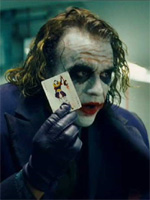
    This is the kiddie-escapist paradigm tinctured with memories of 9/11; today, the vigilantes in primary-colour tights we hanker for don’t confront the conjectural fears of the Cold War, but the all-too-tangible, falling-bodies verities of the new millennium. In “The Dark Knight,” Christian Bale’s Batman has to wrestle, as the Bush administration didn’t, with the necessity of being perceived as evil for the sake of what’s construed as the common good.

    (more…)

  • 10/16 Oscarweb Round-up

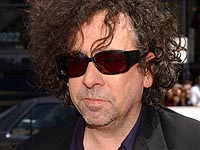
    Tim Burton• Patrick Kevin Day gets some choice words from costumer Jacqueline Durran about the shoot-from-the-hip nature of working with Mike Leigh. [Los Angeles Times]

    • Tim Burton is too busy to see “The Dark Knight.” [Hero Complex]

    • Josh Brolin was initially insulted at the offer to play George W. Bush. [USA Today]

    • Shock of shocks: the kooks depicted in “Religulous” are pissed. [CNN]

    • Erik Lundegaard charts Presdential depictions through cinematic history. [MSNBC]

    • Even though they were staying at the Hilton across the street from the Ziegfeld, John McCain and Sarah Palin declined Oliver Stone’s invitation to the Gotham premiere of “W.” [New York Daily News]

    • Michael Cieply writes up a nice preview of Gus Van Sant’s “Milk.” [New York Times]

    • In honor of Don Cheadle stepping in for Terrence Howard on “Iron Man 2,” the top 13 character switcheroos.  Word up on #2. [Premiere]

  • Will ‘W.’ hold a candle to ‘Nixon?’

    Hollywood Pictures' NixonWith Lionsgate Films’ “W.” on the horizon, we are reminded of the last film Oliver Stone made about an American President: “Nixon,” a critically praised and Oscar nominated work that was the exact opposite of what most thought it would be.

    An angry child of the 1960s, having chronicled Vietnam on screen (some say definitively), Stone announced he was making a biography of President Richard M. Nixon and the feeling was that the film would be an attack on the man, who resigned office in 1974.  Yet when the film was released and critics got a look at it, they were overwhelmed by Stone’s work. Instead of an all out diatribe, he had created a study of a man who felt unworthy of the highest office in the land, even though he spent much of his life trying to get there, and was for most of his presidency a very good Commander-in-Chief.

    Stone’s film portrayed Nixon warts and all, the paranoia, the vulgar language he was known to use, his mistrust of even those closest to him, his jealousy of the Kennedy clan, and the strange hold his mother had on him, even in his later years.  The film displayed a brilliant statesman who struggled with his own sense of self worth, knowing that he could never be loved as Kennedy was, yet also aware of the good he was doing.

    Nixon opened relations with two communist countries, Russia and China, a huge move for him as he was a known communist hater and right hand man to no less than Senator Joseph McCarthy during the red purge of the 1950s that ruined many innocents. He would end Vietnam after having escalated a war he inherited, admitting defeat, and when the nation screamed for his impeachment just two years after being re-elected with the largest margin in the history of United States politics, he resigned in disgrace.

    (more…)

  • Putting the Bat on the couch

    So this is the weekend that the Bat proved stronger than the Force. You’ve surely heard by now that “The Dark Knight” is officially the second-highest grosser of all time in the US, with only “Titanic” sitting above it. Thrilled as I am to see “Star Wars” knocked down a peg, I have to say I never saw this coming. I knew the film would be big – I’m not a moron, I like to think – but I’m still at a loss to explain just what about the film has connected with the public on such a monumental level.

    So is The Sunday Times, it seems. In an interesting piece, journalist Christopher Goodwin poses a number of theories, but can’t really pin it down. (Can anyone?) He covers the obvious angles – the repeated fanboy viewings, the Heath Ledger angle bringing in an unusually broad audience for the genre – but ultimately thinks it comes down to something less tangible than that. Citing the film’s zeitgeisty qualities, he states:

    The film has become a touchstone, beguiling audiences with what appears to be popular, comic-book entertainment, but explores some of the most critical social and ethical issues we face today — in particular, the issues being wrestled with by countries, notably America, fighting the “war on terror”. As those who have seen it will know, The Dark Knight explicitly examines how far it is permissible for individuals and society to go in the fight against “evil”.

    Nothing new there, really. The political resonance of the film in today’s climate has been discussed ad nauseum, something Goodwin emphasises as he quotes extensively from critics such as Richard Corliss and Kyle Smith. For the sake of balance, he also pulls from Andrew Klavan’s perverse conservative reading of the film (covered by Kris here), wherein Klavan called the film “a paean of praise to the fortitude and moral courage that has been shown by George W Bush in this time of terror and war.”

    (more…)

  • ‘W’: bush league?

    Josh Brolin is George W. Bush in WI need to tread gently here and if offend that is not my intention…at all.

    I am not an American but I’ve always been fascinated with American history and politics. While I would never presume to know more about America than its own people, I must admit I struggle with the idea of George W. Bush as president for many of the same reasons Americans do. All of the previous individuals who have held office in my lifetime possessed intelligence — it burned in their eyes — but I do not see that in President Bush at…all.

    Time Magazine did a feature about a year or so ago asking whether or not Bush was the worst US President in history and I believe he won by quite a margin.  Is he fodder enough for a film?  Should it be right now? Should it be directed by Oliver Stone?

    (more…)

  • Andrew Klavan, bastion of subtext, calls ‘Knight’ pro-Bush

    Warner Bros. Pictures' The Dark KnightThe first I heard of this Andrew Klavan op-ed in today’s Wall Street Journal was over at Awards Daily. I blew off the pathetic stretch for a parallel between Christopher Nolan’s “The Dark Knight” and the disastrous administration of George W. Bush as just that, pathetic. This is, after all, the author of such seminally vacant thrillers as “True Crime” and “Don’t Say a Word” we’re talking about.

    Then I noticed Rupert Murdoch pop up on Keith Olbermann’s list of the “worst people in the world” in response to the mogul’s paper publishing the piece this week, and I figured I would give it a closer look.

    Good GOD what moronic copy. A taste of the absurdity:

    …like W, Batman understands that there is no moral equivalence between a free society — in which people sometimes make the wrong choices — and a criminal sect bent on destruction. The former must be cherished even in its moments of folly; the latter must be hounded to the gates of Hell.

    “The Dark Knight,” then, is a conservative movie about the war on terror. And like another such film, last year’s “300,” “The Dark Knight” is making a fortune depicting the values and necessities that the Bush administration cannot seem to articulate for beans.

    That’s right, he brings up the old (and equally stupid) “‘300’ is an allegory for the Bush administration” stand-by from over a year ago.

    Oh, you want some more? By all means:

    The moment filmmakers take on the problem of Islamic terrorism in realistic films, suddenly those values vanish. The good guys become indistinguishable from the bad guys, and we end up denigrating the very heroes who defend us. Why should this be?

    The answers to these questions seem to me to be embedded in the story of “The Dark Knight” itself: Doing what’s right is hard, and speaking the truth is dangerous. Many have been abhorred for it, some killed, one crucified.

    Alright, dear readers. Shake it off. I know the sheer ignorance is both deafening and infuriating. The sad thing is, Klavan has a thesis worth exploring in there somewhere. That it is buried in this partisan hogwash and sublimely inadequate reasoning within such a staunchly pro-conservative view point ironically reflects the very direct approach of liberal-minded filmmaking he’s apparently railing against. But you already knew that. You’re smarter than this…guy.

    Oh, but don’t blink, or you’ll miss Klaven stumble right past the entire point of “The Dark Knight” on the way to missing it completely, and manipulating it to his own ends:

    As Gary Oldman’s Commissioner Gordon says of the hated and hunted Batman, “He has to run away — because we have to chase him.” That’s real moral complexity. And when our artistic community is ready to show that sometimes men must kill in order to preserve life; that sometimes they must violate their values in order to maintain those values…then and only then will we be able to pay President Bush his due and make good and true films about the war on terror.

    Wow, right? Then there’s this blurb at the bottom of the page:

    Mr. Klavan has won two Edgar Awards from the Mystery Writers of America. His new novel, “Empire of Lies” (An Otto Penzler Book, Harcourt), is about an ordinary man confronting the war on terror.

    Can’t wait to see how morally complex that piece of shit will be. Now, I need to go to out to the driveway and grab my sun-faded copy of the Journal so that I can burn it properly.

    (Mr. Nolan — if you happen to be reading this — I implore you to rebut this nonsense in your own op-ed.)

  • Reading “W”

    Boy, they sure are leaning on some hyperbolic recent dubya lore to push this thing along. I’m only about 50 pages in or so and already more than a few things turn me off about this script, but I’m also somewhat surprised that writer Stanley Weiser has gone the way of presenting Bush in such a deep character study.

    I’ll probably write up a “Page to Screen” article later in the fall. But I’m definitely looking forward to Josh Brolin in this role.