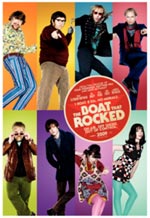
 I have a complicated relationship with Richard Curtis. (Well, with his work, at least.)
On the one hand, I’m keen to defend the man: it’s become fashionable here to direct aggressive vitriol his way for daring to stick to an upbeat formula that, while hardly pushing the envelope artistically, has proved both popular and crowdpleasing. While more considered than most, this critique by Tim Adams in yesterday’s Observer is typical of the scepticism with which local critics regard him:
This desire to be a one-man band, and not just a writer of scripts, appears to be born of an unlikely immodesty. There was a likable kind of humility about the scale of Four Weddings … but as the budgets have grown, so, apparently, has Curtis’s sense of what he is capable of. Somewhat like Blair, he seems to feel he is a pretty straight guy, but also a lone positive voice.
He seems to want his films to evangelise the idea that the world is nowhere near as grim as most film-makers like to think … It is admirable, that faith, but when translated wholesale to movies it borders on sanctimoniousness.
Like I said, I want to go against that elitist grain, but the truth is that Curtis’ maddeningly inconsistent oeuvre doesn’t entirely justify such loyalty. Yes, “Four Weddings and a Funeral” still stands as an exemplary, structurally inventive rom-com, even if it occasionally misjudges the audience’s affection for its characters. (Andie MacDowell over Kristin Scott Thomas? Really?)
 In 1994, Woody Allen’s masterful “Bullets Over Broadway” was not really on anyone’s charts as a potential Oscar nominee. A very funny film about a playwright who enlists a gangster to help him bring life and reality to his play, it was one of Allen’s best works with hysterically funny performances from John Cusack, the great Dianne Wiest (who won an Oscar), Chazz Palminteri, Jennifer Tilly, Jack Warden, Mary Louise Parker, Rob Reiner, Jim Broadbent, and Tracey Ullman. The film premiered here at the Toronto International Film Festival with excellent reviews, but it seemed overshadowed that season by Quentin Tarantino’s “Pulp Fiction,” without question the movie of the year.
 I have a bit of a love-hate relationship with the BAFTA Awards. On the one hand, they can be far more daring and playful in their choices than the American Academy — this is an organisation, after all, that has handed their Best Film award to such enduring works as “The Purple Rose of Cairo,” “GoodFellas” and “Lacombe, Lucien,” while nominating the Oscar-snubbed likes of “Eternal Sunshine of the Spotless Mind” and “The Usual Suspects.”