In Contention

Tag: Black Sunday

  • ‘Black Sunday’ still reigns as the screen’s most accomplished depiction of terrorism

    Black SundayI remember watching 9/11 unfold in horror. As I came home that day, leaving the idle Toronto International Film Festival, all I wanted was to be with my family. Together we watched CNN well into the night and I found myself unable to translate some aspects of the day to my curious daughter. Explaining what happened was easy; explaining why was impossible.

    We live in times when terrorism is a very real part of our lives, when acts of terror come unannounced, swift and brutal, doing exactly what the engineers of hate hope to accomplish.

    Cinema is my job, my life. I spend much of my life in the dark watching flickering images created by artists, their stories unwinding through the projector and unto the screen. Sometimes they make films to make us laugh, sometimes they try to frighten us, enlighten us, or thrill us. Sometimes films replicate life in such a way it is unnerving, the realism is that strong.

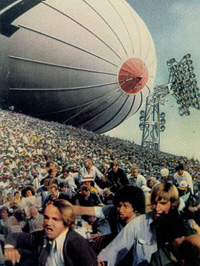
    Every now and then comes a film seems to be too real, too close. I felt that way after seeing John Frankenheimer’s unnerving thriller “Black Sunday” in 1977. The film was terrifying in its depiction of terrorism, portrayed with a grim realism and matter-of-fact reality I had rarely seen before. It seemed to me that Frankenheimer had actually contacted real-life terrorists and been permitted to film their deeds.

    “Black Sunday” was based on a best seeling novel by Thomas Harris, who had not yet written “Red Dragon” or “The Silence of the Lambs.” The rights to the book were snapped up by Paramount and Robert Evans set to work on a blockbuster wrongly envisioning the project as a disaster film. His greatest move was to hire director John Frankenheimer, who saw something darker, more sinister — something extraordinary.
    (more…)

  • Oscar nominations that made me cheer

    Over the years I have been watching and studying the Oscars in earnest, since about 1974 (age 13).  It has always been a nice surprise when an unexpected actor, director or film made the cut to the final five.  It’s a special kind of high.

    I remember reacting with surprise and genuine happiness when Giancarlo Giannini was nominated for Best Actor for his performance in “Seven Beauties,” but even better was the inclusion of Lina Wertmuller, the film’s director (becoming the first woman ever to receive a designation in the directing category — nd for a foreign language film, no less).  I loved the film, so this put me over the moon, even though Giannini’s nod likely cost John Wayne his nomination for “The Shootist.”

    In 1997 it was Atom Egoyan, nominated for Best Director and Best Adapted Screenplay for “The Sweet Hereafter,” a brilliant study of grief in small town Canada; the L.A. Times named it the best film of the year but up here in Canada, we never expected Oscar attention for Atom and his film.

    I was equally thrilled when Martin Scorsese was rewarded with a nomination for his direction of “The Last Temptation of Christ,” a bold, passionate film made from the heart by one of our greatest directors.

    (more…)

  • Great new Dern book!!

    He was nominated for an Oscar just once for his riveting performance in “Coming Home” as a vet who cannot wait to go to Vietnam, and once there cannot wait to get home, horrified by what he sees, betrayed by the dream of what he believed war should be.

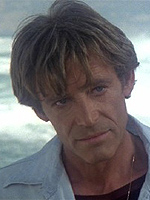
    Bruce Dern was best known in the 70s as the go-to guy to play crazies. Sadly what most people missed is the fact he was a gifted actor, capable of doing so much more. He was the best part about “The Great Gatsby” as pompous Tom Buchanan and gave an Oscar-worthy performance as the Vietnam vet-turned terrorist in “Black Sunday,” still one of the best films ever made about terrorism. Dern was both electrifying and terrifying as Michael J. Lander, who cannot wait to drop a bomb into the Super Bowl.

    He dominated “Smile” with a broad comic performance that is among the finest of his career, and is forever remembered as the dude who gunned down John Wayne, shooting him in the back in “The Cowboys.”

    In the years after “Coming Home” for which he should have won the Academy Award for Best Supporting Actor (sorry Walken) he became a leading man in films such as “Middly Age Crazy” and “Harry Tracy” before fading from view in the late 80s. He emerged on TV recently in “Big Love.”

    I never tired of watching Dern on the screen. Whether it was in “The King of Marvin Gardens” or “Silent Running” he was a charismatic and interesting actor.

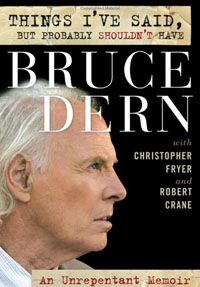
    The actor has written a new book entitled “Things I’ve Said But Probably Shouldn’t Have,” which is an exceptionally honest read moving through his career discovering how he landed some roles, and how some others slipped away from him. I read the book in two days — devoured every word. Loved it.

    One of the great actors of the 70s, Dern ended up being typecast. He never enjoyed the career of a Nicholson or a Hackman, but he was (still is) a superb actor. The book is a worthy read, and hopefully will take people back to his films. It did for me.