 Last Saturday, the Academy concluded four months of screenings of the 65 films in contention for this year’s Best Foreign Language Film award. Today, that tall pile of titles will be culled to a shortlist of just nine contenders, from which the eventual five nominees will be chosen.
Making predictions here is a pretty thankless task, given the regularity with which this branch of the Academy slights seemingly sure-fire nominees in favour of less visible, and less acclaimed, fare. Indeed, a high-profile snub, with ensuing media outcry, has virtually become an annual Oscar tradition.
The furore over the omission of Romania’s “4 Months, 3 Weeks and 2 Days” two years ago even prompted a change in the voting system – to safeguard against such controversies, a smaller executive committee was appointed to add three titles to the six elected by the branch voters.
It didn’t work: when last year’s critical darling “Gomorrah” failed to impress even the new committee, the Academy was raked over the coals once more. The bottom line, then, is that even the mightiest title can’t be called a shoo-in in this race.
(More analysis, and shortlist predictions, after the cut.)
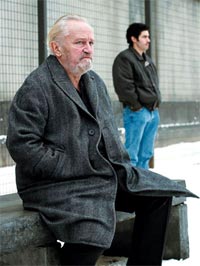
With that said, it’s hard to imagine even the executive committee risking the media crucifixion they would face if either “The White Ribbon” or “A Prophet” fail to make the shortlist. The German and French entries have led the pack ever since they took the top two prizes at Cannes last May, piling up awards ever since.
That said, neither film fits the profile of a typical Academy choice in this category. Michael Haneke’s solemn study of moral corruption in pre-WWI rural Germany is suitably weighty, but emotionally cool; Jacques Audiard’s contemporary prison drama is the less remote piece, but its bloody genre leanings may turn off the more milquetoast voters. It’s easy to see the committee needing to step in on either film’s behalf.
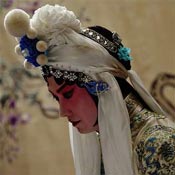 Italy’s “Baaria” and China’s “Forever Enthralled” are lavishly mounted period sagas from familiar names (Giuseppe Tornatore and Chen Kaige, respectively) that could please middlebrow voters, though neither film has garnered much critical enthusiasm. Spain’s “The Dancer and the Thief” comes from a previous winner in the category, Fernando Trueba, and is reportedly an accessible, romantic romp. All were unpopularly selected by their countries over more acclaimed titles, though the Academy isn’t given to caring about such matters.
It’s no revelation that Second World War stories are catnip to this branch: the past decade alone has served up winners “The Counterfeiters” and “Nowhere in Africa,” and nominees including “Downfall,” “Sophie Scholl,” “Days of Glory,” “Katyn,” “Divided We Fall” and “Twin Sisters.”
This year offers voters several WWII-themed titles to choose from, including Czech entry “Protektor,” Norwegian biopic “Max Manus” and the Netherlands’ “Winter in Wartime,” all of which seem substantial threats to crack the shortlist.
What, then, are the more leftfield titles that could sneak in – or raise ire by their exclusion? Peru’s “The Milk of Sorrow,” which took top honors at Berlin last year, struck me as a little too leisurely and oblique to find Academy favor, but there’s buzz suggesting otherwise.
Also arriving with heat from the festival circuit are Israeli urban drama “Ajami,” which could land the country its third consecutive nomination, Canada’s Cannes-lauded “I Killed My Mother,” which boasts a striking media hook in its 19 year-old director Xavier Dolan, and another Cannes winner, Australia’s Aboriginal youth romance “Samson and Delilah.” All three are hard-edged contemporary tales that are a tough sell to voters, but might be rescued by the committee.
And we’re only scratching the surface: Iran’s smartly relatable family drama “About Elly,” Denmark’s “Terribly Happy,” a wicked, Coen-esque comic thriller with U.S. remake possibilities, and gently redemptive Finnish fable“Letters to Father Jacob,” all strike me as possibilities. Even the UK’s “Afghan Star,” a popular documentary with a strong social agenda, could take the committee’s fancy if they’re in a novel mood.
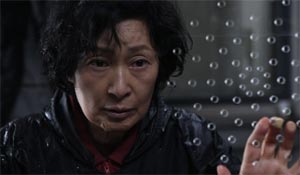 A longer shot, with keen critical backing, is Bong Joon-ho’s Korean entry “Mother,” a thrillingly kinked, female-focused modern noir anchored by a spectacular lead turn from Hye-ja Kim. It’s easily one of the most arresting films on the longlist, but the Academy has yet to show much of a taste for new Korean cinema, and I suspect the gleeful eccentricities of Bong’s film won’t change that.
If I have to predict which film will be this year’s snubbed cause célèbre, however, I’d put money on Cornelio Porumboiu’s “Police, Adjective,” a black comedy of police corruption that has inspired unanimous critical adulation since bowing at Cannes, but doesn’t scream ‘Oscar-bait’ in any way. There’s a chance that the executive committee may step in here to compensate for Romania’s eyebrow-snub of 2007 – but who knows how many films they might have to save?
With that, my wild (and bound to be wrong) guesses for the shortlist:
“Ajami” (Israel)
“Forever Enthralled” (China)
“I Killed My Mother” (Canada)
“Letters to Father Jacob” (Finland)
“Max Manus” (Norway)
“The Milk of Sorrow” (Peru)
“A Prophet” (France)
“Terribly Happy” (Denmark)
“The White Ribbon” (Germany)
What are yours?
Comments
14 responses to “Waiting on Oscar’s foreign language shortlist”
I’d go
“Ajami” (Israel)
“Forever Enthralled” (China)
“I Killed My Mother” (Canada)
“Letters to Father Jacob” (Finland)
“Mother” (S. Korea)
“Police Adjective” (Romania)
“A Prophet” (France)
“The White Ribbon” (Germany)
“Winter in Wartime” (Netherlands)
White Ribbon and A Prophet have to be there to save this branch from obscurity & criticism. I’m hoping for Mother & Police Adjective (as a big fan of the director of Mother & an equally large Romanian cinema fan). Israeli entries tend to continually have strong showings also.
You make no comment about “Broken Embraces,” so I was wondering if maybe it is ineligible for the category. Was it not the selection from its country?
If it is eligible, I wouldn’t underestimate Almodovar in terms of the Academy. I have yet to see Broken Embraces (was hoping to get out to see it this weekend), but even if it is weak, it is written and directed by a previous Oscar winner (Almodovar) and stars last year’s supporting actress winner (Cruz).
If it isn’t eligible, do you know the story on that?
David: “Broken Embraces” is not eligible. Spain chose “The Dancer and the Thief” (which is mentioned in the article) to represent it at the Oscars instead.
We reported the news in September here.
It’s not the first time this has happened to a high-profile Almodovar film: in 2002, Spain failed to choose “Talk to Her,” which went on to win a writing Oscar and a directing nom, as I’m sure you recall.
Bill: So we agree on 6 of the 9 — each picking a slightly different WWII pony. Yay for consensus!
I hope you’re right about “Mother.” I’m sceptical.
Argentina’s The Secret in Their Eyes is gonna not only get nominated but win.
“Ajami” (Israel)
“Baaria” (Italy)
“I Killed My Mother” (Canada)
“Kelin” (Kazakhstan)
“Max Manus” (Norway)
“A Prophet” (France)
“The Secret in Their Eyes” (Argentina)
“War in Wartime” (The Netherlands)
“The White Ribbon” (Germany)
My guesses are:
Germany (White Ribbon),
France (A Prophet),
Chile (Mother),
Canada (I Killed My Mother),
Italy (Baaria),
Australia (Samson and Delilah),
Finland (Letters to Father Jacob),
China (Forever Enthralled)
and Argentina (The Secret in Their Eyes).
Seriously they do have a hard on for world war 2 movies. And by god Europe keeps making them year after year.
Baaria might make the longlist. It is typically lavish and sentimental and might appeal to Oscar voters. That Morricone score can only help.
I think The White Ribbon and A Prophet are this years Pan’s Labyrinth & Lives Of others. The White Ribbon will maybe garner nods in categories other than Foreign Language Film but A Prophet will eventually win.
I hope for “For a Moment Freedom”. Austria’s official Entry!
Thank you so much for this. It is hard to find any Oscar analysis on the category that interests me most.
My heart says yes to The White Ribbon, but my brain says no. After all, this is a committee that committed the snubs you mentioned.
I think there should be a rule that the top two Cannes winners must be included, assuming they are not in English. Maybe that would make it easier to find some of these titled, like the 2007 Grand Prix winner The Mourning Forest.
LOL i predict all WWII movies to make the list.
My guesses are:
Argentina
Finland
France
Georgia
Germany
Iran
Israel
Mexico
Peru
I think that the Georgian film can find a place on the longlist – it’s about war and has a child as the main character.
@Guy two of your picks that I omitted Milk of Sorrow and Terribly Happy. I’ve seen both and liked both. I think Milk of Sorrow is the better film and maybe too much on the art house side while Terribly Happy is a fun, little film. Would actually be happy if either makes the cut but any foreign language nominations not including The Prophet AND White Ribbon would make me very pissed.
Rooting big time for Mother to push through. He is a big enough name on the International scene and easily one of the most talented Asian directors currently working.
the list is out:
Argentina, “El Secreto de Sus Ojos,” Juan Jose Campanella, director;
Australia, “Samson & Delilah,” Warwick Thornton, director;
Bulgaria, “The World Is Big and Salvation Lurks around the Corner,” Stephan Komandarev, director;
France, “Un Prophète,” Jacques Audiard, director;
Germany, “The White Ribbon,” Michael Haneke, director;
Israel, “Ajami,” Scandar Copti and Yaron Shani, directors;
Kazakhstan, “Kelin,” Ermek Tursunov, director;
The Netherlands, “Winter in Wartime,” Martin Koolhoven, director;
Peru, “The Milk of Sorrow,” Claudia Llosa, director.