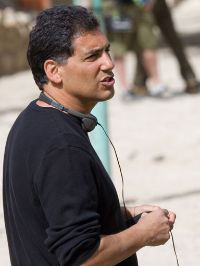
 Those seeking a cinematic escape from this week’s barrage of “Transformers” silliness couldn’t find a much more sober alternative than Cyrus Nowrasteh’s “The Stoning of Soraya M.,” an adaptation of the non-fiction bestseller by French-Iranian journalist Freidoune Sahebjam.
A spare, moving study of gender persecution in 1980s Iran, as frank and unpretentious as its title, Nowrasteh’s fact-based drama may pivot on the eponymous ritual killing, but builds its larger narrative on more cathartic themes of storytelling and silence-breaking. As such, while it may sound like a grim night at the movies, it’s an oddly hopeful film – one whose accessibility was proved with the runner-up Audience Award at last year’s Toronto fest.
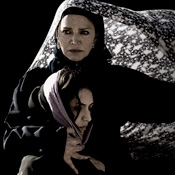
Shohreh Aghdashloo (whom you’ll remember from her deservingly Oscar-nominated work in 2003’s “House of Sand and Fog”) plays Zahra, a senior resident of a remote desert village seeking retribution against the town’s male elders for their collective murder of her niece, the Soraya of the title.
Sentenced to death for adultery, the innocent Soraya was actually framed by the menfolk to enable her husband’s second marriage. When Sahebjam finds himself stranded in the village following a vehicle breakdown, Zahra seizes the opportunity to reveal this injustice to an international journalist, bringing global attention to the persecution of women under Shariah law.
What is notable about the film is how it derives great tension from little actual suspense – the title alone gives away Soraya’s fate from the outset, while the very fact that we’re watching the film confirms that Zahra succeeded in sending her story outside the village, despite potentially violent opposition.
Yet, working with a simple framing structure, Nowrasteh conveys the taut desperation of Zahra’s mission – in such a way that it’s simultaneously unlikely and unsurprising that the director’s key creative touchstone was a Hollywood western.
“It sounds strange, but the first and only film I thought of when I read the back was ‘The Ox-Bow Incident,’” Nowrasteh tells me over the phone from L.A., referring to the 1943 Henry Fonda starrer about three suspected cattle rustlers falsely accused of murder by a town lynch mob. “It’s an incredibly tight film, all talk, nothing is softened. That’s the approach I felt this story called for, that’s why the book screamed “movie” to me.”
 In playing up the urgency of the events, and significantly condensing the book’s time frame in the process, Nowrasteh, an American filmmaker of Iranian heritage best known for his TV docudrama “The Path to 9/11,” has been accused in some quarters of “Hollywoodizing” the story – a claim he heartily laughs off.
“Of course it’s Hollywoodized!” he exclaims. “I’m an American, and I want the film to speak to a wide audience, so it’s inevitable we made some changes. I mean, Shohreh is also quite a bit younger than the real-life Zahra was, but I knew she was the only actress for the role. We’re making a movie, after all. But the spirit and integrity of the story remains.”
He’s also quick to point out that an Iranian-language study of religion and women’s rights is a million miles from a mainstream proposition. “I’d love to have had a video camera to film the meetings we had with so many investors about this film,” he chuckles. “They wanted nothing to do with it. Try telling them it was Hollywoodized.”
It would, of course, have posed considerably few obstacles to film the story in English, but the Iranian dialogue (and indeed, Nowrasteh’s own Iranian background) was a dealbreaker in securing the rights to the book from Sahebjam, who had previously refused offers from a couple of Italian filmmakers, as well as the Greek-born auteur Costa-Gavras.
“He was adamant that he wanted an Iranian interpretation of the material, not a European one,” Nowrasteh explains. “So the language issue wasn’t negotiable. On the one hand, I didn’t think we were going to get the film made, period, and that made it even harder. But I totally agreed with him – why do a film like this if you’re not going to immerse the viewer in another culture?”
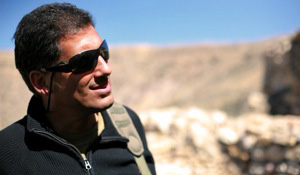 Nowrasteh was equally unwilling to compromise when it came to depicting the stoning of the title, a graphically detailed, real-time sequence that evokes “The Passion of the Christ” in its astonishing physical brutality. (The parallel with Mel Gibson’s sensation don’t end there – the films share a producer, Stephen McEveety, who in turn brought on Oscar-nominated “Passion” composer John Debney and star Jim Caviezel, as Sehebjam.)
“It had to be hard to watch,” Nowrasteh insists. “It does a disservice to the victims to water it down. So in the editing, we tried to strike a balance: push it, but not enough to send everyone out the theater. We tested different cuts, and when we got it down to only one walk-out, I knew it was right.”
It’s this tension between the obligations to challenge and communicate to a general audience that makes “The Stoning of Soraya M.” an intriguing film, quite apart from the compelling narrative within. Nowrasteh closes the interview by explaining his affinity for factual material in his films: “True stories take us out of the standard structural paradigm we expect when we go to the movies.” So it is with “Soraya”; don’t be the one who walks out.
Comments
One response to “INTERVIEW: ‘The Stoning of Soraya M.’ director Cyrus Nowrasteh”
In a word: devastating.