In Contention

Tag: The Passion of the Christ

  • Which films will be remembered in 50 years?

    Daniel Day-Lewis in There Will Be BloodIt is nothing new for a film to be released, find no audience, no critical favor, and disappear to be discovered by a new generation and raised to the level of masterpiece. In fact, this has been going on since the silents.

    Charlie Chaplin’s masterpiece “City Lights” was released four years after the advent of sound, and though popular at the time with both audiences and critics, it was some years later that it was finally hailed as Chaplin’s finest work. “The Wizard of Oz,” one of the most beloved films of all time that celebrates a 70th anniversary this month, was a dismal box office flop when released in 1939.  It wasn’t terribly popular with the critics either, but years later it was finally championed as a work of art and, of course, now the film is considered one of the greatest films of all time and perhaps a more worthy Best Picture choice than the eventual winner that year, “Gone with the Wind.”

    The “Citizen Kane” tale is so well documented I need not continue, and John Ford’s magnificent “The Searchers,” written off as just another John Wayne western, was discovered by film school professors who taught its brilliance to such young minds as Martin Scorsese, John Milius and Francis Coppola. Even Stanley Kubrick’s “2001: A Space Odyssey” failed out of the gate with both audiences and critics, but within a year of its release, many of those same critics had changed their minds about the film.  Within 10 years it was being declared as important a film as “Citizen Kane.”

    When “Gandhi” won eight Academy Awards in 1982, no one was terribly surprised. Yet within a year there were rumblings within the Academy that a mistake had been made and the rightful winner should have been “E.T. : The Extra-Terrestrial,” now recognized as a sublime work of art. And that same year, “Blade Runner” began its life as a major flop, only to re-discovered on home video over the years and become a cult classic.

    Looking back over the last decade or so, which films released since will be recognized 50 years from now? Which films that were passed over by audiences, critics and/or the Oscars will be hailed as masterpieces in the years to come?  I took a stab as choosing a group of films I believe could fall under this label.

    (more…)

  • WEEKLY WRAP: Buried treasure, reading pleasure

    Leonardo DiCaprio and Michelle Williams in Shutter IslandEntirely slipped my mind to do this on Friday, but here’s what we (and you) were talking about this week:

    • At 2009’s halfway mark, this week’s list shone a light on the year’s most undersung films thus far.

    • In Page to Screen this week, we eagerly sank our teeth into Dennis Lehane’s “Shutter Island.”

    • As the respective “Ice Age” and “Transformers” rehashes battled for box-office glory, “Up” quietly became Pixar’s second-highest grosser.

    • Meanwhile, soon-to-be titan “Harry Potter and the Half-Blood Prince” garnered mixed-to-positive notices.

    • Burton, Lasseter, Miyazaki, Zemeckis … the upcoming Comic-Con just got a lot more auteur-heavy.

    • Speaking of comics, “The Green Lantern” has a lead … and his name is Ryan Reynolds.

    • Away from the big screen, we discussed the joys of bargain-bin DVDs.

    • And stirred up debate with a celebration of Mel Gibson’s “The Passion of the Christ.”

  • Five years on, Gibson’s ‘Christ’ still moving, misunderstood

    Jim Caviezel in The Passion of the ChristFive years have passed since the release of Mel Gibson’s extraordinary film “The Passion of the Christ,” a self-financed work that would eventually stun the industry, bringing in more than $600 million worldwide. There were gales of protest about the film, religious leaders spoke out, some for it , some actually against it, and audiences members wept, or walked out, depending on the person.  I can’t remember a film causing this sort of reaction from so many people. Gibson divided audience right down the middle.

    The actor/director chose not to make a film about Jesus’s life but rather his death, exploring in great detail the horrors inflicted on the poor man as he walked toward a hill where he would be nailed to a cross and left to die a most horrible death. The chain of events is called “the stations of the cross” in religious teaching, but Gibson laid it out in near matter-of-fact fashion.  His faith was apparent but it wasn’t a propagandist’s work in the slightest.

    In essence, Gibson made a film about a man who was driven.  He could have stopped but he pushed through this awful denouement to his life. I suppose that, more than anything else, moved me. The fact that no matter what happened to his body, whether it be scourging his flesh or beating him about the head and face, he just kept going, knowing his purpose, knowing his destiny.  In that way, the film could be seen less as a portrait of a religious figure than a tale about everyday passion, the will to continue, eyes on the prize, etc.  Who can’t relate to that in some way, however comparably small?

    (more…)

  • INTERVIEW: ‘The Stoning of Soraya M.’ director Cyrus Nowrasteh

    Cyrus Nowrasteh on the set of The Stoning of Soraya M.Those seeking a cinematic escape from this week’s barrage of “Transformers” silliness couldn’t find a much more sober alternative than Cyrus Nowrasteh’s “The Stoning of Soraya M.,” an adaptation of the non-fiction bestseller by French-Iranian journalist Freidoune Sahebjam.
    A spare, moving study of gender persecution in 1980s Iran, as frank and unpretentious as its title, Nowrasteh’s fact-based drama may pivot on the eponymous ritual killing, but builds its larger narrative on more cathartic themes of storytelling and silence-breaking. As such, while it may sound like a grim night at the movies, it’s an oddly hopeful film – one whose accessibility was proved with the runner-up Audience Award at last year’s Toronto fest.

    Shohreh Aghdashloo (whom you’ll remember from her deservingly Oscar-nominated work in 2003’s “House of Sand and Fog”) plays Zahra, a senior resident of a remote desert village seeking retribution against the town’s male elders for their collective murder of her niece, the Soraya of the title.

    (more…)

  • The new millennium Oscars?

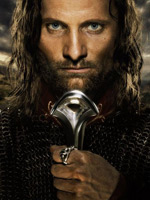
    Viggo Mortensen in The Lord of the Rings: The Return of the KingLooking back over the previous Oscar winners for Best Picture since 2000, the start of a new century (and a new millennium), I find myself wondering sometimes what the hell the Academy was thinking.  It’s no secret I disagree with the Academy a lot, but I can also admit that when they get it right, they get it right.
    But since 2000, their Best Pic choices have run the gamut from incredibly ridiculous, “Gladiator” and “A Beautiful Mind” being just goofy, to bang on, with “The Departed” and “The Lord of the Rings: The Return of the King.”  I am told the Academy is moving in a more progressive direction, willing to take more risks, and I suppose some of these winners do just that.  But they could have gone further.

    Year by year, here’s a quick look, with some thoughts about who might have won, and who should have at least been nominated…

    (more…)

  • Why does the Academy fear controversy?

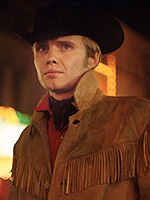
    Jon Voight in Midnight CowboyIn 1969, the Academy saw fit to give “Midnight Cowboy” the award for Best Picture — a first ever for an X-rated film.  Some saw the moment as a bellwether signaling a new dawn for the group, that they were developing a growing acceptance for the films that would start coming at them around this time of creative invigoration in the cinema.  But was it really?

    I remember somewhere that a high-ranking Academy official stated that if “A Clockwork Orange” won the Oscar for Best Picture they would resign their membership! The film had already won top honors from the New York Film Critics Circle and was nominated for four Academy Awards, among them Best Picture and Best Director. A ground-breaking work, the best of Kubrick’s career, still looking futuristic 37 years later, the film is an obvious masterpiece.  But it frightened the Academy for whatever reason.

    A year later Bernardo Bertolucci’s “Last Tango in Paris” came along with a galvanizing performance from Marlon Brando and was certainly a better film than at least two of the pictures nomination int he top race, “The Sting” and “A Touch of Class,” yet as expected, the Academy backed away from the film, nominating only Brando and Bertolucci.

    What is it in the makeup of this esteemed organization of artists that makes them steer clear controversial films, films that push the envelope, that go further out on a limb than most in exploring dark and sometimes daring subject matter?

    (more…)

  • What does early (and excessive) Oscar hype do to a film’s chances?

    Cover of Entertainment Weekly featuring The CrucibleIn 1996, a fall movie preview of Entertainment Weekly arrived in my mailbox, the cast of “The Crucible” staring back at me on the cover, making clear to me this was going to be THE film of the fall. There were rumors floating within the industry that the film, based on the Arthur Miller play, could conceivably be nominated for 12 or 13 Academy Awards, and it seemed a cinch for at least a Best Picture nod.

    Having directed the play twice, studied it at length in university and being a huge Arthur Miller fan, I was thrilled that the film was finally going to get the intense big screen version it deserve. The 1959 French adaptation was okay, but not enough people had actually seen it. Here was a chance for one of the greatest dramas of the 20th century to make the transition to film with a superb cast, including Daniel Day-Lewis, Joan Allen, Paul Schofield and Winona Ryder.

    Somewhere along the way Fox panicked and released the film late in December, and though Day-Lewis finished second in balloting for the New York Film Critics Awards, the picture never caught fire as it had been predicted to do. Instead it was a dismal box office failure, nabbing only a supporting actress nomination for Joan Allen and an adapted screenplay nod for Miller.

    “The Crucible” is a great film, with powerhouse performances from Day-Lewis, Allen and Ryder, though many critics attacked the latter. But was the film a victim of over hype, or were audiences simply too familiar with the story? What happened?

    The same sort of thing almost happened to Steven Spielberg’s “Munich,” which at this time in 2005 was being touted as not just an Oscar nominee, but the likely winner for Best Picture and Best Director, sight unseen. It opened and was very good, but it wasn’t the searing masterpiece everyone had been hoping for.  And somehow “Crash” won the Best Picture prize.

    (more…)

  • Movies that Oscar missed

    As film junkies, we all know it happens. Usually every single year there are one or more films the Academy passes over for Best Picture consideration, in some cases because there are, after all, just five slots available, but in others because, well — they blew it.

    Like the rest of you, I sit and listen to the nominees announced live every January and have never had a year when I did not roll my head and ask to no one in particular, “Where is such and such or so and so?”

    I mean for me, the great honor is the nomination, because when “Kramer vs. Kramer” defeats “Apocalypse Now” for Best Picture, how can you possibly take the winners seriously? However, a nomination — that is decidedly different.

    Where was the Best Picture nod for John Ford’s masterful “The Searchers,” arguably the greatest American western ever made? And Alfred Hitchcock’s “Psycho,” which redefined the horror genre?

    Since 1980 there have been a number of truly brilliant films passed over, leaving this critic often shaking his head in disgust, though I get over quick enough to watch the damned awards…talk about hooked. But it amazes me how “The Empire Strikes Back” can be a better film than “Star Wars,” yet not be nominated in the big race. Ditto Brian De Palma’s “Blow Out,” possibly the finest film of his career, ignored in every category despite its artistic mastery. The very same year Milos Forman gave us “Ragtime,” a much stronger film than “Chariots of Fire,” which won the Oscar, or even “On Golden Pond,” one of the five nominees!

    (more…)

  • Actors winning Best Director — always deserved?

    Of course not. Quite often the Academy gets behind an actor for the simple reason they pulled of the film without screwing too much up.

    How else can one explain Mel Gibson’s win for “Braveheart” but failure to be nominated for his masterpiece “The Passion of the Christ” and “Apocalypto,” easily two of the finest directed films of the last ten years? Somewhere along the road, the Academy fell in love with actors who try their hand at directing (unless your name is Sean Penn or Barbara Streisand) and began giving away Oscars, quite often over more deserving directors.

    Poor Martin Scorsese has watched actors win the Best Director prize over his work three times. In 1980, of course, Robert Redford won for his drama “Ordinary People” over Scorsese’s searing “Raging Bull,” while ten years later Kevin Costner won the Oscar for “Dances with Wolves,” besting Scorsese for “Goodfellas.” But hey — this is the Academy…right? Clint Eastwood also bested Scorsese’s “The Aviator” in 2004 with a win for “Million Dollar Baby.”

    One year after Redford won his Academy Award for Best Director, Warren Beatty took home the award, much deserved for his criminally under-appreciated epic “Reds.” But he would watch in shock as “Chariots of Fire” ran to the Best Picture award over his film. The following year, a minor British actor, Richard Attenborough directed “Gandhi,” which the Academy fell in love with, honoring the achievements of the film’s subject rather than the effort itself, which even at the time seemed old-fashioned and rather ordinary. Attenborough himself, on the way to accept the Directors Guild Award for the film, stopped to chat with Steven Spielberg to make clear what everyone in the room seemed to know: that Spielberg should have won the award for “E.T.: The Extra-Terrestrial!”

    (more…)