 It happens, sometimes when a really fine actor manages to give a brilliant performance in a terrible or weak film, a diamond in the rough. In fact, some of the best actors working have shone brightly in bad films as far back as the 1940s, though I will focus on the 1970s to present day here today.
For whatever reason the respective film fails: perhaps the writing was weak, the direction went horribly wrong, or all the ingredients needed to make a great film, hell even a good film, simply were not there. Yet a single actor did everything right, understood their character, understood the impact they needed to make in their scenes and they give a superb performance despite his or her surroundings.
Look at Bruce Dern in “The Great Gatsby.” Here we have an exceptional actor in one of the roles of his career. He WAS Tom Buchanan, elevating every single scene he was in with sheer presence. Jack Clayton’s direction was lumbering, Robert Redford was woefully miscast and Mia Farrow? Please. (The single burning question we need to ask ourselves is what about Daisy attracts Gatsby when he can now have anyone — she doesn’t appeal on that level.)
Dern radiates the sort of danger Redford needed to have in the role of Gatsby, but is far too good as Tom to even think of him in a different role here. The lead really should have been Jack Nicholson. Can you imagine the sparks between him and Dern?
Perhaps one of the best performances ever given in a bad film was Morgan Freeman’s breakthrough in “Street Smart,” portraying a vicious pimp using a journalist portrayed by Christopher Reeve to get off a murder rap without realizing that he too is being used. Freeman is brilliant, all smiles and kindness, the sort of guy you would like to hang out with until his temper flares (to say the least). With just a few moments of screen time he gave an unforgettable performance as Fast Black.
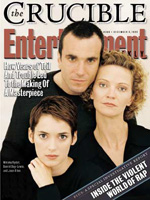 In 1996, a fall movie preview of Entertainment Weekly arrived in my mailbox, the cast of “The Crucible” staring back at me on the cover, making clear to me this was going to be THE film of the fall. There were rumors floating within the industry that the film, based on the Arthur Miller play, could conceivably be nominated for 12 or 13 Academy Awards, and it seemed a cinch for at least a Best Picture nod.