 Last month, I played devil’s advocate a little with the Best Documentary Feature category, suggesting five less-discussed titles from the shortlist of contenders as a potential counter to the dizzying advance of the clear frontrunner, “Man on Wire” — not as a slight on the film, which is terrific, but in the interests of diversity.
Now, as we near the end of a busy first phase of precursors, I feel the need to make a similar effort in the Best Foreign Language Film category. It’s not that the names being mentioned as frontrunners for the Oscar aren’t worthy — oft-mentioned titles like “Gomorrah,” “The Class” and “Waltz With Bashir” are more than credible contenders, with the former two among my favourite films of the year. (More on that in a couple of days.) But we all know the Academy can frequently choose to ignore the obvious in this category — and with that in mind, I’d like to point out a few interesting directions in which they can go.
The critics certainly aren’t helping them out, after all. Excellent film that it is, “Let the Right One In” has stomped all over the precursors almost as comprehensively as “Man on Wire” has: a consensus that strikes me as both surprising and a little disappointing, given what a rich and varied year it’s been for non-American cinema. Share the wealth a little, guys. However, the fact that the Swedish vampire film is ineligible for the Oscar means the Academy’s foreign-language committee is being given very few pointers at this stage.
So, in the interests of rectifying that, I offer an alternative ballot: four under-the-radar titles from the 67-strong shortlist of foreign-language contenders that the voters would do well to consider. There are no doubt more — I’m drawing from the pool of contenders that I’ve actually seen — but any one of these would be a most worthy, and welcome, surprise:
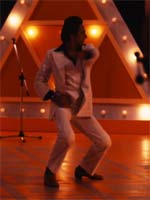
“TONY MANERO” (Chile): Pablo Larrain’s wicked little festival favourite first caught my eye at the London fest in October, and has crawled progressively deeper under my skin ever since. A tightly conceived and wholly unique hybrid of black comedy, serial-killer thriller and socio-political study, it takes its title from the character played by John Travolta in “Saturday Night Fever,” a figure worshipped to a disturbing degree by the film’s own protagonist, Raul, a socially inept lowlife eking out a bleak existence in 1978 Santiago, Chile.
 Continuing the discussion of yesterday’s London Film Festival offerings: