 One of the most artistically ruthless films to be produced in decades, “The Departed” is a spike of adrenaline straight to the heart of an audience desperately in need of such rambunctious filmmaking. A loose but paradoxically loyal remake of the Hong Kong thriller “Infernal Affairs,” the film is doused with a cast of familiar faces, each performer offering portrayals unique to anything in their respective repertoires.
The script, tuned down to deafening perfection by screenwriter William Monahan, is as frenetic as director Martin Scorsese’s visual vernacular. And the atmosphere, molded by Scorsese as if he were twenty years younger, is as saturating and penetrating as one could hope for out of a freewheeling, balls-to-the-wall entry in the cops and robbers genre.
This is truly one of the best films of the year.
Scorsese fell off his throne in the eyes of many when he began tackling epics like “Gangs of New York” and “The Aviator” in recent years. Some felt the fixture of 1970s cinema was chasing awards glory in earnest and therefore watering down his artistic capabilities.
Still, those films have much more to offer than most viewers allow, affording dense portraits of 19th century America and the unraveling world of Howard Hughes respectively. But it admittedly goes without saying the director hasn’t been near the top of his game in well over a decade, and the worry was he might be slowing down. With “The Departed,” that line of thinking flies right out the window.
The story is one of deception and lies, the hardships of undercover life and the effect such particulars have on a human being. The heights Michael Mann was aiming for in “Miami Vice” in this regard are cleared with considerable comfort by Scorsese’s effort.
Leonardo DiCaprio stars as William Costigan, a good kid from a working class family who hopes to make a difference in the Massachusetts State Police. But his superiors, Queenan (Martin Sheen) and Dignam (Mark Wahlberg), see through him immediately as just a kid playing the role of cop more so than living it.
Undercover work in the Irish mafia, however, might be something up his alley. After all, deception seems to be one of his outstanding qualities.
Colin Sullivan (Matt Damon), meanwhile, is a young buck who was introduced to organized crime at an early age. Presented as a surrogate son to Irish crime lord Frank Costello (Jack Nicholson), Sullivan also rises quickly through the ranks of the Boston Police Academy. He is soon positioned as Costello’s mole on the inside, greasing the rails for the mob boss to live his evil and criminal life as he sees fit, without recourse or precaution.
 As the film pushes forward at an unforgivable pace, each respective mole becomes cognizant of the other’s existence. The drama therefore introduces itself in the form of a race against odds (and in the most hair-raising of environments) for each to discover the other before their rapidly evaporating time expires.
These are roles most actors spend a lifetime hoping to nail, but in “The Departed,” even the supporting elements are tough enough to chew and find significant flavor.
Alec Baldwin, for instance, continues to tap into a post-Kim Basinger era of confident, sleazy, yet somehow appealing portrayals as Ellerby, an officer in charge of the building case against Costello. Martin Sheen commands a father figure for DiCaprio’s Costigan with relative ease, while Mark Wahlberg sparks a curious foil to Sheen’s Queenan as a sharp-tongued Sergeant overseeing undercover operatives.
Vera Farmiga adds another delicate and layered performance this year (along with work in Anthony Minghella’s “Breaking and Entering”) as Madolyn, a department psychiatrist who becomes involved with both Costigan and Sullivan. And Ray Winstone fits comfortably into the mold as Costello’s right-hand man Mr. French.
But DiCaprio and Damon’s front-and-center portrayals are what the film hinges on.
Damon’s is a specific and moderately callous turn, one less merely villainous than it is antagonistic by necessity. DiCaprio’s performance as Costigan, meanwhile, might be his most accomplished to date, or at least closely rivaling his work in “The Aviator” two years ago.
An actor consistently relegated to the “pretty boy” column, DiCaprio proves time and again that he is a performer capable of reaching certain emotional depths that others in his generation can’t quite claim for themselves. And though both of these performances are showcases for each actor, it’s still not enough to steal the show.
If there is one thing audiences will be talking about regarding “The Departed” for years to come, it will be Jack Nicholson’s flagrant bloodlust and vicious insanity as Frank Costello.
Costello is the vilest of human occurrences, a truly despicable creature whose sole purpose in the world is to rail against the status quo and push his own boundaries as far as he can to get the maximum stretch out of life. As the character admits later on, “I haven’t needed the money since I took Archie’s milk money in the third grade. I haven’t needed p***y either, but I like it.”
 Indeed, Costello is one of the true villains of the modern cinema, as morally filthy as he is fascinating. And Nicholson wallows in the role like he was born to wear it, savoring every feral gaze and relishing every blood-splattered grin. It might be his best work since “The Shining” 26 years ago, and a performance Academy voters are likely to eat right up like Ben Kingsely’s Don Logan in 2001’s “Sexy Beast.”
William Monahan’s erratic screenplay is enough to give anyone an anxiety attack, but Scorsese plays the thing like a fiddle. Utilizing a crew of usual suspects, the filmmaker finds the pulse of the tale in a hurry and never relents.
Thelma Schoonmaker deserves awards consideration for piecing together parallel narratives while still implementing the greatest of techniques scene after scene. Michael Ballhaus’s camera glides through each sequence and constructs time and space in a manner reminiscent of his work on “Goodfellas,” and most recently, Janusz Kaminski’s underappreciated efforts on Steven Spielberg’s “Munich.”
And I can only hope theaters across the globe crank the volume up to the level it was at in the screening room on the Warner Bros. lot, because the soundscape of the film is as much a character in the tale as Costigan, Sullivan or Costello.
But the real story of “The Departed” has to be Scorsese’s reclamation of his former relentless ways. This is an effort that fills out a trilogy of sorts with “Mean Streets” and “Goodfellas,” further securing the director’s status as the greatest of urban film artists.
What makes the accomplishment all the more appealing is the sense that Scorsese is a beast awakened, done with a slumber that appealed to some and still puzzled others. “The Departed” is crafted like he just recently discovered the medium of cinema and all its wondrous possibilities, fresh out of film school and desperate to express himself.
It’s energizing just thinking about it.
And, like the best of Scorsese cinema, I expect “The Departed” could be largely ignored by the awards season outside of performance respect and potential craft consideration. But it really doesn’t matter what happens to the film in the approaching Oscar derby, does it?
This is as hard boiled as filmmaking can get, and it proves a talented director still has more finesse and spirited determination than half the industry around him. So take note. An old dog can teach as many new tricks as he can learn.
 Not my most successful day at the London Film Festival today, as a communication error kept me out of the fest’s final

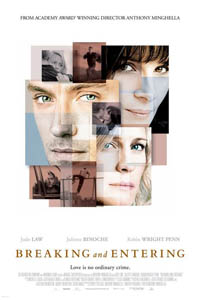 Anthony Minghella’s “Breaking and Entering” is one of the most sincerely penetrating films of the year. It’s most unique quality is the sense of legroom it provides, a healthy stretch of a film with deep breaths and drawn out considerations, as opposed to the typical anxiety of temperamental manipulation (which all film tends to be by nature).
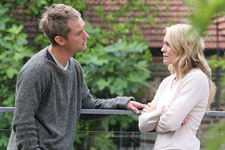 After a series of such robberies, Will begins staking out the building with partner Sandy (Martin Freeman) and an inquisitive prostitute, Oana (a humorous and insightful Vera Farmiga). He finally catches Miro in the act one night, and in chasing him he follows the boy to his home. There Will encounters, from a distance, Amira and her concern for her son.
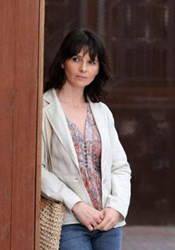 Juliette Binoche is appropriately self-aware and headstrong in her performance as Amira. Driven yet still full of the youth she had ripped from her through tragedy, Amira is an extremely interesting creation and a vibrantly unique character.