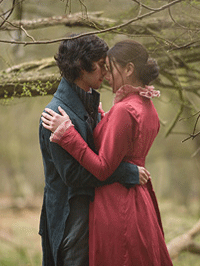
 It’s not every year that my biggest cheer on Oscar nomination morning comes in the technical categories, but such was the case last week when Janet Patterson’s name showed up in the Best Costume Design lineup.
Patterson’s inclusion (following a senseless Guild snub) is gratifying not merely as recognition for her tangibly textured, richly story-serving threads in “Bright Star,” but as a representation of one of 2009’s most immaculately integrated – and under-rewarded – technical ensembles.
Jane Campion’s John Keats biopic derives its fresh, fragile romanticism as much from writing and performance as the combined efforts of Patterson, cinematographer Greig Fraser and composer Mark Bradshaw. Their work has prompted countless critics’ punning on Keats’s “a thing of beauty is a joy forever” chestnut, but sometimes the most obvious praise is the most appropriate.
For Fraser and Bradshaw, “Bright Star” represents their first experience on a Campion feature, having previously collaborated with the New Zealander on a pair of short films, “The Water Diary” and “The Lady Bug.” For Patterson, however, the film extends a collaboration with the filmmaker that dates back to Campion’s 1993 breakthrough “The Piano,” and has yielded previous Oscar nominations for both that film and 1996’s “The Portrait of a Lady.”
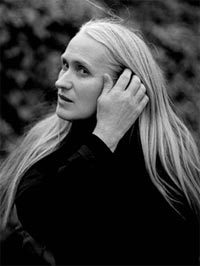 Jane Campion’s laugh comes as a rather lovely surprise: full, throaty and often directed at herself, it betrays a personality more robust, mischievous even, than one might surmise from her fragile, often solemn films. It’s a disconnect she cheerfully acknowledges, and credits in part to her collaborators.
 Some categories haven’t had that much renewal since I last reviewed them. Best Original Score is an exception. Principally, this is because the category is very difficult to judge before hearing the scores, not to mention last minute personnel changes (as composers always seem to be the most disposable members of film crews).