In Contention

Tag: Lou Ye

  • VENICE: ‘Alps’ and other drugs

    The first few days of the Venice Film Festival were so jam-packed with the big-name premieres you’ve been most restless to hear about that, between thrashing out full-length individual reviews of those and negotiating the braided Venice obstacles of crippling humidity and crippled wi-fi facilities, my usual roundups of less flashy fare got a bit shunted. As did anything in the way of an introduction: we may have already reached the close of Day Four, but hey, welcome to this year’s Venice coverage! Hope you’re enjoying it at least as much as I am. More, hopefully.
    As you’ve probably gathered from the reviews I have written, it’s been a quiet festival so far: perhaps I’m more down than most on such titles as “A Dangerous Method” and “The Ides of March,” but even accounting for the more encouraging reviews, no big film has yet set the Lido alight the way last year’s opener, “Black Swan,” did. Indeed, the buzz film of the festival so far may well be Madonna’s “W.E.,” if only because critics, when bored, thrive on schadenfreude.

    (more…)

  • Haneke lands Palme d’Or, Gainsbourg takes Best Actress

    Charlotte Gainsbourg winning Best Actress at the Cannes Film FestivalAs it turned out, the most logical on-paper prediction turned out the be the right one. After emerging as the bridesmaid from several festivals past — winning the Grand Prix in 2001, Best Director in 2005 — the venerable Austrian auteur Michael Haneke has finally won the Palme d’Or for his stark moral drama “The White Ribbon.”

    Whether or not jury president Isabelle Huppert, a two-time Haneke leading lady in the past, wielded much influence on this decision — or indeed, whether she even needed to — is something for the pundits to debate. (I personally doubt it, though there was no mistaking the sly smile on her face as she announced his name at the podium.) Either way, there’s little denying that Haneke was overdue for world cinema’s highest honor; perhaps there was a career-achievement angle to the award, but the critical acclaim for “The White Ribbon” has been extensive.

    From watching the ceremony, it was clear that Haneke wasn’t the most popular winner of the night; that designation clearly goes to hometown favorite Jacques Audiard, whose “A Prophet” — like “Gomorrah” last year — was by and large deemed the favorite for the Palme, but ultimately had to be content with the silver-medal Grand Prix. The rousing standing ovation he received, however, spoke for itself. (I should add that a second-place finish for Audiard was, embarrassingly, the only correct call I made the whole night.)

    The real talking point of the awards, however, will likely remain Charlotte Gainsbourg’s Best Actress prize for her evidently courageous work in “Antichrist” — a clear gesture of support by the jury for a film that has provoked prolonged media outrage since its unveiling, and a blatant slap in the face of Cannes’ alternative ‘ecumenical’ jury who went out of their way to condemn it. The irony of handing a female performance award to a film that has been repeatedly pelted with accusations of misogyny is rather delicious; at the very least, it’s an indication that this is a film to be taken seriously.

    (More commentary, and a full list of winners, after the cut.)

    (more…)

  • ‘Spring Fever’ screens at Cannes

    Spring FeverMany pundits were predicting that Lou Ye’s erotic drama “Spring Fever” could nab the Palme d’Or, if only as a political gesture against the Chinese censors who imposed a five-year filmmaking ban on the director — which he has defied with this film. Following last night’s press screening, however, those hopes have taken a bit of a knock, as it appears to be more an intriguing curiosity than a surefire arthouse success.

    Screen International’s Howard Feinstein is beguiled by the film’s elaborate floral imagery and “astonishing” cinematography, but feels its narrative opacity and explicit sexual content might limit it to the gay festival circuit:

    Close-ups of flowers not only open and close the film, they also pop up intermittently, mirroring shifts in both the story line and the state of mind of its gay protagonist. This integration of visuals and narrative, however, is the exception rather than the rule in this ambitious and – by mainland Chinese standards – daring project. The screenplay is so convoluted and contains so many loose ends that the intense style (fragmented editing, jerky, handheld camera) only highlights the movie’s occasional lapses into incoherence.

    (more…)

  • Cannes soup

    Palme d'OrThere’s a bewildering wealth of quality Cannes coverage out there, and it tests the realms of possibility to mention it all. In the interests of economy, however, here’s a selection of the more interesting festival-related nuggets I found today:

    Eugene Hernandez at IndieWire has a superb piece up in which he approaches a broad selection of industry figures and bloggerfolk with the question of whether Cannes matters much these days. The response of many is sad yet predictable: that the festival does indeed matter from the purist’s perspective of showcasing artistically nourishing films, but that with the commercial window for foreign and/or arthouse fare increasingly narrowing, it has less bearing on the U.S. market than it should. Still, I liked the succinctly idealistic take of one interviewee: “When Cannes no longer matters, film will no longer matter.”

    Back to the films themselves, the New York Times’ Joan Dupont offers her own rundown of the key titles in the mix, picking up, as others have,on the prevalence of controversial auteurs in this year’s lineup. She also provokes this soundbite from the fest’s executive director Thierry Frémaux, explaining why this year’s Competition line-up is so heavy on previous winners and established names:

    “Yes, the big names are back, and with big films … The selection reflects our concern for auteurs — that’s our job. You need to be strong to be in competition; everybody’s watching you. That’s why we think that many films are better off in Un Certain Regard. The filmmakers don’t always agree.”

    I can’t say I agree, either. It’s precisely two decades since a miniature character study from a 26 year-old first-time director walked off the Palme d’Or and changed the face of American independent filmmaking in the process — would Steven Soderbergh have been relegated to the Un Certain Regard sidebar today? I suspect so, and that demonstrates a cautiousness that can only curb Cannes’ capacity for trend-setting.

    (more…)

  • Cannes: sizing up the Competition, part two

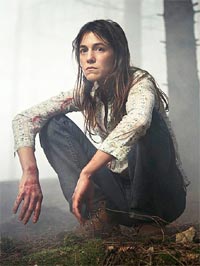
    Charlotte Gainsbourg in AntichristContinuing yesterday’s survey of the runners and riders in the race for the Palme d’Or…

    “ANTICHRIST” (Lars Von Trier)

    The pitch: You’ve seen the trailer. Charlotte Gainsbourg and Willem Dafoe star as bereaved parents who retreat to a remote woodland cottage to nurse their grief, only to be terrorised by unnamed forces of evil. (English dialogue)

    The history: Over his seven previous Competition appearances, Von Trier has enjoyed a gradual ascent from the Technical Grand Prize for 1984’s “Element of Crime,” to the Jury Prize for 1991’s “Europa,” to the Grand Prix for 1996’s “Breaking the Waves” (1996) to, at last, the Palme d’Or for 2000’s “Dancer in the Dark.” Nothing since then, however, with his masterful “Dogville” coming up surprisingly (and undeservingly) empty-handed.

    The outlook: The film may appear to be familiar (albeit bloody terrifying) horror fare in the trailer, but we should know by now never to presume what a maverick like Von Trier has up his sleeve. Cannes is usually averse to the genre, so whether the film made the lineup because it’s something more subversive, or simply because it’s directed by one of their favourite sons, remains to be seen. Either way, the film will need to be something special to get Von Trier back in the winner’s circle – after all, “Dancer in the Dark” proved so polarising, juries have been unwilling to take a chance on him since. He tends to put his actresses through the wringer, so perhaps there’s a chance for Charlotte Gainsbourg here – but who knows?

    “SPRING FEVER” (Lou Ye)

    The pitch: Erotic drama follows a young man hired to survey a married man’s homosexual affair; tangled relationships ensue as the spy and his girlfriend become sexually drawn to the adulterous couple. (Mandarin dialogue)

    The history: Not counting an unfortunate 2006 withdrawal after his “Summer Palace” fell foul of Chinese censors, this is Lou’s second Competition appearance.

    The outlook: There is a great deal of goodwill in the world-cinema fraternity for Lou, who has fought a continuous battle with the Chinese censorship board. His last film, the politically charged “Summer Palace,” resulted in the director receiving a five-year ban from filmmaking – a ruling Lou is flagrantly flouting by screening his new film (which was shot in secret on handheld cameras) at this year’s festival. It’s a courageous move, and I think there’s a strong chance the jury might like to demonstrate their support for the embattled auteur with a prize of some variety.

    (more…)