In Contention

Tag: Gigi

  • LIFE WITHOUT OSCAR: 1957 and 1958

    Catch up with the idea behind this series here.

    The Academy was knee-deep in blacklisting around 1957 and Best Adapted Screenplay was given to novelist Pierre Boulle for “The Bridge on the River Kwai,” despite him not writing the film or being able to speak English. The three hour epic dominated the proceedings and Lean’s masterpiece and subsequent work would help lay the groundwork for the genre we now know as “Oscar bait.” Ridiculously, “Sweet Smell of Success,” “Paths of Glory,” and “A Face in the Crowd” all received no love and could easily be featured in this column.

    1958 saw “Gigi” break records with nine Oscar wins, while the telecast ended twenty minutes early, leaving Jerry Lewis having to try and improvise for that amount of time on live television. Can you imagine Chris Rock having to do that today? I’d watch that in a heartbeat.

    Film industries from all over the world were blossoming and titles from this era are more accessible to us now so my choices have become harder and harder to make. If it comes down to it, I’ll err on the side of obscure because really, you all should know that “Touch of Evil” is required viewing without me saying so.
    (more…)

  • PAGE TO SCREEN: “Chéri” by Colette

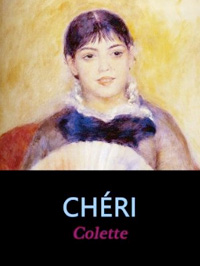
    Cover of Cheri by ColetteMerely casual acquaintances of French literature will likely associate the name Colette with her short story “Gigi” – or rather, the flouncy musical film adaptation thereof that swept the board at the 1958 Academy Awards. A sunny, sanitized interpretation of an intricate study in sexual politics, it captured the author’s sensibility in its lavish set-dressing, but little else.
    I doubt 1950’s Hollywood would have known where to begin with “Chéri,” a darker portrait of the louche demimonde of Parisian courtesans – and we are close to finding out if they do even now. Certainly, those who approach the novel with the jolly peals of laughter from the meringue-light trailer for Stephen Frears’ upcoming film still ringing in their ears, may be taken off-guard by the elegiac, often cruel comedy of manners that awaits them.

    Though “Chéri” is a slender, subtle volume, it’s easy to see what drew Frears and screenwriter Christopher Hampton to the material. Much like their previous collaboration, 1988’s “Dangerous Liaisons” (and other Hampton works such as “Atonement” and “Total Eclipse”), this is a story of sexual awakening gone awry — which is not to say that the novel lacks for romance. Amid the rueful cynicism lies a rather tender love story between two people who only realize they are in love a full six years into their relationship.

    The affair between Fred, an aimless 25 year-old dandy known to all by his family nickname Chéri, and Léa, a wealthy courtesan twice his age, is introduced in the novel as a pragmatic transaction: the beautiful yet increasingly insecure Léa feeds vicariously off her lover’s youth, offering material rewards and a sexual (if not sentimental) education in exchange.

    As such, “Chéri” is truly a coming of age story, a gender-reversed “Pygmalion” even, in which an older, more worldly woman grooms a boy for marriage, before releasing him into gentlemanly society. The twist comes when, the ink barely dry on the certificate of his marriage to sweet, shy debutante Edmée, Chéri discovers that carnal and sensual affections are not merely transferrable between different women. Léa, meanwhile, having undertaken this schooling for multiple men in her career and living by the philosophy that “being disinterested is its own reward,” realizes that she’s more emotionally invested in Chéri’s maturation than she knew at the time.

    (more…)

  • ‘Slumdog’ sweep joins Oscar’s actorless trio

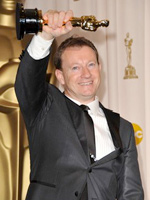
    Simon Beaufoy at the 81st annual Academy AwardsUPDATE: Okay, this is what happens when you skim emails too quickly and don’t do the research on your own.  I’ve corrected the statistical errors on my part.  THIS should be on the money:

    Not sure if this bit of trivia has already been consumed and digested, but thanks to Jeremy who sent it in weeks ago.  We’ve already talked at length about “Slumdog Millionaire”‘s Cinderella season marking the winningest awards streak of all time (Oscar, BAFTA, PGA, DGA, WGA, SAG Ensemble, ACE, ASC, CAS, ADG, CDG, USC Scripter — hell, even an MPSE honor).  But the film’s Oscar victory Sunday night also marked only the the fourth time a film won Best Picture, Best Director and a screenplay award without a member of the cast being nominated. The others were “Gigi” in 1958, “The Last Emperor” in 1987 and “The Lord of the Rings: The Return of the King” in 2003.

    I’ll read more carefully next time, I swear.

    Other interesting stats contributed by Speaking English and The Z:

    • “Slumdog” is the first film to win Best Picture and Best Cinematography since 1999’s “American Beauty.”

    • It is also the first Best Picture winner since 1984’s “Amadeus” to win 8 Oscars.

    • Additionally, it is the seventh film to win 8 Oscars after “Gone With the Wind,” “From Here to Eternity,” “On the Waterfront,” “Cabaret” and the aforementioned “Amadeus.”

    • This was the first year since 1994 that all acting winners had been previously nominated.

    • Sean Penn is the only actor to win twice this decade.  (Tom O’Neil also notes he is the ninth male actor to win two lead Oscars after Spencer Tracy, Fredric March, Gary Cooper, Marlon Brando, Dustin Hoffman, Tom Hanks, Jack Nicholson and Daniel Day-Lewis.  Twelve actresses have taken two.)

    • With Penelope Cruz’s victory, Woody Allen is now third behind William Wyler and Fred Zinneman for most performances directed to an Oscar with seven, Chad tells us.

    Anything else?