 I love it when the Academy steps out and provides us with a genuine shock that is so richly deserved you feel like weeping for joy that they got it…they really got it.
For all the ranting I do about the Academy’s lack of vision, every so often they pull something out of the air that so defies the odds, so stuns the critics and Oscar forecasters, it is a hearty reminder that these people do love film.
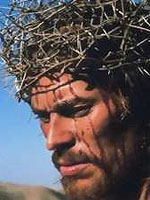
I think the first time I really stood and cheered a shocking inclusion was Martin Scorsese’s directing nomination for “The Last Temptation of Christ,” a powerful film that it took a great deal of courage to make, and an equal amount for the Academy to acknowledge given the storm of controversy the film faced upon release.
I remember going to see “Last Temptation” on opening day and asking one of the men picketing the film what he had thought. “Oh I haven’t seen it,” he stated, “my church warned me against it.” It was a clear indication of the power of religion over the masses.
Two years earlier I championed David Lynch’s being nominated for “Blue Velvet,” a dark and frightening film that Roger Ebert and Gene Siskel dissed at every turn. What would have made the year complete would have been a nomination for Dennis Hopper in the film as opposed to his supporting nod for “Hoosiers.”
In 1998 as I cheered when Canada’s Atom Egoyan found his way to the Best Director list for his haunting “The Sweet Hereafter.” The film had been named the year’s best by the Los Angeles Times and finished runner-up for Best Picture and Best Director in the New York Film Critics Circle voting. Not only was this a huge accomplishment for Egoyan, a uniquely gifted director, but for Canadian cinema.
Just last year, Sarah Polley was nominated for her screenplay “Away From Her,” which also earned Julie Christie a nod for best actress. In my opinion Polley should have been a nominee for Best Director as well.
I guess I wonder today, in this age of super Oscar campaigns, does the Academy really sit up and take notice of the daring work, or should most of the credit rest at the feet of savvy PR pushes? I have to think, at least in a number of cases, it has to be the Academy. The aforementioned films did not have the money to spend on any major campaign, of course.
So that leaves me feeling good about the AMPAS and what they are doing, despite my moaning. They are still watching and appreciating art in cinema, and the proof shines through form time to time.
Any bold choices you can think of to celebrate?
 Over the years I have been watching and studying the Oscars in earnest, since about 1974 (age 13). It has always been a nice surprise when an unexpected actor, director or film made the cut to the final five. It’s a special kind of high.
 The voice on other end of the line sounds nothing like the many wild and somewhat insane characters Dennis Hopper has portrayed throughout his career, which now spans more than 50 years. This is a man who has walked with James Dean (his mentor), John Wayne (who affectionately labeled him a “pinko”) and Francis Ford Coppola.
 Yes, how trite. Another list of the “best” horror films of all time. But this really is the most subjective of genres, is it not? What is scary to us all has slipped out of the realm of the universal and become much more of a personal thing.