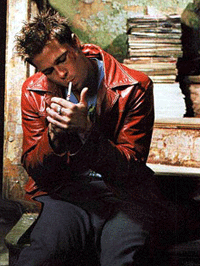
 With “The Social Network” hitting theaters this weekend, audiences are reminded once again of director David Fincher’s skill and vision as a craftsman. The eight films he has assembled throughout an 18-year career in feature filmmaking have been dazzling showcases for below-the-line talent.
As you know, we make an effort to keep the spotlight on these elements of the filmmaking process. Art direction, cinematography, costume design, film editing, makeup, music, sound and visual effects are all key ingredients, and Fincher has always been a director consumed by their implementation in his work.
The seeds of this, of course, were planted early on in his commercial and music video career. They seemed to reach a full apex two years ago with the period and effects detail of “The Curious Case of Benjamin Button” (racking up eight of the 11 total nominations Fincher’s films have amassed in these arenas), but each film in his portfolio sports below-the-line creativity and artistry worth singling out.
So it seemed to me a great opportunity to dedicate an installment of The Lists to the best craft elements of Fincher’s filmography to date. Let’s dive in…
 10. The cinematography of “Zodiac” (Harris Savides, 2007)
Fincher’s understated, masterful exploration of the havoc wreaked by a notorious Bay Area serial murderer in “Zodiac” was, as usual, packed with quality crafts flourishes. Most attractive, however, was his collaboration with cinematographer Harris Savides (their second). The photography on all of Fincher’s films has a glossy sheen that’s become a trademark, whatever the lenser. But in this case, Savides was able to play with the ominous overtones of the narrative visually, capturing a strikingly gorgeous mise-en-scène and yet one still informed by the director’s penchant for dark and gritty subject matter.
 9. The film editing of “The Social Network” (Kirk Baxter, Angus Wall, 2010)
The director’s latest film shows up just once on the list but that’s more a reflection of the wealth of choices than a dearth of quality below the line on “The Social Network.” Most fetching, probably, is the construction of the film by editors Kirk Baxter and Angus Wall. Despite forgoing a traditional three-act paradigm, the editing effortlessly mingles various events in time. Much of that is owed to a wonderfully visual screenplay by Aaron Sorkin, of course, but the cutters also integrate the film’s impressive CGI elements (which feature Armie Hammer portraying twin brothers) with ease.
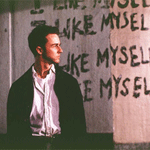 8. The art direction of “Fight Club” (Alex McDowell et al., 1999)
Clocking in with three entries, Fincher’s Chuck Palahniuk adaptation “Fight Club” is the dominant film on the list. And also sporting three entries, art direction has consistently proved to be a vital element of Fincher’s portfolio. The environments he captures have a tangible atmosphere and character unto themselves, and this 1999 lightning bolt of a film was no different. Whether it’s the thematically potent concerns of our main character’s home decor, the crisply assembled yet dreary and depressing world of corporate America or the grimy floors of a tavern basement, the design on this film is impeccable and unsung.
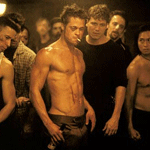 7. The sound mixing of “Fight Club” (Michael Semanick et al., 1999)
The only Oscar nomination “Fight Club” managed 10 years ago was for the fist punching, bone crunching and floor smacking chaos Ren Klyce and his sound editor colleagues had to cook up for the mix. But it wasn’t just the fight scene elements that made the sound effects stand out, it was the overall sonic identity the film managed to develop. That is owed in no small part to the ultimate mix of these elements, so rather than spring for the Oscar nominee here I thought it better to spotlight the work Michael Semanick and his team put into integrating it all with a separate element which will show up further down the list.
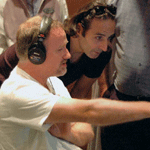 6. The original score of “The Curious Case of Benjamin Button” (Alexandre Desplat, 2008)
Fincher’s 2008 epic “The Curious Case of Benjamin Button” was a below-the-line dazzler. It didn’t get to 13 nominations without impressing each and every branch of the Academy, and one of the truly unique elements was a delicate, beautiful score from the always-working Alexandre Desplat. What was intriguing about the compositions was that Desplat employed musical palindromes for his themes, pieces that could play backwards as well as forward. It was a fascinatingly literal reflection of the narrative.
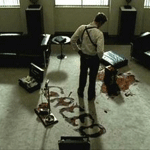 5. The art direction of “Se7en” (Arthur Max et al., 1995)
Moving back to design, Fincher’s 1995 coming out party “Se7en” (three years removed from his directorial debut but nevertheless the film which announced a hot young talent) is an art direction showcase. Interestingly, only the film editing was nominated by the Academy (not the two elements I’ve chosen). But the design in particular should have been there as each sector of a nameless metropolis is unique yet consistently of a piece with the narrative’s ominous, bleak and disturbing overtones. Every crime scene was its own hub of psychological torment and forensic detail. I can never shake the imagery.
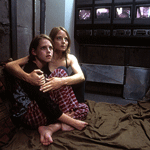 4. The art direction of “Panic Room” (Arthur Max et al., 2002)
One of Fincher’s lesser achievements, in this viewer’s opinion, was the 2002 thriller “Panic Room.” But despite narrative misgivings, I have to commend the design of the film, which went a long way toward creating an atmosphere and thematic texture to the piece. The setting almost becomes a character unto itself in David Koepp’s original screenplay, so it was imperative that Fincher regular Arthur Max and the art department execute the design to a certain standard. Of course it always helps when top notch cinematography captures your work well, and who could argue with Conrad Hall and Dariusz Khondji?
 3. The cinematography of “Se7en” (Dariusz Kondji, 1995)
Speaking of Dariusz Khondji, one would be remiss to exclude him and his contribution to the look of “Se7en” from a list like this. Every time I watch the film I’m rather dazzled by its blend of purposeful framing, fluid camera movement and, as always, balance of aesthetic beauty and harrowing imagery. No film in Fincher’s portfolio looks quite it, but it nevertheless feels of a piece with his work. Richard Francis-Bruce’s Oscar-nominated film editing lends a helping hand here because it’s a masterfully constructed film that never sacrifices Khondji’s work. The two elements are a wonderful tandem.
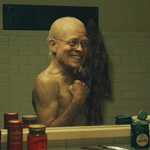 2. The visual effects of “The Curious Case of Benjamin Button” (Eric Barba et al., 2008)
The revolutionary effects on “The Curious Case of Benjamin Button” were a glorious return to form for the wizards at Digital Domain. Eric Barba and his team didn’t quite know the formula for success early on, but sometimes a hail mary pays off, and it did so in spades here. Moreover, the effects blend wonderfully with makeup work from Greg Cannom and his crew, making for a top-notch technical effort and some of the best CGI in years. The film handily walked away with an Oscar in this category and I think few would begrudge them that.
 1. The original score of “Fight Club” (The Dust Brothers, 1999)
But if I were to select one below-the-line element on a David Fincher film that stands out above all else, I would have to look to the bass thumping, jazzy-swinging, electronica stylings of The Dust Brothers and their original score for “Fight Club.” First and foremost, it stands perfectly well on its own as a qualified piece of music regardless of how it’s used in the film. But it nevertheless gives the film a distinctive identity unto itself, in some ways lifting it above the director’s other work (it may be his best film). Maybe it’s nostalgia (the soundtrack was a fixture in my vehicle CD player as a freshman in college back in 1999), but I’ll wager it’s one of the most underrated film scores of the decade and a truly exceptional contribution to Fincher’s work.
There we have it. No offense to “Alien³” and “The Game.” I just couldn’t find any room for them. What say you? Rattle off your picks for the best of Fincher’s below-the-line in the comments section, uh, below.
Comments
38 responses to “THE LISTS: Top 10 below-the-line elements of Fincher films”
I might add the score to The Social Network, which I just thought was FAN-TASTIC.
Ooh, nice approach on taking on a director’s filmography! Do one for David Lean next time.
If I were to make such a list myself, much would be included that is included here.. The only one I really disagree with would be Panic Room for art direction but not cinematography. Personally, if anything it was a showcase for Fincher’s ability with the camera. The Art Direction was solid, but probably wouldn’t make a top ten.
I went back and forth on that Graysmith, but in the end, chalked it up for art direction and made sure I mentioned how it worked so well with the cinematography (much of which was CGI anyway, mind you).
You already mentioned him a little, but I think Richard Francis-Bruce’s editing in Se7en deserves a top ten spot.
desplattttttt, i LOVE this man!
The score of benjamin button are a masterpiece!
What a great idea for a list. Totally understand how you couldn’t find room, but I love the costume design in “Fight Club” and “Zodiac” — both deserving of nominations in their respective years.
Costumes from Fight Club were THIS close.
Speaking of this, it’d be interesting to do a list of acting performances in Fincher films as well. He’s mostly just famous because of how technically fantastic his films are, but there would easily be ten list-worthy performances. A top five at the very least, anyway.
What – no love for The Game? His underrated masterpiece, to me, deserves a mention for the production design, art direction, music or maybe even his direction. SOMETHING.
I would have to second your number one pick…A truly revolutionary score.
Can there be a special mention for opening credits: Seven, Fight Club, Panic Room?
a list like this is tough, but in my opinion the man has gotten the best of brad Pitt in two of his movies. I’m looking forward to The Girl with the Dragon Tattoo and to see what he can do with that
Cinematography of Se7en would be my number one. Happy to see it so high in this list.
It probably doesn’t meet your criteria, but the title sequence of “Panic Room” remains the gold standard for opening titles for me.
Overall, visual effects for “Benjamin Button” easily takes my #1 spot.
I’m curious about the Panic Room titles. A number of people seem to like them but I’ve always found them a bit arbitrary and not all that enticing. Se7en, on the other hand…
They were foreboding and nifty.
But yeah I mentioned Seven as well because those credits have been copied by everyone ever since 95.
And to a lesser degree, Panic Room and Fight club have been aped here and there (most noticeably Fringe)
Opening credits for “Se7en” set the tone for the ominous sense of dread felt throughout the film. Fincher’s masterpiece.
“Panic Room”‘s titles represent a swift and electric introduction that immediately bring you into the film’s foreboding, paranoid universe. Though I should probably disclose that I like “Panic Room” a lot more than you apparently do, at least until Jared Leto’s character leaves the picture.
I don’t know that the titles do anything to bring you into that “foreboding, paranoid universe” that the score isn’t doing in that sequence.
Agree to disagree then. I enjoy the title sequence of “Se7en” as well, though for me “Panic Room”‘s stand out more for its brevity and energy.
His credits always rock, esp in Se7en… as for performances Pitt is his muse and he ALWAYS nails it out of the park for Fincher… that is why I anticipate any project they are both tied too.
Fincher also got some amazing performances, as mentioned everywhere, in The Social Network, the young cast did exceptionally well and the general public should have taken notice of these up-and-comers.
I actually thought that the art direction in Zodiac was gonna be in the top 5 at least.
The cinematography of Button is was fantastic
Great list of the various technical aspects of Fincher’s films. Such a talent guy and surrounds himself with talented individuals. Jesus, you got me wanting to watch Se7en and Fight Club. Don’t own Zodiac yet. Wish I did.
The 2 things that immediately come to mind when I think about ‘Zodiac’ are Ruffalo’s performance and the incredible art direction.
GREAT list though, Kris! I look forward to other topics like this. :)
The score of Benjamin Button is hauntingly beautiful! The song “Sunrise On Lake Pontchartrain” is my particular favorite. Knowing that Despalt employed musical palindromes to reflect the thematic of the movie just makes me appreciate his work even more.
The best score in a Fincher picture is the one used for The Social Network. Best Sound Fight Club and The Social Network. Best Editing is The Social Network, Zodiac, and Fight Club – sloppy-beautiful.
If I were to give Panic Room a single below the line compliment it would be to the DI colorist responsible for the Jared Leto blue fire.
Best cinematography – Zodiac, The Social Network, The Game, Fight Club and Alien 3 (his only feature shot with anamorphic lenses). All the cinematography in his films are standouts but Benjamin, Panic and Se7en overall don’t hold a candle to the others visually.
Best Visual Effects – The Social Network didn’t know the twins were a special effect!
The Game deserves some credit: The cinematography (Harris Savides) and production design are top notch.
And what a coincidence, when I started to read this list, I was listening the Fight Club Soundtrack.
Have yet to see Social Network, but I’ll add to the love for Zodiac… Growing up in the Bay Area, I vividly remember the Zodiac Killer. Parents were literally driving their kids across the street to school. The art direction and effects in the film blew me away – like going back to a time machine. Maybe that gives a bias, but Zodiac is easily my fave Fincker film… Haunts me still…
I’d have to go with Khondji’s cinematography on Seven (Savides was second unit and played the 911 operator). It was the single most influential thing in any of his films — a perfect combination of Gordon Willis’ under-exposed urban landscapes mixed with Vittorio Storaro’s bleach processing (though, to be fair, this was basically a bleach-skip whereas Storaro used ENR).
After Seven, every single serial killer movie has to look like this. And it also kick-started the whole ENR trend in the late ’90s until DI took over.
Love the list. I vote for Fight Club costumes though. I mean maybe for Brad Pitt’s red leather jacket alone. But everything for Marla Singer is brilliant too. And really- it’s just one of my favorite modern costumings. Awesome threads.
The Dust Brothers did the score to Fight Club? I didn’t know that, hats off to them, those guys are legends.
Top ten Fincher´s film quotes
Honorable Mentions:
“Get the fuck out of my house!”/Panic Room
“They fuck you and fuck you and fuck you, and just when you think it’s over, that’s when the real fucking begins! “/The Game
*
10. “Somebody call somebody”/Seven
9. “Easy, Dirty Harry”/Zodiac
8. “Sorry, my Prada is at the cleaners, along with my hoodie and my ‘fuck you’ flip-flops, you pretentious douche bag! “/The Social Network
7. “We have just lost cabin pressure. “/Fight Club
6. “You’re no messiah. You’re a movie of the week. You’re a fucking t-shirt, at best. “/Seven
5. “You’re not your fucking khakis. You’re the all-singing, all-dancing crap of the world. “/Fight Club
4. “First rule of fight Club is… you do not talk about Fight Club”
3. “This is your life and it’s ending one minute at a time. “/Fight Club
2. “Wanting people to listen, you can’t just tap them on the shoulder anymore. You have to hit them with a sledgehammer, and then you’ll notice you’ve got their strict attention. “/Seven
1. “I want you to hit me as hard as you can.” /Fight Club
The only thing I could think of is to move “The Social Network” up for editing and add “The Curious Case of Benjamin Button” for cinematography.
i still can’t believe how Fight Club was lost in the Oscar game in its year, after watching it years ago, it was downright one of the greatest movie for me, it doesn’t need to take years to develop a cult to realize the amazingness of this movie.
I would have gone for the cinematography, art direction and score for Alien 3. Especially the score, a magnificent piece of artistry by Elliot Goldenthal.
Love the list! I agree with others, a great way to look through a director’s work!
A minor quibble, I’m almost certain The Social Network had a three act structure.