 Catch up with the idea behind this series here.
So sorry to have neglected this column for two weeks but life got in the way. A life without Oscar, you could even say. 1951 saw some major shakeups in Oscar-land, with producers taking the Best Picture award rather than the studio for the first time in a symbolic shift away from Hollywood’s mogul origins. “An American in Paris” landed an upset victory over more typical Academy fare like “A Streetcar Named Desire” and “A Place in the Sun,” giving rise to a decade that would see the debut of cinemascope, 3D, VistaVision and a number of other gimmicks meant to enhance the theatrical experience.
The Academy would see fit to honor a number of extravagant but hollow titles throughout the decade, including 1952 winner, “The Greatest Show on Earth.” A gluttonous example of combating TV, it ironically won the first year that the big show was televised, easily becoming one of the largest commercial broadcasts in history at that point. (Video evidence!) Distracted by flashy colors and sets, the Academy missed the chance to honor these excellent titles.
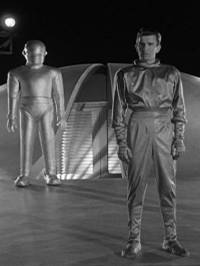
1951 – “The Day the Earth Stood Still” (Robert Wise)
Robert Wise is probably the most famous and accomplished director to come from one of the other technical crafts of filmmaking, specifically editing, where his credits include a little ditty called “Citizen Kane.” He won two Oscars for directing, yet remains an unsung hero because his ability to switch genres and styles effortlessly prevented any kind of recognizable continuity to his work. I mean, did you know the same man directed “West Side Story” and “Star Trek: The Motion Picture?”
“The Day the Earth Stood Still” came relatively early in his directorial career, which began with mainly genre efforts. A stone cold science-fiction classic, the Academy was not really known for embracing this type of film but it did walk away with a Best Picture nomination from the Golden Globes. The ultimate reward came last year when Keanu Reeves graced a big budget remake, the true sign of success.
In all seriousness, Wise does wonderful things on an obviously shoe-string budget, populating his film with ideas instead of special effects. Future Oscar winner Patricia Neal is the only real recognizable name in the cast list, but the performances are superlative throughout. Michael Rennie, in particular, hits all the right (difficult) notes as the alien, Klaatu. Essentially a fish out of water tale for a bulk of the runtime, Rennie could easily have descended into cheap comedy for his performance, but sticks to his stoic guns and comes out the better for it.
The concept of aliens invading with a message of peace is novel enough to remain fresh today, despite the overall “can’t we all just get along?” theme of the film, and elements of Christianity, being driven home a bit hard. The special effects are laughable, but used sparingly and beside the point. Wise and his team were able to use aliens landing as a launching pad for a leisurely paced, talkative study on morality (“Signs” anyone?). That’s something I would get on board for any day.
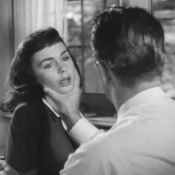 1952 – “Angel Face” (Otto Preminger)
It’s a tough title to live up to, but Jean Simmons certainly had a face to fit the bill. In Otto Preminger’s pitch black noir, she plays Diane Jessup, one of the most fatal of all femme fatales. Robert Mitchum finds out the hard way as an ambulance driver caught up in her spell. There may be no better beginning to an on screen romance than Mitchum walking up to a crying Simmons and slapping her in the face to calm her down.
While the cinematography by fourteen time Oscar nominee Harry Stradling expertly highlights the black and whites of the story, it’s the shades of grey inhabited by the characters that make it interesting. Mitchum is a sexist, unfaithful boor, but he genuinely falls in love with and wants to help Simmons. She is, well, let’s just say the title is not without irony.
In a tricky role that more or less carries the picture, Simmons absolutely kills it. Sexy, dangerous, vulnerable and manipulative sometimes within the same scene, it’s difficult to imagine a contemporary actress coming up with the same kind of performance. But to be fair, it’s even more difficult imagining a studio giving one the same kind of role.
Preminger was no stranger to making masterpieces of noir, this coming eight years after “Laura,” and here he directs with complete confidence. A lean 91 minutes are briskly paced and the camera is far more dynamic than other titles of the era. The only disappointment comes from a final twist that is meant to pack a powerful punch, but is so obviously set up and executed that it’s met with more of a chuckle.
As an example of the great Hollywood noir in it’s twilight years and a vehicle for the late, great Jean Simmons, it remains a must see.
Those are my choices. Have your say in the comments.
Comments
9 responses to “LIFE WITHOUT OSCAR: 1951 and 1952”
Couldn’t agree with you more, Chad, on the 1950s BP selections. By far the most disappointing group of BP winners, with the exception of (maybe) Gigi, Ben Hur, and From Here to Eternity.
My own selection for 1951 BP would be A Place in the Sun, but also love Strangers on a Train and I Want You.
The options are better for 1952. Absolutely love The Narrow Margin & The Captive City with John Forsythe; two small budget gems. Limelight and Singing in the Rain are classics. Much better than TGSOE, the eventual BP winner.
1951:
Angels in the Outfield
Father’s Little Dividend
Here Comes the Groom
I Want You
Strangers on a Train
1952:
Limelight
The Narrow Margin
Pat and Mike
Singing in the Rain
The Captive City
Just for the record, 1952’s High Noon is right up there with the best of the decade.
1951: I haven’t seen “The Day the Earth Stood Still” (yet), so my pick is Mikio Naruse’s “Meshi,” staring Setsuko Hara (who would later appear in Ozu’s “Tokyo Story”). Apparently it was not released theatrically in the US until 1984, by which time it certainly must have run afoul of any number of the Academy’s eligibility rules. Too bad, but then it’s not really an Oscar movie anyway.
1952: I’m torn on this year. Preminger’s “Angel Face” is indeed a great film, worthy of many nominations, but so are Nicholas Ray’s “The Lusty Men” and Josef von Sternberg’s “Macao,” both of which also star Robert Mitchum. So let’s just say that my 1952 pick is any one of these Mitchum films.
For me, 1951 is:
A Streetcar Named Desire
An Ace in the Hole
The Day The Earth Stood Still
Strangers on a Train
The African Queen
A Place in the Sun
The Steel Helmet
The Lavender Hill Mob
Early Summer
Quo Vadis?
On Dangerous Ground
The Red Badge of Courage
And for 1952:
Ikiru
Singin’ in the Rain
Umberto D
High Noon
The Quiet Man
Neighbours
The Bad and the Beautiful
Limelight
Feed The Kitty
Bend of the River
Mr. Hulot’s Holiday
Monkey Business
1951:
Albert Lewin’s “Pandora and the Flying Dutchman”
Robert Bresson’s “Diary of a Country Priest”
Robert Wise’s “The Day the Earth Stood Still”
1952:
Otto Preminger’s “Angel Face”
Akira Kurosawa’s “Ikiru”
Roberto Russolini’s “Europa ’51”
Can’t really talk about The Day The Earth Stood Still without mentioning Bernard Herrmann’s amazing score.
Apart from ET, I can’t think of another theme that’s as closely associated with interstellar visitors then the theme from that movie.
I think 1951 is interesting in Oscar history. As you mentioned, you had An American in Paris, A Streetcar Named Desire and A Place in the Sun all battling for Best Picture. When the American Film Institute would come out years later with its list of All-Time Top 100 pictures, all three were listed. But another movie from 1951 was ranked higher than these three: The African Queen. Ironically, it wasn’t even nominated for Best Picture in 1951. Can you give much weight to all the AFI movie rankings that have come out over the last several years – who knows?
***Apart from ET, I can’t think of another theme that’s as closely associated with interstellar visitors then the theme from that movie.***
“Close Encounters of the Third Kind?”
***Apart from ET, I can’t think of another theme that’s as closely associated with interstellar visitors then the theme from that movie.***
“Close Encounters of the Third Kind?”
I sit corrected. You are right.
I guess what I was getting at is that Hermann’s score really captures the more cartoony aspects of aliens’ representation in fiction.
Close Encounters’ music draws half of its power from the context (and I am a huge fan). The Day The Earth Stood Still is free of context. Our minds fill in the blanks.