 If you’re an awards geek and you haven’t yet discovered Nathaniel Rogers and friends’ series of “Best Pictures from the Outside In” discussions, you have a treat in store.
The premise is both eccentric and beautifully simple: word from both ends of the Oscar timeline, each episode pits two Best Picture winners against other for discussion, re-evaluation and occasional ridicule, with the comparison of two often wholly disparate films bringing out interesting elements in each other.
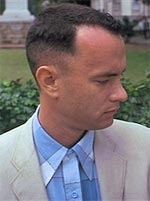
In the ring for the latest instalment are “How Green Was My Valley” and “Forrest Gump” — an appropriate match-up in that they are both sentimental pieces that beat out more daring, enduring works in their respective years, and have retrospectively become less popular choices for it.
I’m pleased to see Rogers, together with his two fellow bloggers Nick Davis and Mike ‘Goatdog’ Phillips, giving “How Green Was My Valley” more respectful attention than most people, who routinely dismiss it as “That Movie That Beat ‘Citizen Kane’” and little more.
It’s still a John Ford film, after all, and one of his most intimate, visually lyrical works, even if it succumbs to hokum on more than one occasion. As Davis so aptly puts it, it’s a film wherein “you really feel the cycles of the day and the season, sometimes within a single shot.”
They don’t, however, hold back on their mutual loathing for “Gump,” which I have to agree is one of the most artistically and ideologically objectionable films ever to wins Best Picture. (“Gump” and “Braveheart” back-to-back represent the Academy’s all-time nadir, as far as I’m concerned.)
So I, for one, took great pleasure in reading the guys list, with surgical precision, everything that is wrong with the film — which also read as a handy reminder of why “Gump” isn’t really like “The Curious Case of Benjamin Button” at all, whatever the latter film’s own problems. Among the most salient (to me, at least) points:
The way it keeps reminding us that being like Forrest (apolitical, passive, simple) is preferable to being like Jenny (political, searching, complicated).
How apolitical it got once the 1980s and the morally and politically corrupt Reagan era rolled around—where was Gump during Iran Contra, the hostage crisis, the savings and loan scandal, the erosion of the social safety net? Oh, right: he was inventing stupid catch phrases and silly iconic images.
The evaporation of any content, complexity, sensitivity, or stakes from the way we think about history.
Hell, yeah. Read the rest here, and catch up with the entire series here. It’s a blast.
Comments
9 responses to “Gumption”
‘How Green Was My Valley’ is ‘Crash’ of the 40’s. It’s insultingly moralising and ridiculously sentimental, but I always thought that John Ford had a problem with sacharine overdose, and unnecessary length in his movies; ‘The Quiet Man’ for example. (I am aware I’m in very small minority of people when I think he’s one of the most overrated directors ever).
As for ‘Braveheart’ , now there is a movie that gets unnecessary slack.
Pulp Fiction has gaping flaws.
The Shawshank Redemption is the only film whose crown Forrest Gump stole, and to that point, it’s an even more shocking upset. But Shawshank didn’t win ANYTHING that year, so the Academy was content with rewarding mediocrity once again that year.
I don’t know why there seems to be this effort among Oscar bloggers to try and stomp out the obvious similarities between Button and Gump. Sorry, they’re there, and if anything this discussion only strengthens that notion.
Doesn’t it also cheapen history with its Hurricane Katrina framing device and gratuitous shot of the shuttle launching from Cape Canaveral? Did Brad Pitt not also sport a laughable southern accent? Did it not also contain misogynist plot elements to make Benjamin preferable to Daisy? Wasn’t that stupid hummingbird pretty much the same as the feather? Weren’t Queenie and Tizzy offensively racist stereotypes painted in broad brushstrokes by the screenwriter? I mean, for crying out loud, they even mention The Curious Case of Benjamin Button in their discussion!
I know there are some of you who liked elements of the film, but you guys have to learn to let this issue go.
“Pulp Fiction has gaping flaws.”
Such as? Really, I’d like to know how one of the most influential films of the 90’s was somehow not deserving of a Best Picture win. I can definitely understand an argument for The Shawshank Redemption, but to say that Tarantino’s magnum opus didn’t deserve it due to a lack of quality confounds me.
Hamer: I’m not really a “Button” defender — I don’t like the film much. I just think the similarities to “Gump” don’t go far beneath the surface. But let’s not go there again.
Agreed. That was then, and this is now.
Looking at some of these discussions, it’s surprising and entertaining to see these guys link two seemingly unrelated films together. It’s really quite brilliant, though, because they reveal things about both movies that you don’t really catch when you take them on their own.
I’m sorry to be the one to have to come to Forrest Gump’s defense, but it is a movie I’ve loved for too long, and one of the reasons I love it is because it approaches life with a simplicity and lack of cynicism that is beyond most people. I think it’s the same reason some people were annoyed by Poppy in Happy-Go-Lucky (my favorite performance from last year), because she holds a world-view that people can’t begin to grasp. I think it’s the same with Forrest. The story is told through his eyes, through the way he looks at life, through how he does good because it’s the only thing he knows, he runs just because he feels like, and I love the way he rationalizes everything. There are scenes in the film I love, including the Watergate scene, the running sequence, the fishing boat sequence, and so many little historical details, and maybe because I’m foreign, but this film introduced me to many pieces of American history (that I later researched and got the real story from, but the film made me aware of Watergate for example). And, I think the evaporation of complexity, sensitivity and stakes is necessary in this story, because Forrest doesn’t think in those terms. Don’t forget who your narrator is. And, by the way, the reason I loved this film more than Benjamin Button is because I felt the characters were more unique and the events were more entertaining to go through. That’s just my two cents.
By the way, I also loved The Shawshank Redemption and I enjoyed Pulp Fiction (though Tarantino is a bit too over-the-top for me at times).
Fair enough, Isaac — though I don’t think it’s necessary for a film to be of the same mindset as its protagonist.
That said, since you compare the two, I love “Happy-Go-Lucky” (which I think manages to make social statements outside of Poppy’s headspace), I despise “Forrest Gump” … so I am only a cynical bastard half the time!
It looks like their disagreement with the film is ideological rather than artistic, which makes their rant a bigoted one. I mean, does one ask why Pol Pot’s cruelty wasn’t displayed in the Dear Hunter or Platoon? No. When a film makes an ideological point, it drills down into territories that it deems relevant to that very point. That’s why the Reagan area is presented as serene. That’s why conservative values are put on the pedestal.
And all this does not make a bad film. Just like nobody’s calling Platoon’s a weak film because of its obvious orientation.
Next week is Schindler’s List and Mrs. Miniver. Should be an interesting discussion.