In Contention

Tag: Warren Ellis

  • Listen to portions of Cave and Ellis’s ‘Road’ score

    The second selection is the overriding theme of the piece that I remember playing throughout the film. Beautiful stuff, aka, the kind of the the Academy’s music branch wouldn’t know how to appreciate.

    Also worth mentioning is “White Lunar,” a collection of some of the duo’s film music compositions.

    (Courtesy: The Playlist)

  • SHORT TAKE: “The Road” (**1/2)

    The RoadTelluride Film Festival

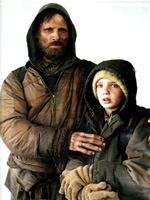
    There is a moment maybe three quarters into John Hillcoat’s “The Road” when it becomes clear that atmosphere may have been preferred over characterization: Viggo Mortensen’s character — known simply as “The Man” in Cormac McCarthy’s original fiction and nameless here — sits by a fire, wary of a cataracts-ridden old-timer (Robert Duvall) who couldn’t defend himself, much less harm a child.

    Rather than soak in the opportunity to finally, for the first time in who knows how many years, have a simple discussion about life, sons, the world, whatever, he holds a steady, paranoid gaze on the man, protective of his boy (Kodi Scott-McPhee), the idea of The Man’s deteriorating sense of humanity hammered home precisely.

    It’s an element of the film’s thematic conceit, to be sure, one present in the book (though not as embossed), but it comes at the expense of what would be natural.  Of course, “The Road,” both on the page and on the screen, is meant as symbolism in more than a few instances, but what may have worked in one’s mind, reading McCarthy’s easy-going prose, has been lost in translation here.

    (more…)

  • TECH SUPPORT: Best Original Score — Volume I

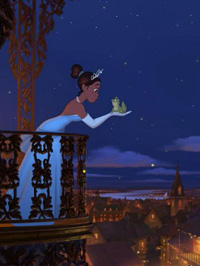
    The Princess and the FrogAs long as humanity has been recording history, music has been immensely important in society. Not only can it be joyous and entertaining, but it can capture the mood and feel of a time and a place. Cinema has been no exception in this regard.
    The creation of original music for a film is awarded by the Academy in the Best Original Score category. The composer has one of the most difficult and lonely jobs in filmmaking. Almost always arriving at the end of the editing stage, he or she has to fashion music appropriate to the mood of a film.  But when a composer does a magnificent job, the result can be iconic.

    This category tends to awards its favorites. It is notoriously one of AMPAS’s most insular branches (though it has warmed up to newbies slightly in recent years). It also tends to award music that features prominently in the films.  From this vantage point, however, it is always hard to guess which films will find themselves in contention, largely because we have not heard the scores.

    An exception in this regard is Michael Giacchino’s work on Pixar’s “Up.” Giacchino, who was nominated two years ago for “Ratatouille,” has once again composed a soundtrack which can be sad, joyous and suspenseful. The film is likely headed towards a Best Picture nomination, and I suspect a citation here will follow.

    Another animated film which may very well end up in contention is “The Princess and the Frog.” The music is being handled by Randy Newman, clearly beloved by the music branch. I remain skeptical of how this film will be received and, in any event, think that Best Original Song may be the more likely spot to consider for this film. However, Newman’s name means a lot and there are few other favorites in the running this year.

    (more…)

  • ‘The Road’ gets a release date

    (from left) Viggo Mortensen and Kodi Scott-McPhee in The RoadJohn Hillcoat’s adaptation of Cormac McCarthy’s “The Road” has been a big question mark for film-goers ever since it was yanked from the 2008 awards season.  I heard at the time (second hand) that the film was in disarray and needed to be “completely taken apart.”  Brian Kinsley, you may recall, reviewed the screenplay (essentially a cut-and-paste job) for us back in September.
    Whatever needed to happen seems to have happened as I’ve been hearing great things here and there, mainly for Viggo Mortensen’s lead performance.  And now, according to The Weinstein Company’s website, the film has finally nailed down a 2009 release date for the film: October 16.

    This is great positioning if TWC/Dimension is to take the genre film route with marketing, and from what I’ve heard, that would be the smart play.  Two weeks before Halloween and decent exposure in the middle of the awards season gives the studio some leverage on where to take it.  Audience and especially critical approval will tell the tale soon enough.

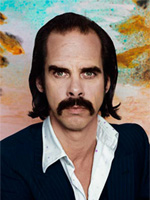
    In case you missed it, Guy wrote up a recently revealed gallery of conceptual art work for the film earlier this week.  I’m most looking forward to Nick Cave’s work with Warren Ellis on the film’s score, as their collaboration on “The Assassination of Jesse James by the coward Robert Ford” in 2007 was absolute magic.  Cave talked about his work in the film industry with the LA Times last year.

  • Nick Cave on film, music and committees

    I can’t think offhand of an upcoming film score that I’m more eager to hear than Nick Cave and Warren Ellis’ work for “The Road.” Their dark, elegiac score for “The Assassination of Jesse James by the Coward Robert Ford,” which wove together a panoply of Americana with a smattering of modern influences, was one of the great overlooked achievements of last year.

    Of course, “The Road” reunites Cave and Ellis with director John Hillcoat, with whom they collaborated on “The Proposition” — the fascinating Outback “Western” that Cave himself also scripted. “The Proposition”‘s score was another sonically dense, richly atmospheric affair, and I expect them to repeat the feat on “The Road.”

    All of which brings me to this interesting little interview with Cave, taken while he was recording for “The Road” in London. He’s long been one of the most articulate, intelligent guys in rock music, and he offers quite generous insight here into his deliciously strange creative process. There’s also this rather matter-of-fact perspective on working for film:

    The whole film business, everything is done by committee, it would seem. So what you feel about what you’ve created is highly irrelevant in the process of making a film. You hand something in and the worth of it is judged by people you’ve never even seen, so it’s mentally frustrating in that way, but at times it’s hugely enjoyable because the kind of agony of original creation, of having to think of the actual idea and the theme and what you’re going to write about and all that kind of stuff, which is really very difficult, the toughest part of songwriting for me, is not there. You’re simply supplied everything by what’s on the screen.

    (more…)

  • Could two potentially great film scores get the AMPAS shaft this year?

    It’s a debate that never gets old regarding the music branch of the Academy of Motion Picture Arts and Sciences. When is it going to clean house regarding shady rules that seem to fly in the face of what the organization sets out to do each and every year: honor the best in cinematic achievement?

    The foreign film committee had a major shakeup last year, and promises of attention were made, but it’s high time the same happened with the musicians. One of the rules seems poised to become a serious talking point later this season, however.

    Within Rule 16B of the Academy’s eligibility guidelines — launched into infamy last year when the caca hit the fan regarding Jonny Greenwood’s “There Will Be Blood” score — you’ll find the key language:

    Only the principal composer(s) or songwriter(s) responsible for the conception and execution of the work as a whole shall be eligible for an award. This expressly excludes from eligibility…scores assembled from the music of more than one composer.

    Specifically, it’s Rule 16B-5f. And it will likely affect two promising works of film music composition this year.

    (more…)

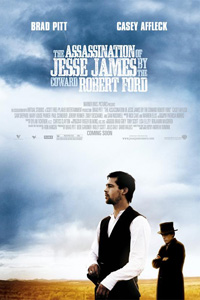
  • REVIEW: “The Assassination of Jesse James by the Coward Robert Ford” (****)

    The Assassination of Jesse James by the Coward Robert FordIn 1983, author Ron Hansen crafted a novel that ought to be considered mandatory reading for anyone fancying himself or herself attracted to the western as a genre and as a conveyor of essential truth. A Shakespearean account of betrayal in the old west, Hansen’s masterful sketches revealed deep and vibrant characters that transcended the nickel-book mythology into which they inevitably found themselves woven.

    Twenty-four years later, filmmaker Andrew Dominik has accomplished a visual telling of that story as close to cinematic perfection as you could hope for. At the risk of sensationalism, I would call “The Assassination of Jesse James by the Coward Robert Ford” the most accomplished work of moving imagery committed to film in nearly a decade. It is a staggering piece of true cinematic art.

    The tale is as simple as it is complex, a trait shared by the greatest of western storytelling. Jesse James (Brad Pitt), the infamous outlaw of old, found himself the subject of obsession, fascination and idolatry by the young and ambitious Robert Ford (Casey Affleck). A yearning to touch greatness, or even reside in similar territory, drove Ford to seek out acceptance amongst James and his gang of outlaws in the waning years of the 19th century. A lethal combination of angst, envy, hubris and government sanctioning brought Ford to a place on April 3, 1882 where firing a bullet into the back of James’ skull seemed the logical course of action. And so it was.

    Dominik and director of photography Roger Deakins have framed the legend of James in some instances by blurring the outer edges of the frame. Perhaps the intention is to convey a legend we know little about, given the cloud of mythology that surrounds actuality. But there are depths of reality here that speak to some fairly grandiose truths, and that, I think, is what Dominik is driving at.

    With all the sensationalized accounts, all of the larger-than-life depiction, there is true poetry in the life and death of the outlaw. And there is true poetry in his assassin’s regret. Myth is born out of realism, and Andrew Dominik, an Australian, seems to understand the American western better than any contemporary, and many who paved the way before him.

    (more…)