In Contention

Tag: The Missing

  • 1976: the last hurrah of the American western

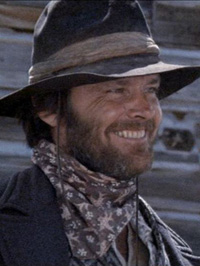
    Jack Nicholson in The Missouri BreaksThe western was not yet dead in 1976 when  four high-profile installments were released to varying degrees of success. Four years later, of course, Michael Cimino’s “Heaven’s Gate” would kill the genre for several years (and United Artists for longer), and though it has seen ups and downs in the years since, for the most part, the western remains one of the least popular genres with studios.

    In my opinion, Cimino’s film was never as bad as the critics said it was at the time.  Many of them were lying in wait for a Cimino failure, hoping to ambush him for the lies told during the press interviews for ‘The Deer Hunter,” which won the man an Oscar and was the Academy’s choice for Best Picture. He was not a Vietnam veteran, he had never seen Russian Roulette used as torture, in fact he had never been out of America until he made the “The Deer Hunter.”  This all but ruined Cimino’s reputation, which is somewhat sad because the man had a hell of an eye for detail.

    That of course was the issue with “Heaven’s Gate”; though stunning in its detail, the film is insufferably slow and ponderous, with perhaps two truly stunning sequences, the best among them the community roller skating sequence, which pulsates with energy driven by a young man, the film’s composer David Mansfield and his fiddle, as they skate around the rink, veering in and out of surrounding bodies.

    There was a time in the 1950s and 1960s when 20% of the films coming out of Hollywood were westerns. There were 26 prime time western programs on television, all popular, and John Wayne ruled as the top box office star. By the 1970s, westerns were made less frequently, and Wayne’s box office throne had been usurped by another star of the genre: Clint Eastwood.

    (more…)

  • Can Ron Howard give ‘Frost/Nixon’ the edge it needs?

    Ron HowardIn 2000 I remember reading a post on Ain’t It Cool News by Harry Knowles.  Having seen an unfinished cut of “How the Grinch Stole Christmas,” the Ron Howard film based on the beloved Dr. Suess story and animated program, Knowles believed that the film would redefine Howard as a filmmkaer, elevate him to a higher level and be the film he would be remembered for.

    Knowles felt it was a greater achievement than “Apollo 13” and pretty much anything else the director had done, that Howard had given us the fantasy film we had been waiting for. Admittedly the effects were incomplete, but Knowles was confident what he saw was a masterpiece.

    Granted it was Harry Knowles, but then, of course, the film was released, critically crucified, reasonably successful before hitting DVD where it is not even regarded as a Christmas classic. You know why? Because it was not very good.

    Whatever Knowles saw, and I am sure he saw something he felt was exciting, did not transfer to the final cut. Instead we had a busy film with a massively over-the-top performance from Jim Carrey and these bizarre little creatures with odd makeup called “Whos.” Christine Baranski was in heat for the green misanthrope, though she had not seen him since he was a wee Grinch, and the town’s mayor was still the pompous windbag he had been in school when he had humiliated our hero and sent him off to the mountain where he now resides.

    They searched the continent of North America to find the right little girl to play Cindy Lou Who, and I suppose Howard thought they had found her.  Wrong.

    One year later Howard won the Academy Award for ” A Beautiful Mind,” one of those wildly over-praised films that somehow win Oscars over better efforts like “The Lord of the Rings: The Fellowship of the Ring” or “In the Bedroom,” or the un-nominated “A.I. : Artificial Intelligence.”

    For my money, Ron Howard has struck gold just once, with the brilliant “Apollo 13,” a superb piece of filmmaking. The Academy awarded the film with nine nominations, but stunningly, despite having won the Directors Guild Award for Best Director, Howard was not among Oscar’s list of helmers. What a terrible slap in the face that must have been!

    In the years since “How the Grinch Stole Christmas” Howard has matured as a director, giving us a superb western that nobody saw called “The Missing,” with outstanding performances from Cate Blanchett and Tommy Lee Jones, and the extraordinary “Cinderella Man,” for which he and Russell Crowe should have earned Oscar nominations.

    If this generation of directors has a filmmaker that resembles Frank Capra, I suppose Howard is the closest we have, though I am not suggesting he is in the same league. Howard is a good director, not a great one.

    Which brings me to my point: I wonder if he can bring the edge needed to make a film like “Frost/Nixon” work?

    (more…)