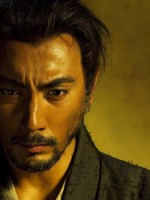
 The director: Takashi Miike (Japan)
The talent: Leading man Ebizô Ichikawa is a well-regarded Kabuki actor with a short screen résumé. International audiences are likelier to recognize his more senior co-star, Kôji Yakusho (“Shall We Dance,” “Babel”), who worked with Miike on the recent “13 Assassins” (currently in US theaters, reviewed here). Also returning from Miike’s last samurai epic is Oscar-winning producer Jeremy Thomas (“The Last Emperor”). He’s not the only Oscar-winning “Emperor” alumnus here: revered composer Ryuichi Sakamoto is on board. Finally, a note for trivia buffs: costume designer Kazuko Kurosawa is Akira’s daughter, so I’m guessing she knows her samurai.
The pitch: After this year’s Berlinale effectively sanctioned the union of 3D and the arthouse, Cannes is following suit: Miike’s latest is the first 3D film to play in Competition. That gimmick aside, “Hara-Kiri” sounds classical enough. Based on a Yasuhiko Takiguchi novel that was previously filmed in 1962, the film centers on a failed samurai whose request to commit ritual suicide is dismissed by his commander — the starting point for a tangle of backstories leading to (what else?) “a tense showdown of vengeance.”
 On my way to Tom Tykwer’s latest, so no time for an intro. Further rounding up highlights (and lowlights) of the Venice competition lineup: