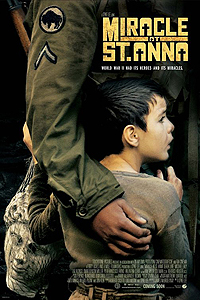
 Spike Lee knows how to mount a natural tension behind the camera. He knows how to create powerful scenes. He knows how to weave theme and yes, even subtext into his narratives. But more often than not he fails to put these gifts together in a successful piece that gets out of its own way and provides a complete experience.
“Mircale at St. Anna” isn’t the nosedive that “Bamboozled” takes half-way through. It isn’t the vibrant mess of “Mo’ Better Blues” and it sure isn’t the ineptitude and stylized aggression of “Inside Man.” Indeed, it is probably the filmmaker’s most unique effort in a number of years. But despite a few sequences that remind the viewer of the skill and artistic ability of its director, it is mostly a narrative strung along and together by poor performances (at least one of them awful) and unfocused screenwriting.
The story begins in Manhattan in the present day. A murder in a post office. Casual, but purposeful, and full of mystery. A giant stone head, a relic, discovered in the perpetrator’s home. The intrigue on high so much that we can forgive the out-of-place and unnecessary, “Pilgrim, we fought for this country, too” that the character spoke not five minutes earlier (a typical on-the-nose Lee aside but also entirely out of keeping with the character’s motivations).
A reporter is digging at the truth. “I know who the sleeping man is,” the shooter tells him. We’re hooked; what will the flashback have in store to explain all of this peculiarity?
Not a whole hell of a lot, as it turns out. We’re zapped back in time to World War II in the countryside of Italy. The Buffalo Soldiers division, a group of African American soldiers referred to as an “experiment” by one blatantly racist commander played by Robert John Burke, will be our company throughout.