 Welcome to the new season…
• “‘The Help’ isn’t racist. It’s critics are.” [The New Republic]
• Pete Hammond takes note of indies looking to make Oscar plays this year. [Deadline]
• Steve Pond talks to “Midnight in Paris” star Corey Stoll. [The Odds]
Welcome to the new season…
• “‘The Help’ isn’t racist. It’s critics are.” [The New Republic]
• Pete Hammond takes note of indies looking to make Oscar plays this year. [Deadline]
• Steve Pond talks to “Midnight in Paris” star Corey Stoll. [The Odds]
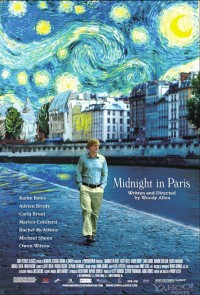
One of the biggest delights of the year for me was Corey Stoll’s performance as Ernest Hemingway in Woody Allen’s “Midnight in Paris.” I had a giant grin on my face, ear to ear, the whole time he was on screen. So I’m glad David Poland dedicated one of his long-form interviews to the actor.
 Cannes Film Festival
Opening Night
“The past is a foreign country: they do things differently there.” Nobody actually quotes L.P. Hartley in “Midnight in Paris,” Woody Allen’s often charming if largely over-explicated ode to the healing and deceiving properties of nostalgia. If they don’t, however, that could just be because a spring breeze stole the last few pages of the script at some point on the shoot of this amiably unfinished choux-pastry film, and Allen didn’t feel much like rewriting them.
Up until that point, Allen hasn’t exactly shied away from obvious references or externalized subtext — this is a film that trades in emphatic cultural and historical caricature, a picture-book approach that will delight some viewers even as it strikes others as aggravatingly twee, but one Allen commits to with the take-it-or-leave-it dispatch of a 75 year-old master working in quick-sketch mode.
Either way, the tourist-style filmmaking that surfaced in such recent Allen films as “Match Point” and “Vicky Cristina Barcelona” feels more thematically motivated in “Midnight in Paris,” a study of a character not merely a traveller in his physical surroundings, but his generational ones too. I kept wondering if the film’s narrowness of perspective was that of Allen or Owen Wilson’s Allen-substitute protagonist, and what textual difference the distinction even makes.