 One of the biggest surprises of the awards season for me is the fact that “Revolutionary Road” is being all but forgotten by many critics groups and has certainly slipped off the Oscar radar as a result. Is the film deserving? Absolutley. I think it is one of the best films of the year and among the finest I have seen this decade, but for whatever reason — and who can explain these things — it has not gotten a great deal of press.
This is a major accomplishment, a work of art superbly directed by Sam Mendes who in eight years has become one of the most exciting directors in modern cinema. Though I count myself among those who though his breakthrough film “American Beauty” was very good but also radically over-praised, his follow-up, “Road to Perdition,” was superb and should have been among the nominees for Best Picture and Best Director in 2002, vastly superior to “Chicago.”
His third film, “Jarhead,” was darkly beautiful to look at but didn’t quite work with audiences who are still not interested in films about Afghanistan or Iraq (whichever installment). Mendes possesses a gift with actors, one of those directors like Woody Allen, Martin Scorsese and more recently, Paul Thomas Anderson. He’s able to bring out their best work. It seems no surprise he married an actress.
He is also patient with a narrative, allowing it to unfold with the knowledge the audience connects with the actors. With “Revolutionary Road,” he has cranked out a crowning achievement in a career just getting started, and yet like so many other masterworks, it may slip through the cracks, barely noticed.
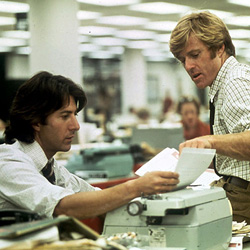 When critics and historians of the cinema sit down to discuss uh, cinema, the conversation almost always turns to the great decades in movie history. And n nearly conversation I’ve been a part of, the 1970s reigns supreme as the single decade of brilliance.