 Catch up with the idea behind this series here.
“All the King’s Men” won the Best Picture prize in 1949, appropriately closing the book on the decade of socially conscious dramas hogging all of the attention. Somewhere, an eight year old Mike Medavoy sat in a dark theater watching and said, “I’m gonna grow up and produce a lifeless remake of this film. That’s what I’ll do.”
The 1950’s were kicked off with “All About Eve” earning a record breaking 14 nominations and narrowly pipping “Sunset Boulevard” to the top prize. Again, the selection was appropriate as the two show business stories represented the new decade that would be considered a new “Golden Age of Hollywood”. As per usual, the Academy couldn’t fit all of the masterpieces into one show so the following missed the cut but are worthy of your time.
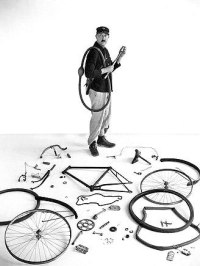
1949 – “Jour de Fête” (Jacques Tati)
Jacques Tati’s first feature came four years before his international breakthrough, “Mr. Hulot’s Holiday,” and doesn’t feature that titular character that would become his trademark, but it does feature all of the great things you would expect from a Tati comedy. Chiefly, that entails a lovable protagonist bumbling through his day to day life oblivious to the changing world around him and the effects his interactions have on it.
Tati plays François, a diligent but awkward postman and just like his later turns as Monsieur Hulot, it is a mostly silent performance. It’s his gift for pantomime and physical comedy, and not necessarily slapstick, that makes him such an endearing cinematic figure. If you only associate physical comedy with getting hit in the nuts with a baseball, then you need an education on how it can be smartly utilized.
Watch out for the colorized version, which takes away from the old school charm, both in the camerawork and cinematography, even though Tati originally intended for the film to be in color. While he would later become obsessed with milking jokes out of the technical aspects of film (absurdly elaborate sets, exaggerated sound design, 70mm photography), “Jour de Fête” revels in simplicity. Some would argue that to be a more difficult task to pull off.
It’s hard not to see the influence that Chaplin and Keaton had on Tati, just as it’s hard not to see the influence this film had on Tim Burton for “Pee Wee’s Big Adventure,” and we’re hopefully at the beginning of a new wave of awareness for Tati thanks to his posthumous involvement in “The Illusionist.” Yet, even some of my filmmaker friends have never heard of him (he did only make five films) and if that’s the case with you, there’s no better place to begin your education than right here.
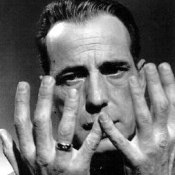 1950 – “In a Lonely Place” (Nicholas Ray)
Here’s a little secret for you. Nicholas Ray is probably the most underrated big Hollywood filmmaker of the 1950’s. Yeah, he directed “Rebel Without a Cause,” which is universally acclaimed, but not many can identify him as the director of that film and it also happens to be one of his lesser works. The crown jewel in a mighty filmography might be this pitch black noir featuring what might be my favorite Humphrey Bogart performance of all time.
Bogart plays a down on his luck screenwriter (which could explain the snub since William Holden and “Sunset Boulevard” had this angle covered), who meets a gregarious hat check girl and through various circumstances becomes the chief suspect in her murder. While the film is set up perfectly to be a standard whodunnit story with mixed motives and shady supporting characters, it never takes that route. Instead, the film mainly focuses on Bogie as he develops a relationship with Gloria Grahame, who lives across the way and served as a possible witness to the crime. As their love grows, so does the dark cloud of suspicion around him.
Brilliantly switching gears and perspective half way through, the audience suddenly never quite knows how they feel about Bogart’s supposed innocence, until the final gut-twisting scene reveals that it doesn’t even matter. That’s not to say that the movie cops out with the answers to the mystery, but that with it, Ray reveals a whole underbelly of thematic nuance that blew my mind. I couldn’t believe that a film from this era could have ended on such a morose note. Granted, it’s a noir and happy endings weren’t always in the cards, but this film seemed to subvert endings in general, let alone happy ones.
Bogart’s character is wonderfully idiosyncratic. Capable of violent outbursts, yet believably tender when it comes time to sell his quicky romance with Grahame. The film relies on us constantly changing our mind about him and Bogart makes that easy. Grahame, to her credit, has all of the heavy lifting to do in the third act. Never quite sure whether to follow her head or her heart, it’s her devastating performance in the last scene that makes the film such a classic. Reviewers didn’t quite know what to make of it at the time, being a mix of old school romance and new-school noir, but it’s reputation grows by the year and deservedly so.
Those are my choices. Have your say in the comments.
Comments
15 responses to “LIFE WITHOUT OSCAR: 1949 and 1950”
“The crown jewel in a MIGHTY filmography MIGHT be this pitch black noir featuring what MIGHT be my favorite Humphrey Bogart performance of all time.”
LOLZ. I will be adding that to my queue because of that sentence.
“…my favorite Humphrey Bogart performance of all time.”
I love how this sentence can describe several Bogart performances, including ones I’ve never heard of (like In a Lonely Place). It just shows how great an actor he really was, and how he affected audiences in different ways.
I happened to see In a Lonely Place for the first time a few weeks ago, and I completely agree with Chad. Great, great film, and Bogart really is fantastic in it, it’s one of my favorite performances of his as well.
Yeah, “In a Lonely Place” is the shit. And “They Live By Night” would be one of my contenders for 1949 inclusion — Ray really hit the ground running.
Allow me to add shout outs for “Kind Hearts and Coronets” (directed, as it happens, by one Robert Hamer) and “Night and the City.” The failure of Alec Guinness, at least, to secure a nomination for the former was all kinds of crazy.
“Somewhere, an eight year old Mike Medavoy sat in a dark theater watching and said, ‘I’m gonna grow up and produce a lifeless remake of this film. That’s what I’ll do.’ ”
Ahaha this gave me a good chuckle.
Those are two outstanding choices. You’re 100% right about Nicholas Ray.
As alternates I’d offer Kurosawa’s Stray Dog for 1949 and either Anthony Mann’s Winchester ’73 or Bunuel’s Los Olvidados for 1950.
Haven’t seen the 1949 choice but the 1950 selection of In a Lonely Place is a good one.
As much as I like the book version of “King’s Men,” the film version is a bit dull. Never did see the Sean Penn version, but is it really THAT bad?
I was surprised to see how many GREAT films I had at home from 1949- a few that probably should have fared better than King’s Men in fact. Particularly, Gene Kelly’s On the Town and the Jimmy Stewart/June Allyson baseball film, The Stratton Story. Mix in a great film noir in Robert Ryan’s The Set-Up and 1949 was a pretty good year.
How The Third Man didn’t even crack 1950’s BP nominees is criminal. By far my best film of 1950. A few little-known gems like Dial 1119 and The Next Voice You Hear round out the year.
Incidently, what happened to all the discussion on this great series? Only 9 comments for the last entry? Come on, people. Get out and see the classics!
1949:
Adam’s Rib
The Girl from Jones Beach (guilty Reagan-Mayo pleasure)
The Foreign Correspondent
On the Town
Scene of the Crime
The Set-Up
Side Street
Take Me Out to the Ballgame
They Live By Night
The Stratton Story
The Window
1950:
The Asphalt Jungle
Dial 1119
The Next Voice You Hear
Union Station
The Woman on Pier 13
I have not seen the Tati film, so my 1949 pick would be Yasujiro Ozu’s “Late Spring.”
As for 1950, “In a Lonely Place” is indeed a great film, but I like Jean Cocteau’s “Orpheus” just a bit more.
I agree with Mark; more attention needs to be paid to Chad’s series via the discussion boards. At any rate, if people feel like they don’t know much about the movies that, at least, I pick, I’ve provided more info–director, country of origin and a line about why you should see these. I should say here, as for all my answers to Chad’s impassioned, well-reasoned series, that I haven’t seen everything I should have seen. I’m saving some great stuff for later. Anyone who doesn’t, I feel sorry for. Anyway, these are a start:
For me, 1949 is:
The Set-Up (Robert Wise…US; real-time noir jaggedly, succinctly directed and performed)
The Third Man (Carol Reed…UK; the classic, of course, but ever so slightly overrated; Orson Welles is the supporting actor of the year)
On The Town (Gene Kelly and Stanley Donen…US; one of the best musicals ever, and the beginning of New York location shooting)
Kind Hearts and Coronets (Robert Hamer…UK; best script (Robert Hamer) and performance of the year, from Alec Guinness)
White Heat (Raoul Walsh…US; “Made it, Ma! Top of the world“; essential Cagney in gangster mode)
The Heiress (William Wyler…US; another great performance of the year, from meek Olivia De Havilland)
Long-Haired Hare (Chuck Jones…US, and probably a lot more Looney Tunes from the year; an outrageously musical roustabout with Bugs Bunny battling a harried, fat opera singer; one of the top five of the studio’s cartoons, I think)
Jour de Fete (Jacques Tati…France; great, early fun from France‘s singular gift)
She Wore a Yellow Ribbon (John Ford…US; colorful Western entertainment via the master of Monument Valley)
Begone Dull Care (Evelyn Lambart/Norman McLaren…Canada; early experimental animation concocted by pioneer McLaren, with the Oscar Peterson Trio as musical inspiration)
Border Incident (Anthony Mann…US; Strikingly photographed and written; extra-fascinating to see in today‘s light)
The Window (Ted Tetzlaff…US; horrifying thriller with NY kid witnessing a murder; it‘ll make you jump!)
Whiskey Galore (Alexander Mackendrick…UK; raucous British comedy about military whiskey washing up on the shores of a long-on-the-wagon seaside town)
Stray Dog (Akira Kurosawa…Japan; tense urban noir; nothing better than Kurosawa in this mood)
Battleground (William Wellman…US; excellent, brilliantly shot WWII mainstay)
It Happens Every Spring (Lloyd Bacon…US; Clever baseball comedy, bordering on fantasy, that I think is ripe for a GOOD remake)
Champion (Mark Robson…US; tough boxing drama marking the debut of Kirk Douglas)
Late Spring (Yasujiro Ozu…Japan; again, of course)
Colorado Territory (Raoul Walsh…US; forgotten tragic western romance, with Joel McCrea)
Mighty Joe Young (Ernest B. Schoedsack…US; a sentimental choice, and my preferred version of the King Kong tale)
Also liked:
A Letter to Three Wives (Joseph L. Manckiewicz…US)
Adam’s Rib (George Cukor…US)
Madame Bovary (Vincente Minnelli…US)
Intruder in the Dust (Clarence Brown…US)
The Secret Garden (Fred M. Wilcox…US)
A lot of foreign titles that were first released in 1948 (or earlier) made it to U.S. shores in ‘49, including The Fallen Idol, Bicycle Thieves, Germany Year Zero, Paisan, and lots more, I bet. What a year! Incredible!
And 1950 was:
Sunset Blvd. (Billy Wilder…US; This creepiest tops them all)
La Ronde (Max Ophuls…France; elaborate circles made by a scintillating storyteller)
Gun Crazy (Joseph H. Lewis…US; Peggy Cummins delivers what is possibly the best performance of the year)
Winchester ‘73 (Anthony Mann…US; as fast-paced as anything made today, and the quintessential Mann Western, with a wild-eyed James Stewart)
In A Lonely Place (Nicholas Ray…US; what a script and lead performance (from Humphrey Bogart, best actor of the year)
Rashomon (Akira Kurosawa…Japan; the now-iconic three-sided tale)
All About Eve (Joseph L. Manckiewicz…US; terrific dialogue and the cast of the year)
Wagon Master (John Ford…US; underappreciated Ford western, with Ben Johnson in the lead)
The Asphalt Jungle (John Huston…US; Essential noir, taking the genre into a new direction)
The Furies (Anthony Mann…US; idiosyncratic western adaptation of greek Mythology; not for everyone, but definitely for me, with excellent Walter Huston)
The Gunfighter (Henry King…US; solid westerner with Gregory Peck and Millard Mitchell)
Panic in the Streets (Elia Kazan…US; taut, grimy NYC-shot thriller with disease-infected criminal stalking the public)
Cinderella (Hamilton Luske, Clyde Geronimi, and Wilford Jackson…US; another beautifully-rendered Disney standard)
Broken Arrow (Delmer Daves…US; striking Indian-sympathetic western with James Stewart and Jeff Chandler as Cochise)
(The New York Film Critics gave notice in 1950 to a three notable 1949 UK-backed releases: Kind Hearts and Coronets, The Third Man and Whiskey Galore! I’m sure this discrepancy is the dumb reason why Alec Guinness was absolutely cheated out a nomination or the probable win for his remarkable 7-tiered Kind Hearts and Coronets performance).
Again, terrific series, Chad. I really look forward to it. Old movies rule.
I should add to the LIKE column for 1950:
The Next Voice You Hear (William Wellman…US)
House By The River (Fritz Lang…US)
Stage Fright (Alfred Hitchcock…US)
Harvey (Henry Koster…US)
The Men (Fred Zinnemann…US)
When Willie Comes Marching Home (John Ford…US)
Cheaper By The Dozen (Walter Lang…US)
Most are sentimental choices. Still more to see…
Not to discourage what little discussion there is, but the topic is supposed to be about films that got no Oscar recognition at all, not just all the great films from any given year. There are undoubtedly countless. But thanks for the kind words about the columns.
@ Dean:
Good call on The Window- great noir.
I didn’t list Border Incident because I didn’t think it quite measured up, but the scene where the guy gets “run over” in the field is pretty heady stuff for the times. I’m a big Anthony Mann noir fan.
Well, there are about eight or nine times where the Academy got it right, and gave the award to what I consider to be the best films of those years. So I don’t discount the Oscars, or even the point of your articles, which I love. Just adding my two cents in…
1949:
Robert Hamer’s “Kind Hearts and Coronets”
Joseph H. Lewis’ “Gun Crazy”
Alexander Mackendrick’s “Whisky Galore!”
Max Ophuls’s “The Reckless Moment”
1950:
Jean Cocteau’s “Orpheus”
Anthony Mann’s “Winchester ’73”
John Ford’s “Rio Grande”
Luis Bunuel’s “The Young and the Damned”
Nicholas Ray’s “In a Lonely Place”
I’m certainly still following this column; I just don’t have much to say, I’m afraid. Keep up the good work, Chad – I’ve been catching up with most of these films as you go and haven’t been disappointed yet (well, maybe with Sabotage, but that’s more because of Hitchcock’s standard than the film’s quality).