 Is everybody over their post-mortem depression? Come to grips with your favorite movie winning or not winning? Boned up on your newest bits of Oscar trivia, such as “The Hurt Locker” and “Slumdog Millionaire” premiering a day apart at the 2008 Toronto Film Festival? I certainly hope so, because the world has continued to spin and “The Spy Next Door” has already kicked off the unofficial 2010 Oscar season.
Before things completely return to revolving around the gold-plated bald guy, I’d like to welcome you to the newest weekly column on In Contention that aims to bridge the gap between increasingly long and grueling Oscar seasons with a look outside of the awards bubble. Here, I will be spotlighting one film per year that received no recognition from the Academy whatsoever but still deserves to be seen and discussed, because let’s face it, sometimes they get it very, very wrong.
The format here will be two films per article, one from each year, in ascending order. Some of them will be stone cold classics that you simply must see and some will be personal favorites that strike a chord with no one but me. Hopefully all of them encourage you to think of cinema in the broader picture and instigates a desire to seek out titles beyond what one organization has deemed worthy of etching into history. So without further ado…
1927 – “Metropolis” (Fritz Lang)
Faithful readers of the site will know how much admiration Kris has for this classic silent and it’s an obvious choice for Oscar’s inaugural year. While it didn’t see a release in the States until 1928, it was most likely overlooked in that year due to the fact that cuts made by its American distributors butchered the story and sabotaged the critical reception it would initially receive. Since restored (multiple times), the film represents a staggering achievement from the silent age.
A towering example of German expressionism as well as a grandfather to both the science-fiction genre and the effects dominated blockbuster, Lang accomplished visuals that pushed the medium while telling a potent story about the rights of the individual in the face of an increasingly impersonal society. While American silents were staged and executed more often than not as filmed plays, Lang and his compatriots were crafting the very first recognizable and important visual style in the medium and pioneering the use of art direction, camerawork and lighting as integral parts of the storytelling. Simply put, no self-respecting film fan can be excused for not seeing it.
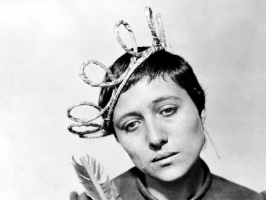
1928 – “The Passion of Joan of Arc” (Carl Theodor Dreyer)
If you liked “Antichrist” or “The White Ribbon”, then you have seen and appreciated the influence of Dreyer’s work 81 years after it was made. Focusing on the trial and execution of Joan of Arc, Dreyer reinvented the close up and let Maria Falconetti’s tortured face almost single-handedly tell his whole story. Her performance is rightly considered one of the greatest of all time and the emotional turmoil she experienced in giving it convinced her to never act for the screen again.
An exercise in minimalism from content to composition, Dreyer intended for the film to be seen completely silent with no musical accompaniment and I can vouch that doing so is unlike any other viewing experience. The way some felt after leaving “Avatar,” is the way I feel when I get through this harrowing example of pure visual storytelling. Initially set up solely to self-congratulate particular studios and product, it would be a few more years before the Academy opened up and saw fit to nominate a foreign film in any category, which is the only possible explanation for this masterpiece receiving no mentions.
So those are my picks. They may seem obvious, and it’s not like I’ve seen dozens of films from 1927 that weren’t nominated for any Oscars truth be told, but if you haven’t seen them then you have your homework assignment. If you have, watch them again! Then chime in below with your take or suggestions for your own.
Comments
44 responses to “LIFE WITHOUT OSCAR: 1927 and 1928”
I saw the director’s cut of Metropolis last month on german television. It’s really worth seeing.
I love the visuals in “The Passion of Joan of Arc” but I also thought the musical accompaniment was amazing and I feel it’s a better film with the music than without it. Nice choices, though.
Slumdog Millionaire and Hurt Locker opening so close at the Toronto Film Festival is really interesting IMO. I remember reading a review from last year by someone who saw them both on the same day there.
Earleir this decade you also had a number of people who saw Crash at the 04 Toronto Film Festival well before Million Dollar Baby ever screened.
Yes, Falconetti’s performance is definitely one of the best ever. The funny thing is that, in theater, she appeared mostly in comedies.
I have Joan on DVD but never saw it. Metropolis is great.
It’s a tough one, but I’d actually have Gance’s Napoleon pip Metropolis at the post for 1927.
The Passion of Joan of Arc, though, should still be winning Oscars to this day. It’s that good.
To be pedantic, Slumdog Millionaire premiered at Telluride on 8/30/08, The Hurt Locker at Venice on 9/4/08 – then showed after that at Toronto.
2009 now joins 2005 (Crash was a 2004 premiere) ,1928 (because at that time Oscars were not calendar years) and 1943 (since Casablanca opened in New York in December 1942) as four years without a best picture other than Oscar calendar.
Hurt Locker opened in Italy theatrically right after Venice. It is the first best picture winner to play in theatres outside the US in the year before it won the Oscar.
I saw Slumdog Millionaire and The Hurt Locker on the same day at TIFF 2008.
Matt
My sense is that Hurt Locker got a bit lost at Toronto (in that it wasn’t a 2008 contender, and the bad Variety review from Venice damaged interest in the industry – how did the screening go? Were you at the press/industry screening or a public one?
This is a great idea for a weekly column.
Nice idea for a column and very good first article! I haven’t seen the films but I’m certainly going to.
The Passion of Joan of Arc was one of my favorite movies we watched in my first film class. If the Oscars had existed, it would’ve been the biggest shame in the world had Maria Falconetti lost. But her performance is grand with or without any awards shows.
It would be hard to pick for 1927, perhaps the greatest year for film ever.
I’d go with Sunrise, though, which I sometimes think is the greatest film ever made. It certainly is the best Oscar winner (effectively one of the two best pictures that year, since they gave both a “best production” as well as “unique and artistic film” award that year only.
There is a stunning sidenote to Passion – the master negative was accidently destroyed. Dreyer needed to go back and recreate the film was takes that had been discarded (but fortunately saved). So the entire film as we know consists of second best takes, not the better ones who chose initially.
Sunrise is one of my default picks for the best movie of all time but as an Oscar nominee, is ineligible for the column.
I just reread and noticed; sorry for that.
The concept is very good – I look forward to upcoming columns.
Does anyone know how close to the original the current cut of Metropolis is?
I remember they discovered some footage in South America a few years ago that was thought to be lost, but I don’t know if that footage was enough to completely restore the film to its original state.
Anybody know?
“Metropolis” is one of the greatest films ever made, and probably the finest science-fiction film ever.
I have yet to see “The Passion of Joan of Arc,” but now I’ve just gotta.
“The Passion of Joan of Arc” is simply one of the greatest pieces of art ever created. I know what you mean when you talk about how you feel after watching it – it’s a transcendent, out-of-body experience kind of sensation.
Great idea for a column, but why do we have to make everything about the Oscars?
Why can’t you just pick a great film from every year and write about it?
Can we please leave the damn Oscars out of this one please?
filmoholic: I think the idea is to talk about pictures that should not be forgotten. Best Picture winners are much less likely to be forgotten, so he writes about the best movies that were not awarded.
It’s not about the oscars. ;)
Great idea. I really have to watch the Joan of Arc pic!
Being from Denmark, I guess I should also be in the Dreyer camp with my 1928 pick, but I have always had a very hard time with that film.
It’s a great achievement, but it has never really done anything for me. Of Dreyers silent films I actually like Michael much better (and no, it’s not because of the name ;-) )
So for the 1928 pick I would definitely go for John Fords Four Sons which won the Photoplay Award that year, but incredibly no Oscar noms.
Metropolis as the 1927 pick I agree on 100%
Hope you remember Dreyer’s “Ordet” when you get to the 1950s.
What a great idea for a series. I’ll be sure to check in for this every week. I saw METROPOLIS in school, though it’s been a while. Somehow, they failed to show us THE PASSION OF JOAN OF ARC, and it’s been one of those I’ve been meaning to see. Now, you have reminded me, so I will make it happen.
love this column! my queue is probably going to expand by 82 films by the time it is through and I cannot wait!
Just watched The Passion of Joan of Arc on youtube! To be honest I was more impressed by the camerawork than Maria Falconetti. She was great though, but I found her to be distracting during the trial scenes in the beginning.
Metropolis is complete drivel in my opinion. There, I said it. You know there are others thinking the same thing but are too scared to admit it. Maybe in its day it was amazing, but in 2010 it isn’t. And I’m not prepared to give a film a break just because it’s old. Battleship Potemkin, for instance, is just as old but holds up very well indeed.
Wasn’t The Passion of Joan of Arc ineligibile since it didn’t have a release in Los Angeles?
Don’t know Robert. Regardless, I think the Academy wasn’t looking past its own nose at that point anyway.
Michael- I haven’t seen Michael. But if Passion isn’t your bag, my runner up choice for 1928 would be The Crowd.
Actually, it probably wouldn’t be, Chad, since The Crowd was nominated for Best Director and Artistic Quality of Production. Or do nominated films that didn’t win anything count for this column? I love the idea, anyway.
I’m with you in ’27 and cannot imagine springing for something else. For ’28, I’d stump for Josef von Sternberg’s The Docks of New York, followed closely by Victor Sjostrom’s The Wind, with its plot of sexual panic and its fantastic performance by Lillian Gish.
You’re right. No The Crowd then. I really need to see The Wind.
Fun fact about The Crowd:
It was at first voted the winner of the “Artistic Quality of Production” award at the first Academy Awards by the Central Board of Judges that determined the winners, but one of the Academy’s “founding fathers”, Louis B. Mayer, protested the decision.
I was well know that he didn’t like the film one bit, and he argued that Sunrise should win the award. It’s also speculated that Mayer was standing in the way of other potential winners from his own MGM studio (The Crowd was an MGM film) because he had been acused of creating the Academy just for him and his studio and was eager to prove that there was no collusion between himself, MGM and the Academy. MGM only won the smallest award of the first Academy Awards; Title Writing – a category that was only included in the awards as an afterthought from the writer’s branch.
Just one of many amazing and interesting stories from the great, great book by Anthony Holden called “The Secret History of Hollywood’s Academy Awards”.
The BFI magazine Sight and Sound has been doing an all time 10 best list every decade since 1952 (Bicycle Thief #1 in 1952, Citizen Kane since each time).
Based on their most recent survey (2002), these are for the next few years the highest ranked non-nominated major Oscar category films by year (of premiere, not necessarily LA release). They are a reasonably solid guide to the best year by year.
1929 – none (tough transition year)
1930 – L’Age d’or (Luis Bunuel)
1931 – M (Fritz Lang)
1932 – Trouble in Paradise (Ernst Lubitsch)
1933 – Duck Soup (Leo McCarey) & King Kong (Ernest Schoedseck and Merian Cooper)
1934 – L’Atalante (Jean Vigo) – #11 ranked overall
1935 – The Crime of Monsieur Lange (Jean Renoir)
1936 – Modern Times (Charles Chaplin)
1937 – Angel (Ernst Lubitsch)
1938 – Alexander Nevsky (Sergei Eisenstein)
1939 – Rules of the Game (Jean Renoir) – #3 overall
The Passion of Joan of Arc was their topranked film from 1928.
They list Metropolis as 1926, where it was just behind Buster Keaton’s The General. Their top ranked film of 1927 is Sunrise (tied for #6), followed by the Oscar-unnoticed Napoleon (Abel Gance).
So anyway, you are off to a legitimate start without any doubt.
1931- M (Fritz Lang/Germany
“1929 – none (tough transition year)”
1929 is far and away the worst year for nominees in Academy history—many unremarkable sound films nominated over more deserving silent films—so finding good films that they didn’t nominate is easy. For my money, you can’t go wrong with any of the following:
Man with a Movie Camera (Vertov)
Asphalt (May)
A Cottage on Dartmoor (Asquith)
Frau im Mond (Lang)
Pandora’s Box (Pabst)
Diary of a Lost Girl (Pabst)
Lucky Star (Borzage)
The River (Borzage)
All solid or better (mainly those aren’t all by my listings 1928 films, but these things can be tricky) – The River unfortunately is missing its first and last reels (about 19 minutes of running time).
Was Applause nominated for anything major? That was first significant musical of quality. Other standout Hollywood films include Hallelujah (Vidor), Thunderbolt (Sternberg), Alibi (West), The Kiss (silent, Feyder) and then in Britain Blackmail (Hitchcock).
“(mainly those aren’t all by my listings 1928 films, but these things can be tricky)”
That’s because we are talking about 1929 films here.
Applause was not nominated for anything. Also, I disagree that Alibi is a “standout Hollywood film,” though I do think it’s better than some of the other 1929 nominees.
“The River unfortunately is missing its first and last reels (about 19 minutes of running time).”
I’m quite well aware of that, but the fragment that remains is still quite wonderful.
“The King of Kings” was a 1927 realease, and though it is a horribly dated film today, in 1927 it must have been quite something in its study of Christ — Demille though, the James Cameron of his time.
Very late to the party here, but let me just add my voice to the chorus of cheers for this column concept. And yes, these two choices are absolutely inarguable.
Can’t wait to see some of your more against-the-grain picks.
LOVE this idea, Chad. Can’t wait to see what titles you choose. Will you be including movies like – to use a recent example – “Bright Star” that only got one technical nomination or is it a stone cold no nominations at all rule?
As for “Metropolis”… I love the look and the grandeur of it, but I have a similar problem with it as I do a lot of the silent movies I’ve seen (notsomuch “Sunrise” or “Pandora’s Box”), but I don’t wanna go into it for fear of being seen as pedantic and a philistine.
Stone cold no nominations
Metropolis was indeed eligible. One has to remember that silent films were widely seen around the world by all audiences. Making them accessible to any country in the world was the matter of replacing a couple hundred twenty-forty word inter titles. Easy to cut out and easy to cut in. The modern day practice of subtitling intertitles rather than replacing them is definitely a radical change from how the audiences at the time of original release would have viewed the films. John Ford was very familiar with the German movies of the time, The Informer is very similar to M, for example, and many of his pre-Informer sound films with self-consciously arty in the manner of Germany/UFAs self-conscious artiness.
But distribution of international films was pretty common in those days, particularly from the uber-dominant German film industry of the 20s. Metropolis was cut before american distribution, but it was cut before german distribution as well. Films got routinely cut up all the time in various ways. The film was not nominated for an academy award because the Academy was partially founded as a way for the american film industry to show that their films were capable of competing on as high a level of art and craft as the best German films of the era were. Nominating a German film at the academy awards would have been anathema to their purpose. Protectionism, not ignorance, were why the academy awards were all american until A Nous la Liberte got a nomination in the early thirties. Why do you think they went to such efforts to import German filmmakers and stars five years before the nazis came to power?
when sound rolled around, there was a huge problem in terms of translating. In a film like Eskimo (the first film to win best editing and 90% in the native Inuit language and a major MGM studio film to boot), they used intertitles ala silent films to give us the translation, oftimes with some of the dialog running under the title (which is a trick Ozu used in his late silents as well, and is a fairly interesting and late development in the use of intertitles). Subtitles were a long a tough process to incorporate, but once the optical printer came online in the early thirties, it became more of an effect, but for a few years there in early sound, there just was not a realistic process or way to translate a film for audiences. That’s why studios made spanish language versions of films like Dracula, for example.
Any love for Eisenstein’s October? I saw it a couple of years ago and though it was pretty great. (I’m not arguing with your choices, however. Great idea for a column!)
Finally watched Joan of Arc. Quite effective, especially at such an early stage of film. I did feel that the use of close-ups bordered on excessive, but Falconetti was truly something, and in a way I had not anticipated. Truly a performance for the ages.
I would say the films that deserved Oscar recognition (but probably never would’ve gotten it):
1927:
Clyde Bruckman & Buster Keaton’s “The General”
Tod Browning’s “The Unknown”
Grigori Aleksandrov & Sergei M. Eisenstein’s “October”
Abel Gance’s “Napoleon”
J.A. Howe & Ted Wilde’s “The Kid Brother”
1928:
Josef von Sternberg’s “The Docks of New York”
Luis Bunuel’s “An Andalusian Dog”
Charles Reisner & Buster Keaton’s “Steamboat Bill, Jr.”
Vsevolod Pudovkin’s “Storm Over Asia”
Not many films to choose from early on, but good ones, especially for amateur film critics/historians like me.