 Catch up with the idea behind this series here.
The epics kept rolling at the turn of the decade with “Ben-Hur” taking the 1959 Best Picture prize, picking up a record 11 wins in the process, yet to be eclipsed but matched twice by “Titanic” and “The Lord of the Rings: The Return of the King.”
That year also saw “Pillow Talk” walk away with the Best Screenplay award under the nose of Truffaut’s “The 400 Blows” and Bergman’s “Wild Strawberries.” Painfully embarrassing, the Academy almost pulled the exact same stunt in 2002 with “My Big Fat Greek Wedding” competing against “Talk to Her” and “Y tu Mama Tambien.” Thankfully, cooler heads prevailed that time.
“The Apartment” started the swinging 60’s off on a winning note, and remains one of the Academy’s most atypical Best Picture winners. The decade’s winners would be almost evenly split amongst epics, musicals and socially conscious drama, making Wilder’s light hearted comedy stick out like a sore thumb.
As for this column, we’ve hit an unwelcome first. No eligible film I’ve seen from 1959 has really wowed me in a way that usually merits inclusion. It’s especially frustrating since 1960 has no less than seven Oscar ignored masterpieces giving me a veritable Sophie’s choice on that front.
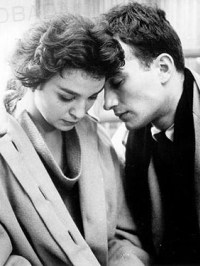
1959 – “Shadows” (John Cassavetes)
If I can’t write about a brilliantly successful film, I may as well write about the most interesting and noble failure. This is John Cassavetes’ debut as a director and his reputation as a filmmaker seems to grow closer and closer to deity every year. Already an established television actor, Cassavetes was seemingly tired of the artificiality of most Hollywood productions and enlisted the members of his acting class to create an independent, improvised film.
Every idiot in the world can do the same today (and many have), but in 1959 it truly was a revolutionary act. A certain amount of sloppiness in the execution can be expected and forgiven, but the film is just terribly put together and instead of being the catalyst for invention or exhilaration, the flaws become glaring speed bumps preventing any type of narrative or atmospheric flow. Half-hearted post-sync sound stifles the gritty realism of the on location exteriors. Shoddy dissolves stunt the emotional continuity of the film’s most powerful scene. The list goes on.
All that said, the film lives on for a reason. The acting is inconsistent among the cast, but Ben Carruthers and Rupert Crosse both give amazingly natural performances and Leila Goldoni deservedly went on to a solid career. Individual scenes cackle with vivid life the way few Hollywood productions ever could in those days and the central conflict of interracial relationships was an issue needing to be explored matter of factly. Still, what Cassavetes pioneered here deserves praise, but has been executed far better down the road.
 1960 – “Saturday Night and Sunday Morning” (Karel Reisz)
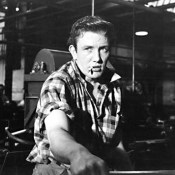
“The Grass is Greener.” “Eyes Without a Face.” “Le Trou.” “L’Avventura.” “Breathless.” What an unbelievable year, but in the hopes of introducing readers to something they may not otherwise know, I’ve selected this British kitchen sink drama starring a young and brutishly sexy Albert Finney.
Made for a scant £100,000, the film focuses on a hard-working, hard-partying lothario and his relationships with two separate women. Karel Reisz made his directorial debut, coming from the world of documentaries and that sensibility is evident in the natural camerawork and acting. It typified the growing movement of British cinema focusing on the social issues of working class men that the Oscars embraced the previous year with “Room at the Top.”
One of the earliest films to explicitly deal with abortion, “Saturday Night and Sunday Morning” was originally given an X rating, only to be re-evaluated with a PG in the 80’s. It’s the frank exploration of sexual issues that make it stand out and remain relevant today, with Alan Sillitoe’s sharp screenplay refusing to take any easy paths and the result left me consistently surprised until the ambiguous and heart-breaking finale.
The role of Arthur Seaton is tailor-made for launching a career, provided the right actor came along to give some much needed charm and humanity to an otherwise aggressive prick. Albert Finney did just that and more, in a performance that rivals early Brando in sheer sexual bravado and understated confidence. He simply burns the screen and while Shirley Anne Field and Rachel Roberts give great performances beside him, there was clearly only one person destined for superstardom here.
Two films representing the early stages of new independent movements in their respective countries, piggy-backing off the French New Wave highlight one of the most exciting times in film history. Those are my choices. What am I missing in 1959?
Comments
8 responses to “LIFE WITHOUT OSCAR: 1959 and 1960”
Happy with 1960 personally. I consider The Apartment to be one of the greatest films of all time as well as one of my personal favorites. I actually consider it to be underrated…
So glad you brought up that 1959 Screenplay category, which surely ranks as one of the Academy’s all-time most mortifying moments. And it couldn’t just be any unremarkable rom-com that benefitted: no, it had to be the thoroughly vile and retrograde “Pillow Talk.”
Even if they weren’t quite ready to reward the European auteurs, they still had perfectly acceptable alternatives: you don’t mention that “Pillow Talk” also beat “North by Northwest.” Just thinking about it makes me want to hurl.
Sorry, got distracted there.
Anyway, I completely second your pick for 1960: “Saturday Night and Sunday Morning” is a personal favourite, and Finney has never topped that performance in his entire career.
Meanwhile, for 1959, I’d be tempted also to go to the British ‘angry young man’ well: “Look Back in Anger” isn’t as complete a film as “Saturday Night,” being essentially a well-filmed play, but Richard Burton’s performance is an absolute beast. The Golden Globes, at least, were canny enough to nominate him; the Academy really missed the mark there.
I’d throw “The Human Condition” into the debate for 1959. Actually, I’d put it into a conversation for one of the greatest accomplishments in the history of film period. Of course, it doesn’t help that the three parts of the film were spread-out over the decade divide. But even two parts of that film are more impressive than most in their entirety.
For your consideration (1959):
Compulsion or Tiger Bay
1959:
Georges Franju’s “Eyes Without a Face”
Budd Boetticher’s “Ride Lonesome”
John Cassavetes’ “Shadows”
Satyajit Ray’s “The World of Apu”
Jean-Luc Godard’s “Breathless”
Robert Bresson’s “Pickpocket”
Howard Hawks’s “Rio Bravo”
Jacques Becker’s “The Hole”
Yasujiro Ozu’s “Floating Weeds”
1960:
Luchino Visconti’s “Rocco and His Brothers”
Karel Reisz’s “Saturday Night and Sunday Morning”
Francois Truffaut’s “Shoot the Piano Player”
Michelangelo Antonioni’s “L’Avventura”
Luis Bunuel’s “The Young One”
Ritwik Ghatak’s “The Cloud-Capped Star”
Kim Ki-young’s “The Housemaid”
Mario Bava and Lee Kresel’s “Black Sunday”
Michael Powell’s “Peeping Tom”
My favourite of 1959:
“Hiroshima, mon amour”
(received a screenplay-nom, at least)
“No eligible film I’ve seen from 1959 has really wowed me in a way that usually merits inclusion.”
I’m surprised to hear that, Chad, as 1959 has a number of un-nominated gems.
My 1959 pick would be Ozu’s “Floating Weeds,” with Bresson’s “Pickpocket” close behind. The conclusion of Ray’s Apu Trilogy—“World of Apu”—is also wonderful.
My 1960 pick would be Kaneto Shindo’s sublime “The Naked Island,” about a family of subsistence farmers on a small, remote island in Japan. Also great, but un-nominated, are Visconti’s “Rocco and His Brothers,” Ozu’s “Late Autumn,” and Naruse’s “When a Woman Ascends the Stairs.”
I’m no fan of Pickpocket and am trying not to include more than one film per director in the series.