 Just recently, the strongly linked film industries of Spain and Mexico were the talk of the world cinema scene, with auteurs like Almodovar, Del Toro, Amenabar and Inarittu enjoying an unprecedentedly high profile in the US, and picking up awards left, right and centre.
This past year, however, has a seen a shift back to more traditional cinematic sources, with rejuvenated European stalwarts Italy and, in particular, France churning out the critical hits and festival sensations.
The Spanish-speaking countries’ slight (and no doubt temporary) loss of momentum is arguably reflected in their recently announced submissions for the Best Foreign Language Film race: both have selected sober-sounding period dramas with relatively low international profiles.
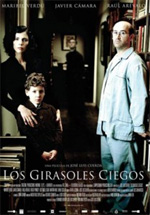
Spain’s choice, “The Blind Sunflowers,” takes place in the aftermath of the Spanish Civil War, and tells the story of a presumed war widow harbouring her left-wing husband in the family home. It’s a period that has proved fertile ground for great Spanish cinema, and the cast, including the wonderful Maribel Verdu and Javier Camara, is exciting, but Variety was decidedly unimpressed by the film at Toronto:
Brimming with ideas it fails to galvanize, “The Blind Sunflowers” reps an unhappy swan song for late, great screenwriter Rafael Azcona. As a portrait of the dullness of life in provincial postwar Spain, the pic is fine, but much of that dullness spills over into the treatment, which fails to do justice to Alberto Mendez’s dark novel … Top-notch cast feels wasted, with most of the content rerun from previous Civil War dramas.