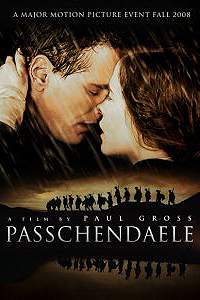
 Let’s face it, we all wanted it to be the great Canadian film we have been waiting for for so long, the one that would become mainstream enough to make its mark on the box office charts and enjoy some praise from critics around North America. We wanted “Passchendaele” to be the great Canadian film that was also popular with mass audiences in the manner of Steven Spielberg’s “Saving Private Ryan.”
And it’s a rare occurrence. Two examples leap to mind. “The Sweet Hereafter,” Atom Egoyan’s 1997 masterpiece, was the last universally acclaimed work of cinematic art out of this country, while “The Barbarian Invasions” took home an Oscar for Best Foreign Language Film.
Paul Gross, a bona fide stud of a Canadian movie star (but no Spielberg) has wanted to make “Passchendaele” since listening to the stories his grandfather used to tell him. The $21 million dollars he was given to start production was unheard of for a Canadian film, but to his credit every penny is up there on the screen. His recreation of the period is quite stunning, capturing the very essence of a small Canadian town circa 1917.
Gross catapults his audience back to the muddy fields of the First World War, where soldiers sat and slept in cold, wet and muddy trenches, the smell and sights of death all around them, awaiting the enemy’s advance, awaiting hell to escape from the bowels of the earth. His work at the helm in these sequences is flawless, and though all war films are forever compared to what Spielberg accomplished in the summer of 1998, this was a very different war. It was one lacking the technologies we had by the 1940s, a much more brutal and unforgiving conflict with almost barbaric weaponry. I mean, Jesus, bayonets? Gas? Rocks? Whatever they could hit with or throw.