 Venice Film Festival
If any one title in the Shakespeare library has been sufficiently fiddled about with on screen, it’s “The Tempest,” among the most tonally malleable of his comedies, and a fantasy that gifts filmmakers with obvious opportunities for spectacle.
“Forbidden Planet,” a terrific 1956 sci-fi riff on the play, perhaps took this adaptability furthest, but it only set the ball rolling for assorted free interpretations: Derek Jarman gave it a homoerotic spin in 1979, Paul Mazursky rewrote it as a neurotic modern-day sex comedy in 1982 and Peter Greenaway played all manner of metatextual games in 1991’s “Prospero’s Books.” At this point, about the most radical thing a filmmaker could do with “The Tempest” on screen is play it straight.
That is evidently not a view shared by one Julie Taymor, whose murky, lunk-headed and signally boring new film tricks out Shakespeare’s text with gaudy CGI saturation, a wardrobe from “Zoolander”‘s Derelicte collection and a key sex change in the lead, as sorcerer and doting father Prospero here morphs into Helen Mirren’s Prospera, a highbrow voodoo priestess of sorts with a permanent Patty Hewes-style scowl.
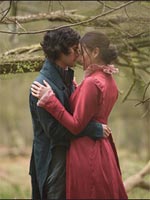 Does the comeback begin here? This morning gave critics their first look at Jane Campion’s Keats biopic “Bright Star” — the director’s first feature in six years, and her first foray into period drama since “The Portrait of a Lady” — and early reactions indicate a genuine return to form.