Ryan Gosling is a smooth customer. Lacking pretension so much that one can’t even find a hint of his intending to steer clear of it, the actor recently celebrated his 26th birthday on November 12th. This following a year that has seen his directorial debut come to pre-production light, a coveted spot amongst GQ’s annual “Men of the Year” issue and, oh yeah, one of the most acclaimed performances of 2006.
The critically hailed star of “The Believer” and “The Notebook,” Gosling finds himself in the thick of the year’s awards race for his riveting portrayal in Anna Boden and Ryan Fleck’s “Half Nelson.” The film received five Independent Film Spirit award nominations this morning, including Best Male Lead for Gosling.
Greeting me via telephone from Toronto, where he is nearing the end of principle photography on Craig Gillespe’s “Lars and the Real Girl,” the actor seems to have tripped over his sister’s computer chord and is having some trouble with the usual “hellos.” It’s all for the best, really, because when you have a conversation with Ryan Gosling, the last thing you want to do is bog things down in formalities. Gosling is a real guy, attracted to real ideas and, above all else, real characters.
“I had read the script and thought it was about people I had met, people I knew or was like in some way,” he says. “When I go to the movies, I want to feel like I’ve met someone. People who do things out of character, who don’t have a clear character arc, those are the people I’m interested in seeing in a film.”
In “Half Nelson,” Gosling stars as Dan Dunne, a charismatic junior high school history teacher in a drab and dismal Brooklyn neighborhood. Dan’s professional environment is one of enlightenment for his pupils. He captures the spark of their educational hunger and even finds time to coach the girls’ basketball team. But personal demons can haunt even the saintliest of souls, and Dan’s crutch is drug addiction. The allure of the crack pipe frequently pulls him away from the buoyancy he works so hard to construct for his students, dragging him through the realities of crushed idealism.
In some ways not the most sympathetic of individuals, Dan provided for Gosling a character of tangibility and truthfulness.
“I think you have to love and hate the characters you play,” he says. “They’re people. It’s not as simple as sympathizing with them.”
To prepare for the role, Gosling moved to New York for one month before shooting even began, immersing himself in the life of his character. He lived in a small apartment in Brooklyn and spent time shadowing 8th grade teacher David Easton. Speaking matter-of-factly about his methods, Gosling mentions, “There’s a million ways to get there, but it’s a challenge when there’s no real reference for the people you play.”
What might also be considered a challenge for some actors is sharing the screen with untrained thespians. But Gosling seems to have found a preference of sorts, so much so that he plans on casting his upcoming directorial debut, “The Lord’s Resistance,” with non-actors across the board.
“I love working with non-actors,” he says. “Actors are so manipulative, and non-actors are not. They push you in ways that the best actors in the world can’t.”
One such non-actor is Shareeka Epps, receiving equal praise for her portrayal of Drey in the film. One of Dan’s students who happens upon his secret early in the first act, Drey seems weathered and accustomed for her years, but exuberant and youthful all the same – qualities Gosling also found bursting out of his co-star.
“Shareeka has no reverence, which I really respected,” he explains. “She doesn’t approach any scene with any preciousness. She’s brutally honest and not ashamed of how she feels.”
Finding himself in the heat of contention for Best Actor consideration at this year’s Oscar ceremony, Gosling is predictably apathetic about the awards process. One almost doesn’t want to approach the subject with him, given the expected response from an actor so obviously concerned with the work above anything else. But this is a business of sound bites, and even the most apprehensive awards hopefuls can give you gold in that regard.
“It affects me,” he says of the Oscar race, “in the sense that I’m happy that a film that cost $500,000 can get to a point where this many people are aware of it. Awards – I don’t know who that’s up to, but I appreciate that the film is being received the way it is. I had one of the best experiences of my life on this. We never had to hit any marks. We never had to say anything twice or worry about continuity. You never felt like you were in a scene in a movie. A lot of directors never see it that way. Anna and Ryan have a great eye for the way that we are and the lies we tell about who we are, and that’s rare.”
From here, Gosling will assuredly take it all in stride. The aforementioned “The Lord’s Resistance” is high on his list of priorities. Telling the story of the Lord’s Resistance militia in Uganda, the film looks to be another pointed political entry in the current canon of Africa-centralized cinema. Even still, don’t expect the actor to look too far ahead at the kinds of films he wishes to make, in front of or behind the camera. He holds such judgment to a case-by-case basis.
“I’ll have to wait until I’m tested,” he says. “Films I love have a certain allowance for accidents. When I was a kid, my favorite films were the ‘Abbot and Costello’ movies. I love Werner Herzog’s films, Terry Malick, John Cassavettes. But I’ve got a lot of things I want to do in my life, and not just acting. There’s no anxiety about not having enough time to do all the movies I want to do or anything, but I have to keep it interesting for myself. I don’t want to make the same movie over and over again.”
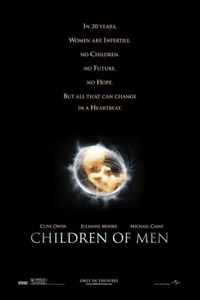 Alfonso Cuarón’s is one of the most singular voices in the filmmaking community. Along with longtime collaborator, cinematographer Emmanuel Lubezki, the director has ushered forth textured visions of skewed fairytales for over a decade.
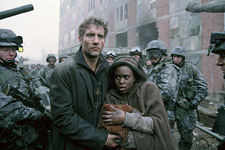 The unnamed woman is soon revealed to be Kee (Clare-Hope Asitey), a refugee holding the potential key (I feel as though I’ve just discovered the point of the character’s name) to the future of man: miraculously, she is pregnant, waiting to give birth to the first baby the earth has seen in 18 years.
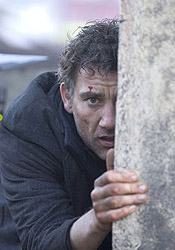 Some of the set pieces Cuarón orchestrates are the most electrifying, living and breathing sequences ever imagined in the history of cinema. Much credit here is due to Lubezki and camera operator George Richmond, not to mention a meritorious technical and stunt crew who must have rehearsed these moments into the ground.
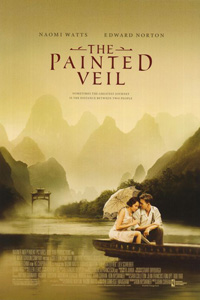 Romance seems to be the theme that sparks the most diverse reaction from the artistic community, filmmakers in particular. There are various methods and structures utilized to tell tales of the elusiveness of love, and new, fresh takes on this binding structure of human interaction come into the cinematic arena every year.
 Tensions, meanwhile, are running high between nationalist Chinese and the westerners they feel are invasive to their way of life. Held somewhat emotionally captive in this unfamiliar environment, Kitty spends her days and nights wasting away and feeling useless.
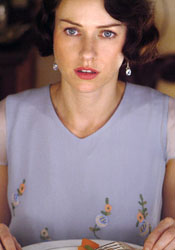 Naomi Watts shines and has the clear character arc of a woman who grieves for her past mistakes. Kitty is extremely child-like at the film’s start. By the end, she is a woman with a life of experience and a future that would have been uncertain otherwise.
 Clint Eastwood is largely considered one of the most uneven directors working today. For every probing piece of thematic greatness (“Unforgiven,” “Mystic River”) there are three or four considerable missteps, from “The Gauntlet” and “Heartbreak Ridge” to “Midnight in the Garden of Good and Evil” and “Blood Work.”
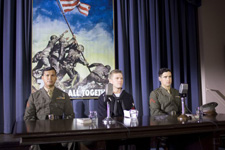 The ubiquity of the photo puts Gagnon in the appreciated place he had sought to be, Hayes in the hesitant position he feels he doesn’t deserve, and Bradley as an awkward observer of it all, strangely passive as a character, given the book’s origins.
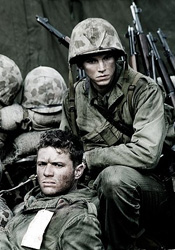 Elsewhere, John Slattery offers a great supporting turn as the point man on this public relations whirlwind. Barry Pepper, in the role of flag-raiser Mike Strank, comfortably stifles the urge to take a tough-as-nails character to the same places he has taken numerous similar characters numerous times before.
 One of the most artistically ruthless films to be produced in decades, “The Departed” is a spike of adrenaline straight to the heart of an audience desperately in need of such rambunctious filmmaking. A loose but paradoxically loyal remake of the Hong Kong thriller “Infernal Affairs,” the film is doused with a cast of familiar faces, each performer offering portrayals unique to anything in their respective repertoires.
 As the film pushes forward at an unforgivable pace, each respective mole becomes cognizant of the other’s existence. The drama therefore introduces itself in the form of a race against odds (and in the most hair-raising of environments) for each to discover the other before their rapidly evaporating time expires.
 Indeed, Costello is one of the true villains of the modern cinema, as morally filthy as he is fascinating. And Nicholson wallows in the role like he was born to wear it, savoring every feral gaze and relishing every blood-splattered grin. It might be his best work since “The Shining” 26 years ago, and a performance Academy voters are likely to eat right up like Ben Kingsely’s Don Logan in 2001’s “Sexy Beast.”
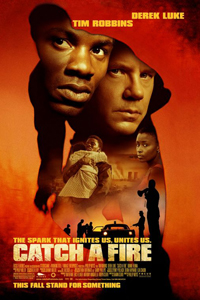 Phillip Noyce has made a relatively stealthy career of tackling political subject matter without being a blatant mouthpiece for the issues with which he sides. Endeavors like “Patriot Games” and “Clear and Present Danger” approached agendas from a more entertaining standpoint, both being based on Tom Clancy best sellers.
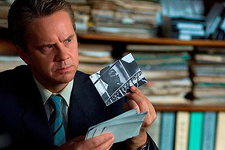 In the beginning, Slovo attempts to place a sympathetic face on Vos, a man who supposedly sees his prey as human beings above and beyond terrorists. Early scenes with his family reveal Vos as the diplomatic sort.
 As for performances, Tim Robbins feels terribly miscast in an underwritten role, while Bonnie Henna handles her own half-baked responsibility with a delicate ease.
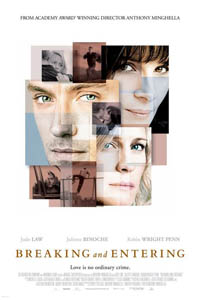 Anthony Minghella’s “Breaking and Entering” is one of the most sincerely penetrating films of the year. It’s most unique quality is the sense of legroom it provides, a healthy stretch of a film with deep breaths and drawn out considerations, as opposed to the typical anxiety of temperamental manipulation (which all film tends to be by nature).
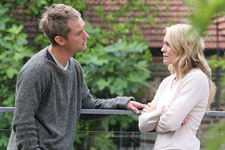 After a series of such robberies, Will begins staking out the building with partner Sandy (Martin Freeman) and an inquisitive prostitute, Oana (a humorous and insightful Vera Farmiga). He finally catches Miro in the act one night, and in chasing him he follows the boy to his home. There Will encounters, from a distance, Amira and her concern for her son.
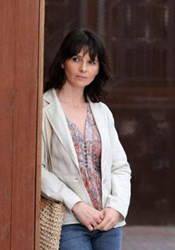 Juliette Binoche is appropriately self-aware and headstrong in her performance as Amira. Driven yet still full of the youth she had ripped from her through tragedy, Amira is an extremely interesting creation and a vibrantly unique character.
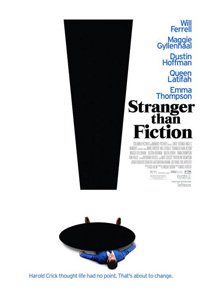 Marc Forster’s “Stranger Than Fiction” really ought to be referred to as Zach Helm’s “Stranger Than Fiction.” While the “Finding Neverland” helmer does a sensational job conveying the brilliant and elaborate story to the screen, it is evident throughout that the writer’s intentions are being taken care of.
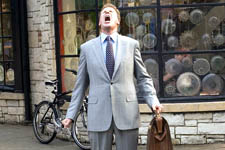 Meanwhile, Harold has been given the task of auditing a feisty bohemian baker, Ana (Maggie Gyllenhaal). Discontent with “the man” and certainly not afraid to speak her mind, Ana is, if anything, Harold’s polar opposite: hip, tattooed, free-spirited and boisterous.
 It took two viewings to really grasp the importance of that shift in theme, and when it landed, it certainly had an impact. In that final act, the film becomes a story about living for others as much as for yourself.
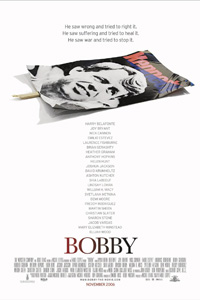 Emilio Estevez’s third feature filmmaking endeavor is everything his prior work was not. It is both insightful and meaningful. It exudes passion and commands relevance. It represents a cross-section of a country battered and bruised, and emphasizes the beacon of light that hoped to usher it to greener pastures.
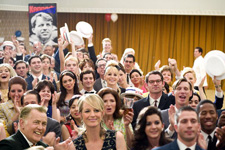 However, rest assured the actor/writer/director covered all bases, charting youthful aggression, elderly wisdom, minority rage and feminine anxiety amongst the numerous hot button issues of the day.
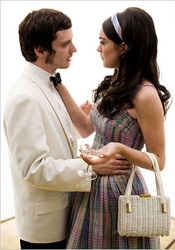 The editing of the film is of the highest quality, coming under the acclimated hand of veteran Richard Chew (“One Flew Over the Cuckoo’s Nest,” “Star Wars”).
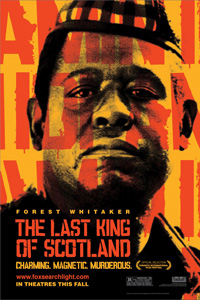 Every so often a film comes along that is so celebratory of the filmmaking process and fresh in its approach to visually conveying a story that it creatively demolishes anything within earshot.
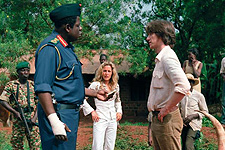 Following an automobile accident that is cleverly repositioned from its place in Foden’s novel, Garrigan and Sara are summoned to the aid of Amin. The president has sprung his wrist in the process of ramming his Maseradi into a giant bull.
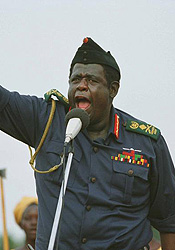 The performances on the whole are fantastic, but the central tension and these two men’s effect on one another could not have been portrayed more succinctly. James McAvoy is outstanding, and Macdonald should be applauded for casting someone so little-known. One would expect a pseudo-star like Ewan Macgregor to be forced into such a scenario, but the right decision has been made and McAvoy holds his own opposite the most explosive on-screen incarnation of the year.
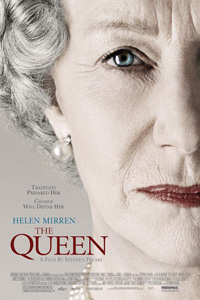 Stephen Frears is one of the most versatile working directors in the industry. With that versatility comes the inevitable misstep from time to time, sure. But also with it comes a high order of professionalism and a certain amount of confidence that can manifest the most precise of cinematic creations.
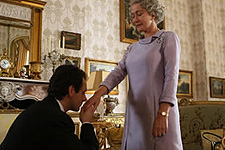 The relationship established between Elizabeth and Blair is a delicate one, and certainly a dramatic one. It might be the oldest story in the book, but it is still one of the most relevant. The clashing of policies is something the world will struggle with until we are no longer the dominant species.
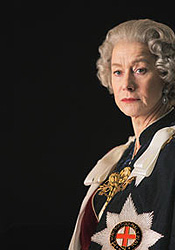 Stephen Frears does what he is best at in “The Queen.” He steps aside and lets the story tell it self. He has always been what I consider a “screenwriter’s director,” as he seems ever capable of letting the writer’s words play on the screen as they should. He never leaves a fingerprint, other than the strong scent of competence that can be found even in his lesser efforts.
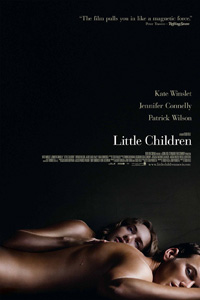 Tom Perrotta’s novel “Little Children” is a visceral reading experience. A smart and casually brilliant work of fiction, the author’s characters exude a demand for understanding and compassion above all else in a narrative flow that is forgivably meandering.
 All of this could certainly be gleaned from reading any synopsis of Perrotta’s novel, and obviously, the makings of a brilliant film are quite apparent. But somewhere along the way, “Little Children” lost its freshness.
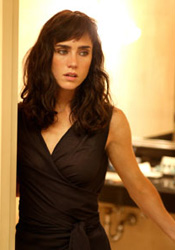 Jennifer Connelly threatens depth with her character, though a sub-plot involving Kathy’s mother was largely omitted which might have helped in that regard. Connelly is, as always, a beautiful and talented actress, but here she’s simply relegated to being a hottie. The role doesn’t call for much else.
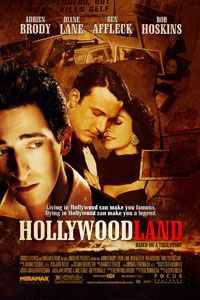 The death of George Reeves, television’s original Superman, in 1959 defined the loss of innocence for a generation. There are many who remember where they were the moment they discovered Reeves’s body had been found, the victim of an apparent suicide.
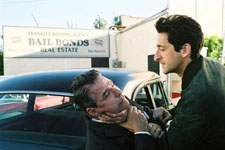 When audiences were distracted by the actor’s iconic image during his scenes in Fred Zinnemann’s “From Here to Eternity,” the director inevitably had the work Reeves had put into the picture removed. Suicide, it seemed, made complete sense to the community at large.
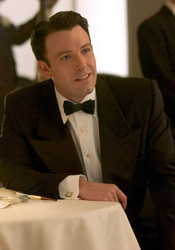 No, in “Hollywoodland,” Ben Affleck shows us what he can do when he really wants it. The actor took a sizeable upfront pay cut on the film (as did pretty much everyone), and while at first glance it may seem that his beefcake persona would laughably overpower the mythos of George Reeves, we soon discover just how tailor-made his screen presence is for the role.
 “World Trade Center” is a nearly flawless account of something so personal, yet so universal, that it leaves the instigating events of September 11, 2001 almost as an afterthought – lipstick on the rim of a wineglass long emptied.
 Meanwhile, the longer Jimeno and McLoughlin remained submerged, the stronger their hope became in the face of losing the lives they loved, the lives in which they belonged more so than any other place on Earth. As their bodies physically gave way to the unforgiving pressure and internal bleeding, their spirits remained as solid as ever.
 Humility is the most endangered trait amongst the filmmaking community today, and perhaps since the dawn of the medium. That Stone could so humbly remove himself and his ego from the spotlight in order to convey Jimeno’s and McLoughlin’s story is striking, not only due to the fact that this is Oliver Stone we are talking about, but I venture to say because few, if any other filmmaker, would have been so selfless about such a film. This will widely be reported as the most un-Oliver Stone film of the director’s career, and while that statement is true, it should not be seen as a slight, as if to say he finally came around or some such nonsense.
 So I’m on the phone today with Adrien Brody, interviewing him for that New York Times piece I’m putting together on “Hollywoodland.” We’ve had some delays in connecting – the poor guy has been traveling a lot – and we finally got a block of time on the calendar this afternoon, both of us in traffic in our cars (well – I was parking, to be fair).
 I’m no fan of Will Ferrell’s comedic sensibilities in the slightest, but “Talladega Nights: The Ballad of Ricky Bobby” is probably the best film of his typical mold to hit screens yet. I know “Anchorman” has its devoted, and “Old School” was apparently good enough in the eyes of Bravo to make it to an obscenely high position on their recent (awful) list of the best comedies of all time.