 I’ll be honest with you, readers. Struck with the idea of waking (after its winter nap) our weekly lists feature with something suitably Cannes-themed, I started with the obvious: the 10 greatest Palme d’Or winners of all time. Simple, snappy, uncomplicated.
Or so I thought. But as I began whittling down the titles, I came to the disheartening realization that my list looked pretty much like that of everyone else who has had a go. By the time you’ve included the inarguable likes of “Apocalypse Now,” “The Leopard,” “The Third Man” and “Taxi Driver” (and hell, that’s before I even reached 1980), there’s precious little room for idiosyncratic argument, however obtuse you may be.
(It also leaves a sadly narrow window for personal favorites: it was when I was balancing the numbers and realized that I had to boot either “The Umbrellas of Cherbourg” or “The Knack” that I began to have doubts about the enterprise.)
The thing is, unlike the Academy Awards, the Palme d’Or goes to a genuinely great film more often than not. Sure, there are errors of judgment now and then. (“The Child” over “Cache?” What were they thinking?) And some years present a slate so rich there are bound to be slights however you deal the cards. (I certainly wouldn’t have wanted to choose between “Pulp Fiction” and “Three Colors: Red” in 1994.) But Cannes is a festival that, an impressive amount of the time, gets it right in hindsight. Too right — for my list, anyway.
And so it was that I decided to turn my attention to the runners-up. Cannes has always awarded a silver medal of sorts, under various monikers over the years: the Special Jury Prize, the Grand Prix du Jury and, currently, the simply but sweetly named Grand Prix. A significant number of future classics have been handed this accolade, but it’s a sadly undersung one: as with so many things in life, first place is all that counts in the history books.
So I’m taking a moment to give this honorable category of winners their due. What follows is my selection of the 10 greatest runners-up in Cannes history. There’s a daunting range of films to choose from (check out the full list here and here), so this list turned out to be pretty agonizing too. (No “L’avventura?” Mon dieu!) A couple of titles here were robbed, but many of them were simply unlucky to come up against formidable competitors. All of them, however, deserve to recognized as the Cannes champs they are.
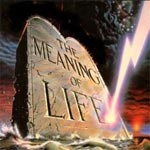 10. “Monty Python’s The Meaning of Life” (Terry Jones, 1983)
Even if you aren’t a Python devotee (and I’ll fess up — I totally am), one of the things you have to love about Cannes is that it can celebrate this outrageous, hit-and-miss collection of barely connected skits alongside a sober auteur statement like Shohei Imamura’s “The Ballad of Narayama,” which pipped the Python boys to the top back in the year of my birth. I know which one I’ve revisited more often: from its unashamedly gross fat jokes to the rousing ode “Every Sperm is Sacred,” the film filters hefty matters of life and death through a batshit-crazy comic sensibility. An inspired choice; an even more inspired film.
 9. “Gomorrah” (Matteo Garrone, 2008)
In many other years, Garrone’s blistering study of the inner workings of the Neapolitan Camorra crime syndicate would have been a slam-dunk for the Palme d’Or, and indeed, it held effortlessly on to its frontrunner status until the festival’s very last day, when Laurent Cantet’s “The Class” quietly showed up and captured everyone’s heart. (Cannes 2008 was a banner year, even if the rest of the year wasn’t.) No matter; an authentic, brilliantly structured mosaic of everyday crime that at once recalled classic Italian neo-realism and felt bracingly contemporary, “Gomorrah” immediately announced itself as a landmark Mafia movie for the ages.
 8. “Woman in the Dunes” (Hiroshi Teshigahara, 1964)
Cannes 1964 provided a true chalk-and-cheese choice for its jurors: either “The Umbrellas of Cherbourg,” Jacques Demy’s joyous, color-saturated musical of star-crossed love in Normandy, or this equally remarkable film, a haunting, absurdist allegory of an entomologist who becomes the prisoner of a lonely, sandpit-dwelling widow. Awash with startling imagery — Teshigahara portrays the ever-shifting sand of the title as a character in its own right — caught on some of the most beautiful black-and-white lensing ever put to film, it’s a mood piece like no other. My heart might have gone with the Demy; my head is in the dunes.
 7. “Burnt by the Sun” (Nikita Mikhalkov, 1994)
I wouldn’t dare suggest that Mikhalkov’s crowning achievement should have beaten “Pulp Fiction” to the Palme. I wouldn’t even say it deserved second place: this was the fest where “Three Colors: Red” went home empty-handed, after all. It was, as Sinatra sang, a very good year. Still, along with its foreign-language Oscar, I remain pleased that this Russian epic, currently one of the most under-heralded films of the 1990s, had its moment in the sun. A vividly atmospheric melodrama chronicling the days leading up to Stalin’s Great Purge, Mikhalkov marries political and domestic detail with a literary grace that feels at once expansive and intimate.
 6. “Taking Off” (Milos Forman, 1971)
Perhaps both the most emotionally generous and criminally undervalued film of a great career, Forman’s first non-Czech effort found him collaborating with two brilliant writers, John Guare and Jean-Claude Carriere, to create an indelible snapshot of then-contemporary America through the eyes of frustrated runaway teenagers and their bewildered, equally aimless parents. Forman’s outsider gaze brings both an inquisitive compassion and a hilarious sense of absurdity to the now-familiar theme of the generational gap. (A scene in which a group of concerned parents are schooled in the workings of pot-smoking is comic gold.) Cannes and BAFTA duly recognized the achievement; in America, alas, it never really took off.
 5. “Solaris” (Andrei Tarkovsky, 1972)
Here’s one occasion on which the jury simply got it wrong: though the Palme d’Or was ultimately shared between two perfectly respectable Italian films, it was Tarkovsky’s visionary science-fiction headfuck about a psychologist encountering parallel worlds created by memory that has proved the more enduring and influential work. A minefield of spiritual and metaphysical concerns, it is a film capable of sustaining multiple debates and interpretations — including Steven Soderbergh’s intriguing 2002 remake — but even those too baffled or exhausted to engage can still wallow in the exquisite intricacies of Tarkovsky’s imagery.
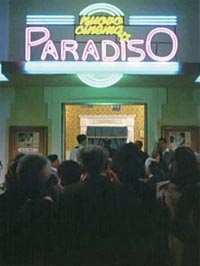
 4. “Cinema Paradiso” (Giuseppe Tornatore, 1989)
And so we move from head to heart. It may not be terribly fashionable these days to love Tornatore’s sweetly nostalgic ode to the sanctity of movie theaters in days gone by, but love it I do — for the unabashed sentimentality with which it lays out the unlikely friendship between man and boy, for the delicate grace and humor of Philippe Noiret’s performance, for the bittersweet strains of Ennio Morricone’s score, and most of all, for the simple ingenuity of one of cinema’s all-time great endings. Steven Soderbergh’s “sex, lies and videotape” took the gold that year, and I can’t argue with the logic and significance of that selection, but I’m grateful the jury indulged their soft sides as well.
 3. “Breaking the Waves” (Lars Von Trier, 1996)
Two highly contrasting character studies of emotionally conflicted women in working-class Britain went head-to-head for the Palme at the 1996 fest, and in the end, it was the warmer, more humanist touch of Mike Leigh and “Secrets and Lies” that came out on top. No shame in that. For this viewer, however, it’s Lars Von Trier’s troubling portrait of a mentally unstable girl who allows her paralyzed husband to live vicariously through her own sexual promiscuity that burns brighter in the memory. Laudably adventurous in its sexual and spiritual content, it also boats one of the all-time great screen debuts in Emily Watson’s fierce, heartbreaking characterization.
 2. “The Seventh Seal” (Ingmar Bergman, 1957)
There’s a reason why Bergman’s seminal masterwork is currently on the “most influential films” shortlist to your left: as frequently parodied as its chess-related imagery and doomy literalization of death are these days, it remains a landmark in the development of a cinema as a symbolic medium — and also stands as one of the director’s most approachable and compelling dramas. Bergman never won Cannes’ highest honor; he refused to compete in festivals after 1960. In 1957, the jury could be forgiven for assuming his day would come, but given the festival’s usual arthouse leanings, their decision to crown William Wyler’s “Friendly Persuasion” instead looks notably bizarre.
 1. “Raise Ravens” (Carlos Saura, 1976)
As I surveyed the list of Grand Prix champs, I had to suppress a squeak of delight on being reminded that Saura’s curious, oblique and altogether extraordinary attempt to enter the mind of a grief-stricken 8-year-old girl (the amazing Ana Torrent) nabbed the silver medal in 1976. (It lost to “Taxi Driver” — tough break.) I make no apologies for the subjectivity of this choice: it remains one of my favorite films of all time, for its fusion of dreamlike structural complexity (it moves seamlessly between three periods in the protagonist’s life) and its guileless emotional directness. It’s as adult and intelligent a film as has ever been made about childhood. If you haven’t seen it, do.
What Cannes losers are winners for you? Have you endured the perils of compiling a “best-ever Palmes d’Or” list? Have at it in the comments below.
Comments
13 responses to “THE LISTS: Top 10 Cannes runners-up of all time”
Cool list and a nice break from the same list we always get this time of year. Disagree with Women in the Dunes but the rest are worthy of note. I had forgotten that Breaking the Waves lost to Secret and Lies that should be mentioned as a tragedy more often.
10. The Sweet Hereafter
9. The Piano Teacher
8. The Seventh Seal
7. Songs From the Second Floor
6. Z
5. Breaking the Waves
4. Harakiri
3. Mon Oncle
2. Woman in the Dunes
1. L’Avventura
I’m not sure what it lost to, but I believe Paul Newman’s excellent “The Effect of Gamma Rays on Man in the Moon Marigolds” was a Cannes loser. Deserves to be (re) discovered on DVD.
Guy,
It is spelled “Nikita Mikhalkov” not ” Nikita Makhalkov”. I wouldn’t have mentioned it but it just happens to be one of my favorite directors.
…And I can’t believe “Solaris” didn’t win.
Adeluta: Thanks for the correction. I must be tired.
Patryk: The Palme that year was shared between “Scarecrow” and “The Hireling” — not exactly a vintage year. Joanne Woodward took Best Actress, though. An underrated film, I agree, though it’s ages since I saw it.
Chad: So we agree on three — I regard that as a breakthrough. May as well make it five — it killed me to leave out “Z” and “L’avventura.” I really don’t like “The Piano Teacher,” though.
Head Wizard: I wouldn’t call it a tragedy, exactly — “Secrets and Lies” is a terrific film. Tough break.
Guy: I have shamefully not seen Solaris but I’m almost positive we can count that as an agreement. I’m curious to check out your #1 now too. Monty Python you can keep and if I could include just the first half of Cinema Paradiso, it would make my list.
Cinema Paradiso is one of my all time favorite films. Loved every sappy minute of it. ESPECIALLY the ending.
2007 – Zodiac or No Country
2005 – A History of Violence or Sin CIty (well it’d have been cool
2004 – Oldboy (Definitely)
2003 – Mystic River (I didn’t really like Elephant and I LOVED Mystic River)
2001 – Mulholland Drive (NO question)
1998 – Fear and Loathing in Las Vegas
1997 – LA Confidential
1963 – To Kill a Mockingbird
1956 – The Man Who Knew Too Much
In the past decade, I think the best Cannes film is, by far, YI YI, by the late Edward Yang.
It lost to Dancer in the dark, sadly.
YI YI is the best film of the 2000s, in my opinion.
As far as Grand Prix winners go, I gotta give a shout-out to “Oldboy”.
Wild At Heart won but shouldn’t have.
“Cinema Paradiso is one of my all time favorite films. Loved every sappy minute of it. ESPECIALLY the ending.”
Couldn’t agree with you more Kris. Cinema Paradiso is in my top 10 of all-time and a huge influence.