 Catch up with the idea behind this series here.
1947 kept the preachy, socially conscious train rolling at the Oscars with “Gentleman’s Agreement” taking the top prize. Anything exposing anti-Semitism was going to be hard to beat in the post-World War II period and the fact that it was actually well-made didn’t hurt either. More impressive is the fact that the Original Screenplay category that year featured both Charlie Chaplin and Vittorio De Sica as nominees.
1948 saw the Brits take over and “Hamlet” becoming the first non-Hollywood production to ever take Best Picture. It also saw the debut of the Best Costume Design category and the first of thirty-four nominations for Edith Head. The Academy was at last, thinking a bit more globally, but they still missed out on some great titles. Such as….
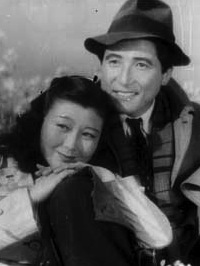
1947 – “One Wonderful Sunday” (Akira Kurosawa)
Three years before “Rashomon” would make him an international celebrity and Academy Award recipient, Kurosawa was honing his craft with small, contemporary stories that focused on post World-War II Japan and its inhabitants. This small gem is exactly what it says on the tin, a wonderful Sunday in the life of an engaged couple. The man has only 15 yen to his name and the woman only 20, but they conspire to make the best of their day in any way they can.
Using this simple conceit, Kurasawa is able to comment on the economic and socio-political hardships that faced Japan directly after the war, but covered in a blanket of optimism and romance. It’s the type of sanguine storytelling that rarely makes an appearance in film festivals today or on the filmographies of the most celebrated auteurs (“Happy-Go-Lucky” being one recent exception that comes to mind).
Kurosawa earned his reputation as a master from the samurai genre, but his camerawork is equally as impressive here as he seems to know exactly when to punch in, dolly around or linger back on his characters. It all seems so effortless when of course, it’s not. I’m not ashamed to admit that Kurosawa’s samurai epics tend to bore me more than inspire, despite the obvious craft to admire. It’s films like this and “Ikiru,” where he catches my attention.
He’s helped immensely by the charming performances of Isao Numasaki and Chieko Nakakita. In typical 1940’s cinema fashion, they are given some labored expositional dialogue to spew out and for the most part do it admirably, but it’s eclipsed by the superior chemistry they share and their ability to command the screen together for the entire runtime. Think of it as Kurosawa doing Capra or “Before Sunrise,” and you’ll have a good idea of whether or not it will appeal to you.
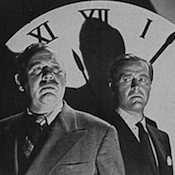 1948 – “The Big Clock” (John Farrow)
Worst title of a thriller ever? As non-menacing as a big clock sounds, this is, in fact, one of the best thrillers produced in the 1940’s and I am choosing it over the effective, but gimmicky “Rope” for this article. If it’s known at all amongst film fans, it’s probably because it’s based on the same novel as Kevin Costner’s atrocious “No Way Out,” which had a field day with creative liberties. John Farrow sticks much more closely to the book and delivered a tense, rewarding film.
Ray Milland and Charles Laughton headline the cast, going toe to toe, and they are two of my very favorite actors. Laughton especially can do very little wrong with me and he fits the bill of the corrupt media conglomerate head to a tee. His performance occasionally teeters on becoming over-the-top but I wouldn’t want Charles any other way. Milland was coming off his only Oscar win and does the man in the wrong place at the wrong time schtick well. Without giving too much of the plot away, Milland and Laughton are caught in a game of cat and mouse, only Laughton doesn’t know that Milland is the mouse. To spoil any other twists and turns would be criminal.
The cinematography by Daniel L. Fapp (future seven time Oscar nominee) is exceptional, using high contrast black and white to constantly give new looks to the same few corners of the office building, which I forgot to mention before. Nearly the whole film takes place in one office building, complete with the titular clock where our climax naturally has to take place. It’s hard not to imagine John McTiernan looking to this film as an inspiration for “Die Hard” in how Farrow milks the claustrophobia for all it’s worth and uses the location as a chief component of the suspense.
The Academy probably viewed the film as a B-movie thriller with an A-list cast, and that may be fair, but it stands the test of time much better than many of its contemporaries and even better than it’s much more recent remake. The script is sharp and the dialogue witty. Elsa Lanchester shows up to steal a few scenes and the pacing is shockingly brisk. I saw the film as part of a class in film school called “Forgotten Films to Remember,” which utilized our incredible collection of rare film prints to screen classics not available on DVD. It has since been released by Universal and there’s no excuse for not tracking it down.
Those are my choices. Have your say in the comments.
Comments
10 responses to “LIFE WITHOUT OSCAR: 1947 and 1948”
Haven’t seen your 1947 selection, Chad, but as the post-WWII era saw a number of great film noirs, I’ll submit my noteworthy selections (dominated by noir, of course).
One of my favorite noirs (along with Kubrick’s 1956 The Killing) is 1948’s He Walked By Night with Richard Basehart. I highly recommend this for noir fans.
1947:
Out of the Past
Monsieur Verdoux
The Bachelor and the Bobby-Soxer
Dark Victory
Desperate
The Devil Thumbs a Ride
Kiss of Death
1948:
Call Northside 777
The Bicycle Thief
A Foreign Affair
Fort Apache
He Walked By Night
Key Largo
The Lady from Shanghai
The Naked City
I thought I was the only one who loved “One Wonderful Sunday”. My favorite Kurosawa film hands down, and one of my favorites in general. Good choice.
As much as I like “One Wonderful Sunday,” my 1947 pick would be Tourneur’s “Out of the Past,” which I think is just about the best film noir I’ve ever seen. It’s astonishing how many wonderfully rich films the Academy overlooked in 1947: the Tourneur film, Preminger’s “Daisy Kenyon,” Dassin’s “Brute Force,” Goulding’s “Nightmare Alley,” Mankiewicz’s (comparatively lighter) “The Ghost and Mrs. Muir”—zero nominations. Sad.
I have yet to see “The Big Clock,” but my 1948 pick is Ophuls’ “Letter from an Unknown Woman,” a film that I love beyond all reason.
Oops—I see that “The Ghost and Mrs. Muir” did get a cinematography nomination, so ignore my lamenting about that one.
I entirely forgot about The Ghost and Mrs. Muir- I wish TCM had it.
Never seen either one of your choices! Thanks for the tip. For me, 1947 is:
Great Expectations
Monsieur Verdoux
The Lady From Shanghai
Nightmare Alley
Miracle on 34th Street
Out of the Past
Black Narcissus
Shoeshine
Brute Force
Germany, Year Zero
Odd Man Out
T-Men
Body and Soul
Pursued
Song of the South
Lady in the Lake
The Secret Life of Walter Mitty
Life with Father
They Won’t Believe Me
For 1948 (what a year!):
The Treasure of the Sierra Madre
Bicycle Thieves
Red River
The Fallen Idol
The Red Shoes
Yellow Sky
He Walked By Night
Force of Evil
Day of Wrath
Fort Apache
Macbeth
Letter from an Unknown Woman
The Search
Drunken Angel
Portrait of Jennie
Oliver Twist
Sorry, Wrong Number
Raw Deal
Mr. Blandings Builds His Dream House
The Winslow Boy
Abbott and Costello Meet Frankenstein
Easter Parade
The Naked City
Key Largo
The Snake Pit
They Live By Night
@ Dean:
I missed Lady in the Lake- good call.
The Treasure of the Sierra Madre- tried to watch it years ago and fell asleep. As much I like Bogart, he’s got a handful of the most overrated films in American film history: The Maltese Falcon, The African Queen, and Treasure.
@ Mark: You’re right about “The African Queen,” but “The Maltese Falcon” and especially “The Treasure of the Sierra Madre” are wonderful.
I don’t think any of those films are overrated, especially SIERRA MADRE, which is in the running for the best film of that decade, for me. I think it chugs right along at a fast clip, easily keeping pace with the films of today, and has a host of charms to it in its acting, screenplay, and direction. Give it another try.
1947:
Jacques Tourneur’s “Out of the Past”
1948:
Max Ophuls’s “Letter from an Unknown Woman”
Fritz Lang’s “Secret Beyond the Door”
Abraham Polonsky’s “Force of Evil”
Fei Mu’s “Spring in a Small Town”
Alfred Hitchcock’s “Rope”
Orson Welles’ “The Lady from Shanghai”