In Contention

Blog

  • Is ‘Gomorrah’ this year’s ‘City of God’?

    Since May, based on nothing but a gut feeling following the film’s Cannes reception, I’ve been predicting that Matteo Garrone’s astonishing “Gomorrah” would score nominations for Best Director, Adapted Screenplay and Film Editing — in addition to a Best Foreign Language Film nod. (Garrone has recently slipped from my Best Director predictions, but he’s still on my radar.)

    It may seem a far-fetched proposition, but clearly I’m not alone in thinking it’s possible. The news this morning that distributor IFC Films has shifted the film’s L.A. release to December, in order to qualify for main-category Oscar consideration, is a clear vote of confidence. One wonders if they have “City of God” at the back of their minds — a similarly violent, kinetic foreign-language study of urban social decay that stunned pundits in 2004 when it scooped four Oscar nominations, including Best Director and Best Adapted Screenplay.

    It’s a slightly different situation, of course — “City of God”‘s amazing haul was surely partly motivated by the Academy’s embarrassment over its exclusion the previous year from the foreign-language race. “Gomorrah,” however, is eligible for the gold in that category this year, so the Academy may feel that would be sufficient recognition for it.

    Still, we all know how the directors’ branch of Academy likes to throw arthouse curveballs now and then (in addition to Fernando Meirelles, think Mike Leigh and Pedro Almodovar), while I think a Best Adapted Screenplay nod looks increasingly likely given this year’s sparse slate of contenders in that category. (The Hollywood Reporter agrees that the film’s writing may represent its best shot.)

    (more…)

  • A sad day for the web

    …the blame lies not with them but with shoddiness in the traditional news media and especially the blogosphere.

    “With the 24-hour news cycle they rush into anything they can find,” said Mr. Mirvish, 40.

    Mr. Gorlin, 39, argued that Eisenstadt was no more of a joke than half the bloggers or political commentators on the Internet or television.

    An MSNBC spokesman, Jeremy Gaines, explained the network’s misstep by saying someone in the newsroom received the Palin item in an e-mail message from a colleague and assumed it had been checked out. “It had not been vetted,” he said. “It should not have made air.”

    But most of Eisenstadt’s victims have been bloggers, a reflection of the sloppy speed at which any tidbit, no matter how specious, can bounce around the Internet. And they fell for the fake material despite ample warnings online about Eisenstadt, including the work of one blogger who spent months chasing the illusion around cyberspace, trying to debunk it.

    More.

  • Winded from the start

    This is well off topic, since it’s such a slow news day (and week), but is anyone else ever thrown for a loop by the longish headlines that appear on New York Times stories?  They seem to get more drastic in the arts & leisure section.

    I’ve had my hand at writing for the Times, and each story had a giant headline tacked on.  A profile of Eric Roth and his tendency to get difficult scripts made in the studio system, with a look toward those scripts that have been lost in that system along the way, landed the headline: “His Screenplays Get Made, Except The Ones That Don’t.” (“His” was actually “Eric Roth’s” in the print edition.)  Another piece about Walden Media and New Line Cinema’s road to the big screen for the children’s classic “How to Eat Fried Worms” was saddled with “‘How to Eat Fried Worms’ (Ick! Yuck! Ugh!) Lures Boys With a Tasty Tale.” And on and on.

    There have been some creative ones that really nail the story, mind you, like a piece about “Hollywoodland” and the George Reeves back story: “The (Tinsel) Town That Ate Superman.” But more often than not, it’s this long-winded stuff.

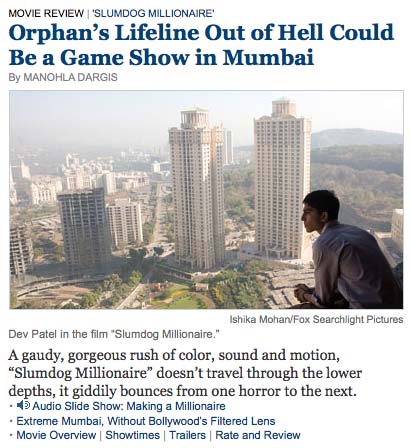
    Today, I ran across Manhola Dargis’ “Slumdog Millionaire” review and there it was, confusing me before I even dug into the copy:

    New York Times review of Slumdog Millionaire

    Am I alone here?  I love the work the Times does, despite the aimless criticism from this outlet or that.  But these headlines gotta go.

  • Parting shot

    Tapping into my inner Jeff Wells here for a bit, but I just came across this shot of our own Guy Lodge, which I took while we were enjoying a few pints in the Covent Garden area of London this summer.  I lost my 80 gig iPod the very same day, not moments before Guy showed up.  Heart breaking.

    There is also a shot somewhere of Gerard Kennedy, drunk off his rocker on Canada Day near Trafalgar Square.  I assure you, it was humorous.  And wonderful blackmail material.

    Guy Lodge

  • 11/12 Oscarweb Round-up

    Ben Stiller• David Chen junkets Danny Boyle on the director’s inspirations. [/Film]

    • David Poland is being pissy about when Paramount wants to screen their Oscar contender this year. [The Hot Blog]

    • Lou Lumenick rounds up the infinitely boring denials and foreplay coming from the “Australia” camp.  Can we just get to the movie already and stop with the lame “news” bytes? [Lumeick on Film]

    • Noah Forrest is kind of over James Bond. [Movie City News]

    • Steven Zeitchik gives “Slumdog Millionaire” another look and still loves what he sees. [Risky Biz Blog]

    • Logan Hill, meanwhile, talks to the film’s standout Dev Patel. [Vulture]

    • Sasha Stone pegs the season as the year of the showcase perf. [Awards Daily]

    • Chris Lee corners “Changeling” star Angelina Jolie about life and stuff. [The Envelope]

    • As the Buzzmeter rumbles to life, slowly, a few more pundits chime in with Tom O’Neil. [Gold Derby]

    • “Gomorrah” producer Domenico Procacci and IFC Films won’t be content with a mere Best Foreign Language Film mention. [Variety]

    • Museum of the Moving Image honoree Ben Stiller talks his feting to Daniel Frankel. [Variety]

    • Dave Karger puts Frank Langella’s likely Oscar clip out there for all to see. [Entertainment Weekly]

  • Why does the Academy fear controversy?

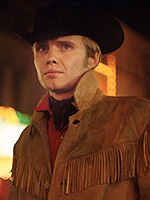
    Jon Voight in Midnight CowboyIn 1969, the Academy saw fit to give “Midnight Cowboy” the award for Best Picture — a first ever for an X-rated film.  Some saw the moment as a bellwether signaling a new dawn for the group, that they were developing a growing acceptance for the films that would start coming at them around this time of creative invigoration in the cinema.  But was it really?

    I remember somewhere that a high-ranking Academy official stated that if “A Clockwork Orange” won the Oscar for Best Picture they would resign their membership! The film had already won top honors from the New York Film Critics Circle and was nominated for four Academy Awards, among them Best Picture and Best Director. A ground-breaking work, the best of Kubrick’s career, still looking futuristic 37 years later, the film is an obvious masterpiece.  But it frightened the Academy for whatever reason.

    A year later Bernardo Bertolucci’s “Last Tango in Paris” came along with a galvanizing performance from Marlon Brando and was certainly a better film than at least two of the pictures nomination int he top race, “The Sting” and “A Touch of Class,” yet as expected, the Academy backed away from the film, nominating only Brando and Bertolucci.

    What is it in the makeup of this esteemed organization of artists that makes them steer clear controversial films, films that push the envelope, that go further out on a limb than most in exploring dark and sometimes daring subject matter?

    (more…)

  • Right to left

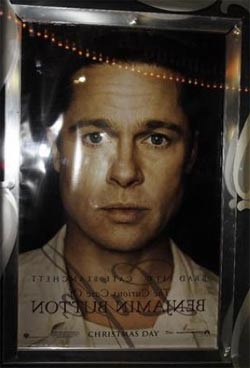
    Thanks to commenter Adam for pointing out this blurry glimpse of the “Benjamin Button” one-sheet on /Film. As Kris anticipated yesterday, it employs the same rather bland artwork that appeared on the film’s Apple trailer page — with the added gimmick that most of the text (save for the release date) reads backwards. Geddit?

    It’s kind of a clever trick, but it still looks like a half-arsed design job to me. What is going on in posterville this year?

  • ‘The Class’ heads Louis Delluc shortlist

    The Cesar may be the most internationally recognised award for French cinema, but the Louis Delluc Prize is arguably the most prestigious. Now in its 73rd year, the prize is awarded annually to a single film deemed by a select jury to represent the year’s finest achievement in French filmmaking.

    Previous winners include Cocteau’s “Beauty and the Beast,” “Les Diaboliques,” “The Umbrellas of Cherbourg” and “Au Revoir, Les Enfants,” so you have an idea of the level of prestige we’re talking about here. In recent years, they have commendably tended to favour underdogs — choosing “Intimacy” over “Amelie” in 2001, for example, or last year selecting “Couscous (Le Graine et le Mulet)” over “La Vie en Rose” or “Love Songs.”

    Now, they have announced their shortlist of seven films vying for this year’s prize. The three most high-profile titles on the list are, obviously, Laurent Cantet’s Oscar frontrunner “The Class,” Olivier Assayas’ delightful “Summer Hours” and Arnaud Desplechin’s “A Christmas Tale.” (Desplechin won the 2004 Delluc for “Kings and Queen.”) All, I think, are wonderful films — “The Class,” in particular, grows richer and deeper the more I think about it.

    Rounding out the list are “La Vie Moderne,” “Seraphine,” “Le Premiere Venu” and “Dernier Maquis,” while their Best First Film award will be fought between “Versailles,” “Le Tueur” and actress Sandrine Bonnaire’s highly personal documentary “Her Name is Sabine” — which I caught on TV the other day and was thoroughly moved by.

    I’m very surprised at the omission of “I’ve Loved You So Long” — still my favourite film of the year to date — from either list, but you can’t have everything.

  • What the… ?

    Insane pre-production news for the day: Charlotte Rampling and Paris Hilton are to appear in the same film. I could make some crack about moving from the sublime to the ridiculous, but… oh wait, I already did.

    If that tidbit isn’t enough to blow your mind, let me put it in context — they have been added to the cast of the new film from Todd Solondz, which is to be a “part-sequel, part-variation” to his boundary-pushing 1998 masterpiece “Happiness.” Also lined up for the ensemble are Allison Janney, Michael Kenneth Williams and Paul Reubens, among others.

    The very idea of it all makes my head swim. I’ve always thought Paris Hilton was destined for an ironic moment of arthouse lunacy some point in her career — a la Shania Twain in “I Heart Huckabees” or, well, the entire cast of “Southland Tales.” This looks like it. Meanwhile, the thought of Rampling and Solondz joining their very intense forces makes me positively tingly.

    Can this year be over already? 2009 sounds so much more exciting.

  • ‘Defiance’ strikes out with the trades

    Ed Zwick may just be one of those directors who will never be in critics’ good graces: a fine technical craftsman and a no-nonsense storyteller, even his best films remain as resolutely unfashionable in execution as they are noble in intention. Nothing wrong with that, of course — I’m no real fan, but films like “Legends of the Fall,” “The Last Samurai” and “Blood Diamond” entertained a lot of moviegoers, even as critics offered a collective shrug.

    Now, early reviews suggest that “Defiance” will continue that pattern. Though Kris had positive words for the film, the trade papers are significantly harsher, tossing out phrases like “dramatically flat” and “an overall lack of creative spark.”

    Todd McCarthy’s review praises the performances (particularly Liev Schreiber’s) and tech contributions, but overall, he is left unmoved:

    A potentially exceptional story is told in a flatly unexceptional manner… Zwick’s version of the grim but inspirational events becomes more conventional as it goes, topped by a climax straight out of countless war pics and Westerns.

    It all becomes pretty standard-issue stuff, filled with noble and tragic heroism, familiar battle images and last-second rescues. None of the suffering, sacrifices, anxieties or tests of heart and soul are rendered with any special dimension or heightened force, nor depicted with anything near the staggering, hallucinatory impact of the two great Russian films to have depicted events in wartime Belorussia, Larisa Shepitko’s 1977 “The Ascent” and her husband Elem Klimov’s 1985 “Come and See.”

    (more…)

  • At least SOMEONE has seen ‘Australia’

    Some people are getting very excited about the gushing praise Oprah Winfrey heaped upon “Australia” in yesterday’s edition of her show, which was entirely dedicated to the movie. She proclaims it “the best movie I’ve seen in a long, long, long, long time,” so I guess she kind of liked it.

    While it’s heartening to hear warm words for the film, I think people may be placing a little too much stock in them — simply because it’s the only opinion of the film that has been expressed so far. I love Oprah, but we all know she’s not the most discerning voice out there.

    On the other hand, this does remind me of a similar show she devoted to “Moulin Rouge,” in which she said something to the effect that the film gave her the same kind of moviegoing rush that she got when she saw “The Wizard of Oz” as a kid. When I saw the film, I knew exactly what she meant. Hopefully, she’s onto something again here.

    Anyway, for those who are interested, here’s a rather haphazardly edited highlights reel of yesterday’s show. You’ve gotta love Oprah’s giddy enthusiasm at the start:

  • THE LISTS: Top 10 biopics

    It’s no real secret that the Academy is partial to the biopic. Big or small, intimate or epic, celebratory or critical, they never seem to tire of the allure of actors channelling real-life figures, past and present. Lately, in the performance categories in particular, biopics have been the surest route to voters’ hearts, with seven of the last nine Best Actress winners falling under the category, and Daniel Day-Lewis having just broken a three-year run of biopic winners in Best Actor.

    The genre is no less prominent this year, with titles like “Milk,” “Frost/Nixon,” “Che” and “W.” all garnering varying degrees of awards buzz, for their star turns in particular. Meanwhile, from the arthouse, European titles like “Hunger” and “Il Divo” are significantly challenging the formal boundaries of the biopic, proving that the genre has far more adventurous terrain to cover than the solid, occasionally stodgy awards catnip the Academy frequently chooses to laud.

    Back in August, I wrote a post about how I was wearying of Oscar’s devotion to the genre; in turn, after my unenthusiastic “Frost/Nixon” review, a friend said to me, “Well, you do hate biopics.” I really don’t. But I am a little bored of the more linear, prosaic examples of the genre that reduce the narrative to CliffsNotes highlights in order to showcase a performance. (Step forward, “Ray” and friends.)

    Real life offers an infinite number of structural and cinematic possibilities, and it is the films that best take advantage of this fact that this week’s list is designed to celebrate. The ten films here take a wide range of approaches in portraying an equally diverse array of lives, but for me, they all pass the principal test of the great biopic: defamiliarizing the familiar. By creating living, breathing characters out of figures best known from history books and pop culture annals, they make real life as revelatory and surprising as fiction.

    It’s interesting to note how few of the films I’ve chosen qualify as the Oscar-bait that biopics are widely perceived to be — we have four Best Picture nominees here, and only one winner. It was by no means a deliberate or elitist move on my part, but the fact remains that a lot of the most interesting and audacious work within the genre doesn’t get the recognition it deserves.

    The biopic is clearly maturing — as I was drawing up the shortlist for this piece, I was surprised by how recent many of my inclusions were, but it’s clear that filmmakers are getting more adventurous with time. For example, in the 1950s, a film like “La Vie en Rose” would have been made as a stolid music weeper in the “I’ll Cry Tomorrow” mold — today it comes in a considerably more fractured form, structurally and stylistically. It’s just one of several recent films, from “The Assassination of Jesse James by the Coward Robert Ford” to “Marie-Antoinette,” to show that the biopic need never be safe cinematic territory. The following ten films prove that.

    10. “American Splendor” (Robert Pulcini and Shari Springer Berman, 2003)
    An ingeniously intertextual account of the life and work of comic book author Harvey Pekar, “American Splendor” goes against the grain of nearly every other biopic of a creative being by revelling in its subject’s ordinariness. Riffing off Pekar’s own autobiographical comics, Pulcini and Berman brought their keen documentarist’s eye to Pekar’s unremarkable world of beige offices and supermarket checkouts, making as much dramatically of the absences in his life as his achievements. Anchored by a quicksilver performance from Paul Giamatti, this achieves the rare biopic feat of matching its subject’s individualism.

    (more…)

  • More vague “news” on ’28 Months Later’

    28 Months LaterI ran across this /Film post today regarding a sequel to “28 Weeks Later” (which, to my mind, was a very successful sequel to the bloody awesome “28 Days Later”).  I don’t generally get into the web-journo thing of clawing over ourselves to convey nothing “scoops” from this junket or that, but seeing as the /Film post (stemming originally from scifi.com) brought such painfully vague information to light (though I guess the possibility of Danny Boyle directing is interesting), I figured I’d add my bit of earth-shattering information, taken from my interview with Boyle last week:

    Well there is a plan.  A little idea.  Well it’s a big idea, and it’s a bit different so it won’t be more of the same.  Not really.

    Feel free to giggle at the absurdity of it all.  I didn’t even bother following it up because he clearly wanted it somewhat muted, but I can’t say I’m not curious about what “a bit different” means.  I love this franchise, and the closing moments of “28 Weeks Later” were friggin’ awesome, so bring this one on any day.

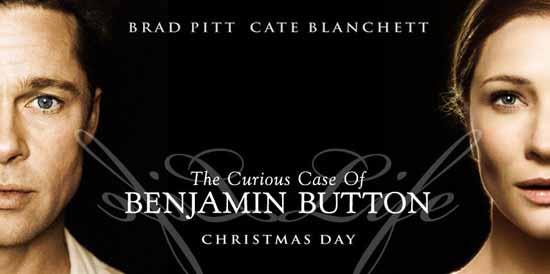
  • Uninspired ‘Button’ poster art lands at Apple

    Granted, this might NOT be the poster art for the upcoming “The Curious Case of Benjamin Button,” but generally, when an image like this lands at the official Apple trailer page, it tends to end up on the one-sheet (same deal on the cover of the soundtrack).  Color me disappointed:

    The Curious Case of Benjamin Button

  • Please stand by

    Forgive us if things have been a little quiet here the past day or two — as Kris has already explained, he’s snowed under with work, while I’ve had my share of distractions too. However, I will be doing my best to pick up the slack, with a new edition of The Lists on the way later today (a little later than usual — apologies) and other bits and bobs to come.

  • Chalk one up for ‘WALL-E’

    The Academy has revealed the 14-strong shortlist of films competing in the Best Animated Feature category, and, well, it doesn’t make for very inspiring reading. What’s most significant about the news is that it means the nominees will, as usual, be limited to three films; to accommodate five, more than 15 shortlisted titles are required. That has only happened once before, in 2002. Here’s the list:

    “Bolt”; “Delgo”; “Dr. Seuss’ Horton Hears a Who!”; “Dragon Hunters”; “Fly Me to the Moon”; “Igor”; “Kung Fu Panda”; “Madagascar: Escape 2 Africa”; “$9.99”; “The Sky Crawlers”; “Sword of the Stranger”; “The Tale of Despereaux”; “WALL-E”; “Waltz With Bashir”

    It’s a nail-biting race. “Madagascar: Escape 2 Africa” may appear to be the locked-in frontrunner, but “Bolt” has Academy veteran Miley Cyrus powering its chances, and watch out for the lovely Australian stop-motion work “$9.99,” which is creeping up on the outside lane, and could take it all…

    Okay, okay, forgive me for trying to make it sound a little more exciting. (I am pleased to see “$9.99” in there, though.) I think we can safely eliminate most of the titles on the list from consideration — even if the voters have in the past nominated the odd head-scratching dud. (“Jimmy Neutron: Boy Genius,” anyone?) Anyway, We all know “WALL-E” is winning this by a country mile, so the only thing left to ponder is which two films it will beat.

    (more…)

  • 11/11 Oscarweb Round-up

    Marisa Tomei in The Wrestler• Peter Bart worships at the alter of Brian Grazer and Ron Howard. [Peter Bart]

    • Tom O’Neil reports on the 14 animated features submitted for toon consideration this year… [Gold Derby]

    • …and he interviews “Changeling” psycho Jason Butler Harner inside Hannibal Lecter’s prison cell deep in the bowels of the Hollywood Museum. [Gold Derby]

    • Jeffrey Wells has his “Eureka” moment regarding “Frost/Nixon.” [Hollywood Elsewhere]

    • Kim Voynar has the right idea about exploring issues of nudity in films, but picks the wrong example to kick it off.  Uh…Marisa Tomei DOES play a stripper. [Movie City News]

    • Russell Crowe talks his 50 lb. “Body of Lies” weight gain across the pond. [Daily Telegraph]

    • Five picks for a black James Bond. [New York Daily News]

    • Despite “W.” having come and gone, Christopher Campbell kicks around Josh Brolin’s Oscar chances. [Spout Blog]

    • Lev Grossman talks to “Watchmen” artist Dave Gibbons. [Time]

  • Are the Oscars a popularity contest? Sort of.

    Over at his increasingly active OscarWatch blog, Dave Karger is bringing up the age-old issue of whether or not the Oscars are a popularity contest. The post is in part a response to Tom O’Neil and Pete Hammond’s dismantling of Karger’s predictions in the Best Actor race, where he declared the frontrunners to be Sean Penn, Mickey Rourke and Frank Langella.

    Seems sound enough to me — the first two in particular — but O’Neil and Hammond seem to feel that personal likeability issues might get in the way for all three actors. Karger acknowledges their point, but ultimately feels they might be off-base:

    I see where they’re coming from: An awards campaign truly is similar to a political campaign at times, and one’s deportment certainly comes into play. I think it’s fair to say that Marion Cotillard’s tirelessness and charm in supporting La Vie en Rose didn’t hurt in her recent eventual Best Actress victory over Julie Christie. And who knows how many nominations Russell Crowe has squandered over the years by shoving awards-show producers or chucking hotel telephones. But then again, I wonder if Penn’s win for Mystic River (after he didn’t even bother to show up for the Golden Globes) proves that conduct doesn’t matter that much.

    I have to agree. Yes, the Academy can play favourites — not least within the actors’ branch — but popularity and likeability aren’t always one and the same. Otherwise, someone as universally liked as Kate Winslet would have won approximately four Oscars by now. (Kate Hepburn, meanwhile, might have won substantially fewer.)

    (more…)