In Contention

Blog

  • POLL: The most influential films of all time, round one, part two

    Harrison Ford in Blade RunnerAnd with that, part one of the first round of voting comes to a close.  Go here for the background on our survey.

    Today, we have 10 fresh titles in the left sidebar for you to rifle through on the way to choosing THREE worthy of moving forward to the next round.  Each poll throughout the rest of round one will include 10 films and choices of up to three.  Last week’s poll was the big dive, 16 titles.  The five that moved on from there were:

    “Apocalypse Now” (1979)
    “Battleship Potemkin” (1925)
    “Citizen Kane” (1941)
    “Gone with the Wind” (1939)
    “Rashomon” (1959)

    I must say, I was sad to see “Bonnie and Clyde” left out.  The Arthur Penn classic was in the top five for a while, but it was too close for comfort on “Battleship Potemkin” as far as I’m concerned.  Literally, a final vote right at the deadline secured it a place in the top five over “E.T.: The Extra-Terrestrial.”  That says one thing to me: more people need to see it.  So to those of you who’ve never seen it, do yourself a favor: seek it out.

    No, it is not the most captivating film of all time and no, you won’t be seeing anything “new” by your standards.  But do a little digging and find out why the film has meant so much to the practice of film editing and montage and you’ll discover why its impact is probably felt as much if not more than the most seminal titles on our massive list of 66.

    Keep in mind when voting: this isn’t a popularity contest.  Don’t just rattle off votes for your favorite films (which, I imagine, has to be the main reason “E.T” was so high on the list during part one).  Take a moment to think about what the films have meant to the medium.  This list represents you, the readership, after all, so vote wisely.

    This poll will close Wednesday, April 29 at 2:00 pm EST.
  • Billy Bob Thornton: “I’m an asshole all the time. What’s the big deal?”

    “Hump-backed geeks” of the world might take some umbrage:

    Click here and here for the background.  And yes, Billy Bob.  I can tell by looking at you that you were there when the Beatles came along.

  • R.I.P. Jack Cardiff

    Sad to see one of the greats leave us.  Perhaps it’s a grand occasion to pick up the “Black Narcissus” Blu-ray, which I hear makes Cardiff’s cinematography pop and is said to be one of the most beautiful high-def discs out there.

  • Ma belle

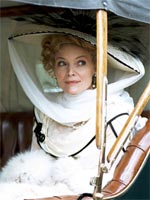
    Michelle Pfeiffer in CheriWhile I’m on the subject of Gallic-flavoured Best Actress contenders, I usually try not to get too invested in an individual’s awards hopes before I’ve seen the film carrying them, but I must admit to one sentimental wish this year: that Michelle Pfeiffer and “Chéri” will live up to the delicate beauty of their source material, and in that event, that Pfeiffer will be duly rewarded for her pains.

    Not to step on Nat Rogers’ toes, but we all have a fantasy list of people we want to see receive an Oscar one day — and nestled among the diverse likes of Mike Leigh and Samantha Morton, Pfeiffer is near the top of mine. Partly, I confess, because she was my first cinematic crush (I was nine, and our first date was “Frankie and Johnny”), but more because of the hope that an overdue career celebration might coerce her into working more often, and casting directors into offering her more tempting bait. (Why should Meryl Streep be the only woman headlining films in her fifties?)

    2002’s undervalued “White Oleander” offered an intriguing glimpse of how the actress’s advanced years actually added nuance and fragility to her trademark froideur; “Chéri,” if played right, should do the same, and then some.

    All of which is a long-winded way of pointing you towards this excellent interview with Pfeiffer in today’s Guardian, in which Geoffrey Macnab pays due tribute to her skill and versatility (I love his suggestion that she venture into the Western genre), and the actress explains that “Chéri” is a more complex beast than the bonbon depicted in the trailer:

    “The scope of the movie turned out to be bigger than any of us had realised at the beginning. We were on a limited schedule, but when you see the film, the scope of it is huge. Usually, you have a couple of scenes where you might have pages of dialogue – but this film, every scene was five, six, seven or eight pages of dialogue. It took a tremendous amount of concentration.”

    (more…)

  • Strong notices for Tautou in ‘Chanel’

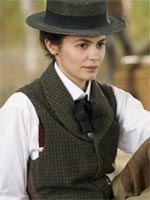
    Audrey Tautou in Coco Avant Chanel2008’s slate of eventual Best Actress nominees may not have been the strongest of recent years, but it was certainly the most predetermined. Months before anyone had seen even a frame of their films,  it was accepted wisdom that Meryl Streep, Angelina Jolie and Kate Winslet (for something, at least) would be invited to the ball.

    This unusual star-focused stranglehold (in an unusually crowded field) made it that much harder (and ultimately impossible) for critics’ darlings like Sally Hawkins or Kristin Scott Thomas to gain a slot.

    This year, however, sees a return to the usual terrain of questionmarks in the field, with the usual regrettable paucity of female star vehicles on the horizon. (Only “Amelia” smells like Oscar catnip, and it smells a little funny to me.) Can Michelle Pfeiffer and Meryl Streep score veteran nods for comedy vehicles? Could either Gabourey Sidibe or Saoirse Ronan become only the second teenaged nominee in the category’s history? Which film, if any, will turn out to be Helen Mirren’s awards pony?

    With the most early buzz centred on an ingenue few have yet heard of (that would be Carey Mulligan), it’s looking like a year of few sure things from a distance, which is the way I like it. (Of course, I could be completely wrong — I bow to certain other folks’ expertise in this field.)

    So with the race so delicately poised at this early point, it’s interesting to see one of the few supposedly baity contenders passing the initial critical test. On paper, Audrey Tautou’s performance in “Coco Before Chanel” has a lot going for it. Nobody needs to be reminded of the Academy’s fondness for biopics (but just for the record, 7 of the last 10 Best Actress winners played real-life figures), and they aren’t exactly averse to pretty period pieces either.

    (more…)

  • A friendly recommendation

    I’m not in the habit of imploring people to go see things — much like organic breakfast cereal, specialist cinema is tastier when you haven’t persistently been reminded how good it is for you — but I must make an exception on behalf of Paolo Sorrentino’s cracking political bio-thriller “Il Divo,” which opens Stateside on Friday (and is still on limited release across the pond).

    I feel it necessary to mention the film because, for all its widespread acclaim, the press for the film tends to depict it as a far harder sell than it really is. I’ve lost count of the number of critics I’ve read referring to the film’s intense grounding in the intricacies of Italian politics, hardly a surefire way to lure even the subtitle-schooled crowd.

    What they largely fail to mention, however, is that this wildly paced, darkly comedic film requires little to no previous knowledge of — or interest in — the figures at its centre to register as entertainment; it’s actually a more accessible, populist work than its ethnic and aesthetic peer “Gomorrah.” “The Consequences of Love.” As I wrote in my October capsule review (and my “Best of 2008” roundup, where it narrowly missed my Top 10), prime Oliver Stone is the closest point of reference here.

    The following trailer is fairly crudely assembled (the film itself is a technical dazzler), but it captures “Il Divo’s” whip-smart energy rather better than much of the media has. As a South African yogurt brand once advertised: “Try it. You might love it.”

  • ‘Baraka’ time

    The occasion of Disneynature’s “Earth” release today should be met with screenings of Rob Fricke’s “Baraka” across the globe, for those uneducated and educated on the film alike.  Go out, buy/rent a Blu-ray, find the best 46″-plus screen you can and bask in its warm rays.  I think this exercise preferable to re-watching, say, Luc Jacquet’s “March of the Penguins” or even the BBC’s landmark “Planet Earth” documentary, to which “Earth” has been compared in recent weeks.  Of course, “Baraka” takes a different route than those largely Mother Nature-centered projects, but I think it does the best job of depicting a humanity in tune with its environment, and at this stage in the game, I think that’s the most applicable course of study.

    Here are the first nine minutes or so, just to whet the appetite.  I saw this thing projected on 70mm once.  Gorgeous.

  • J.J. Abrams on keeping secrets

    J.J. AbramsI enjoyed this J.J. Abrams editorial in this month’s issue of WIRED magazine for the most part.  But even with his somewhat noble point (that spoilers, cheating and the “age of immediacy” have dulled the satisfaction we get out of the “process” of doing, watching or experiencing something), I can’t help but sense a heavier condoning of twists and “surprises” as a necessity in the film and television world.  Maybe it’s just me.

    Anyway, Abrams starts out like so:

    …why does it feel like the world has been ripped open, all parts exposed? Why does so much seem absolutely and thoroughly demystified? These days we can leap, all of us, from a casual curiosity about anything to a sense of satisfying understanding. Instantly. Want to fold origami? There are more than 200,000 Google results on that subject available to you, now. Need to know the capital of Mauritania? A recipe for sticky buns? How to pick a bicycle lock? You could answer all these questions in less time than it will take you to finish reading this article (which, for a second time, I suggest you skip. Remember: You know how it ends, so why are you still here?).

    What I’m getting at is hardly news to anyone: We’re smack dab in the middle of the Age of Immediacy.

    True understanding (or skill or effort) has become bothersome—an unnecessary headache that impedes our ability to get on with our lives (and most likely skip to something else). Earning the endgame seems so yesterday, especially when we can know whatever we need to know whenever we need to know it.

    After having bookended the piece with a great story about how he and his friend tried to beat Super Mario Bros. 2 (I’ve certainly never done this — anyone?), he closes thusly:

    Perhaps that’s why mystery, now more than ever, has special meaning. Because it’s the anomaly, the glaring affirmation that the Age of Immediacy has a meaningful downside. Mystery demands that you stop and consider—or, at the very least, slow down and discover. It’s a challenge to get there yourself, on its terms, not yours.

    It’s a good read. Check out the rest here.

  • What a difference two decades makes

    When I caught Gregor Jordan’s “The Informers” at the Santa Barbara Film Festival earlier this year, I had one of those “Hey, neat-o” moments when I noticed both Mickey Rourke and Kim Basinger were part of the film’s ensemble.  Granted, the two never share the screen and each part is minuscule, but it was a slightly intriguing throwback to the 1980s amid all the decadence of that era on display in the film (which I quite liked, however bizarre and critically ravaged).  But then I saw a shot of the two attending the Los Angeles premiere of the film and I got, I don’t know…sad.

    (from left) Mickey Rourke and Kim Basinger in 9 1/2 Weeks and at the Los Angeles premiere of The Informers

  • Get your votes in

    Part one of the first round on our big, mammoth “most influential movie ever” poll closes tomorrow and part two will launch on Thursday, so make sure you get your votes in.  I’m happy to see “Rashomon” has pushed into the top five, but poor “Battleship Potemkin” is left in the cold, apparently largely unseen and, therefore, not receiving the fair leg up.  But it’s a readership poll so I’m leaving it all in your hands.

  • Shouting match

    I can’t be the only one who read the news that David O. Russell will be directing Christian Bale in his next film and thought, “Uh-oh.”

  • You said it, not me

    Sandra Bullock in CrashSo, what does Paul Haggis have to say about the recent revelation that “Crash” (not the 1996 Cronenberg film, surprisingly enough) has remained the most rented film on Netflix since September 2005?

    “I have no idea why anyone went to see the movie in the first place, let alone rent it.”

    Truer words, etc, etc. But snarkiness aside, Haggis has a fair point here: the film was never meant to be any kind of phenomenon. Whether by calculation, alchemy or sheer good fortune, it happened to resonate with certain audiences upon its spring release four years ago — and if those Netflix numbers are anything to go by, it still does. Credit where it’s due.

    Academy voters thrust a weighty reputation onto this slender film that forever altered the way audiences would approach it, and I’ve long been unsure how it would support that weight. For my part, I disliked “Crash” immensely when I saw it in the summer of 2005, but I didn’t resent it the way I do today — though the fault there lies with me, not the film.

    “Crash” is a fascinating case study of the way the public’s relationship with art can shift with time, but the film’s evident popularity on DVD suggests that the relationship is more in flux than its detractors may have guessed.

    (more…)

  • Coppola turns down Cannes

    TetroNow here’s a curious strategic decision. Having been offered the chance to unveil his much-anticipated “Tetro” in an out-of-competition slot at Cannes, Francis Ford Coppola has responded with a polite “thanks, but no thanks”:

    “While I very much appreciate the invitation, this is an independent film, self-financed and self released, and I felt that being invited for a non-competition gala screening wasn’t true to the personal and independent nature of this film,” Coppola said in a statement released late last week. “More important than Cannes, our team can focus all our time, energy and resources into the US release this June 11th.”

    Coppola is instead opting for a considerably more low-profile bow at the Seattle Film Festival. What gives? Perhaps he just wants to avoid the pressure of a major festival environment: the Cannes crowd can be notoriously hostile towards auteur works that don’t meet certain expectations. (Just ask Coppola’s own daughter.)

    But they can also be welcoming towards veteran filmmakers looking to rediscover form, particularly in the more relaxed out-of-competition strand — Woody Allen has twice benefitted from such platforms in recent years. Considering that “Tetro,” an Argentinian-set family saga headlined by Vincent Gallo and Maribel Verdu, doesn’t sound like the easiest sell in the world, I’d say the Cannes exposure could have done it some good — but maybe Coppola knows something we don’t.

  • Far from heaven

    Ever since it was announced that Peter Jackson had succeeded Lynne Ramsay at the helm of “The Lovely Bones,” I have been hopeful that the project would see him veer closer to the eerie understatement of “Heavenly Creatures” than the extravagant kitsch of “The Lord of the Rings.”

    The premise of Alice Sebold’s novel may indicate delicate drama, but its fantastical elements need a light touch to avoid tipping over into gauzy sentimentality. (We will, of course, be discussing the novel in our Page to Screen series, which starts next month.)

    So I’m pleased to read, in USA Today’s chat with the filmmaker, that restraint appears to be high on his agenda. Though he rightly picks up on the redemptive aspects of Sebold’s narrative (“Susie holds on to love, and by doing so, she transcends the horror of her murder”), he’s wisely taking an open-ended cinematic approach to the issue of the afterlife:

    “It’s God-less in the sense that when Susie dies, she finds herself caught in a place between Earth and heaven — she is in an ‘In-Between,’ as Alice Sebold calls it.” When she moves on, “we’re happy for audiences to imagine this new world in whatever way makes them comfortable.”

    Empire, meanwhile, offers a still that provides an intriguing glimpse of this ‘In-Between’ world. I’m feeling more and more optimistic about this.

    Saoirse Ronan in The Lovely Bones

  • First look at Russell Crowe in Ridley Scott’s ‘Robin Hood’

    When Russell Crowe was on Letterman the other night, it totally escaped me that the filming of Rilsey Scott’s “Robin Hood” was responsible for his new “Gladiator” hair do.  Now we get our first official look at Crowe in character, courtesy of USA Today:

    Russell Crowe in Robin Hood

    And here’s Crowe pitching “State of Play” in the aforementioned Letterman segment. There’s a quasi-interesting/humorous Helen Mirren story thrown in:

  • SUNDAY CENTS: Zac attack

    17 AgainFor the second weekend in a row, a product of the Disney Channel has headlined the top film at the box office. This week it’s Zac Efron in the Warner Bros. comedy “17 Again.” Sure, this plot has been done before multiple times (three in 1988 alone), but not with that distinct new millennium flavor. What’s that? “13 Going on 30?” Okay, so no movie this millennium has done it with a boy as the lead.

    And that’s why this film needed to be made. Conceptual gripes aside, I actually like Zac Efron and if the trailers are any indication, his timing and charm are the only things this film have going for it. A $24.1 million opening weekend is virtually identical to the aforementioned Jennifer Garner vehicle, which helped her establish an identity outside of “Alias.” Her next film was “Electra” so hopefully Efron is paying attention.

    “State of Play” investigates second place with $14.1 million and a handful of decent reviews. In previous years this kind of film would have done better (Affleck’s 2002 April thriller “Changing Lanes” debuted with $21.2 million), but in 2009, Universal will take that result. Direct competition comes from “The Soloist” next week but the word of mouth among adults should be strong enough that this sticks around until Memorial Day.

    After the demanding “Master and Commander” shoot, Russell Crowe said he wasn’t interested in doing movies where he was in every shot any more and that explains his last four films pitting him against an equally famous co-star. With the exception of “American Gangster,” all of them have debuted with $13-$14 million.

    (more…)

  • Rock me gently

    Anvil! The Story of AnvilAlong with a lot of viewers, it seems, Jeff Wells has fallen hard for the sweetly sad rock documentary “Anvil! The Story of Anvil” — and demands that the Academy take notice:

    How can Sacha Gervasi’s Anvil! The Story of Anvil not wind up being nominated for Best Feature Documentary Oscar? It’s got heart, it’s about over-the-hill, down-on-their-luck artists getting their groove back, it’s well made, it’s connecting with audiences, it’s funny, it’s lowbrow-highbrow. How can Academy’s doc committee ignore it?

    Who doesn’t love Anvil!?

    Yours truly, for one — though I wish I did. Much like Ramin Bahrani’s “Goodbye Solo,” which I discussed recently, I saw “Anvil!” in a festival context last autumn, kinda liked it, completely forgot about it, and am now a bit befuddled by the rapturous critical reception it has received.

    I’m not completely resistant to its charms — as I wrote back in October, it’s a witty, compassionate piece of work with a keen eye for absurd detail. What it didn’t succeed in doing was to make me care more than fleetingly about the affably deluded, self-oriented figures at its centre; not having much interest in their music, I didn’t find the band members particularly compelling as personalities either, which for me meant the film never rose above the anecdotally diverting.

    Perhaps I need to give it another go. But if there aren’t five better documentaries released in the course of 2009, I’ll be both surprised and a little disappointed. In the meantime, feel free to tell me what I’m missing.

  • ‘Grey Gardens’ redefines Drew Barrymore as an actress

    Drew Barrymore in Grey GardensIn a stunning, Oscar-worthy performance that redefines her as an actress, Drew Barrymore is nothing short of miraculous as Little Edie in “Grey Gardens,” the latest knockout from HBO. Nothing the actress has shown us before will prepare you for her transformation into the eccentric character she portrays in this fine film.

    I remember seeing her and Jessica Lange presenting at the Golden Globes, holding hands, both looking like they had the most amazing secret in the room. Obviously they adored working with one another on the film, and together they create two characters who could not exist without each other. Ironically, neither actress could do what they do on film without the other.

    The film is based on the famous documentary of the same name by the Maysles brothers, which chronicled the everyday life of a mother and daughter, once affluent and wealthy, now eking out an existence in a run down, vermin-infested 14 room mansion in East Hampton. The aunt and cousin of Jacqueline Kennedy, the odd mother and daughter became cult figures in New York’s underground art world. Their story, from wealth to abject squalor, is explored in the film.

    We have come to expect high quality work from Lange, though in fairness her better efforts have been sporadic over the years. She overcame the stigma of the terrible remake of “King Kong” in 1976 with a string of outstanding performances beginning with the Angel of Death in “All That Jazz” and Cora in “The Postman Always Rings Twice,” for which she deserved an Academy Award. Lange was electrifying in the film, all but blowing Jack Nicholson off the screen.

    One year later Lange was nominated for two Academy Awards, winning Best Supporting Actress for her lovely comic turn in “Tootsie” and astonishing audiences with her ferocious work in “Frances” as troubled actress Frances Farmer. More nominations would come for “Country” and “Sweet Dreams,” with attention for “Crimes of the Heart,” but no nomination, however deserving.

    (more…)