In Contention

Blog

  • Scorsese saves ‘Red Shoes’

    The Red ShoesI’m willing to lay a substantial bet that there won’t be a better film screened at this year’s Cannes festival that the brand-new restoration of Michael Powell and Emeric Pressburger’s 1948 ballet-drama-cum-fairytale “The Red Shoes.” Easily one of the most exquisitely designed works ever put to celluloid, and a jewel in the crown of the great (and recently departed) DP Jack Cardiff’s career, it’s a film I’ve loved since childhood that never fails to show me something new upon each visit.

    The fully restored print will be introduced tomorrow on the Croisette by Martin Scorsese, who arranged and funded the restoration with his longtime editor (and, of course, Powell’s widow) Thelma Schoonmaker. Anyone familiar with Scorsese’s career likely knows the deep affinity the director has for Powell and Pressburger’s work, and there’s a nice piece in today’s Guardian in which he discusses the influence the British team had on his own creative development, as well as his personal friendship with Powell himself:

    I had to explain to him that his work was a great source of inspiration for a whole new generation of film-makers – myself, Spielberg, Paul Schrader, Coppola, De Palma. We would talk about his films in Los Angeles often. They were a lifeblood to us, at a time when the films were not necessarily immediately available. He had no idea this was all happening.

    Apparently, Scorsese and Schoonmaker plan to restore more works in the Powell/Pressburger canon down the line. Bless them. For my part, I’ll be seeing the restoration at next month’s Edinburgh Film Festival. There’s something to look forward to.

  • Mixed critical response for ‘Tetro’

    Alden Ehrenreich in TetroFollowing its Cannes premiere, Francis Ford Coppola’s “Tetro” has been greeted with something of a collective shrug by the critical community. Most of the reviews appear to follow the lead of Todd McCarthy’s mixed Variety take, in which he praised the cinematography and the performance of relative newcomer Alden Ehrenreich, but largely dismissed it as “a work of modest ambition and appeal … the pale product of an over-tilled field.”

    Screen International’s Lee Marshall is slightly more enthusiastic, crediting the cast with saving “all but the most cringeworthy lines,” and declaring — not entirely in a negative way — that the film has the “melodramatic sweep and overwrought tone of an opera libretto.” indieWIRE’s Eric Kohn also sits squarely in the middle, suggesting the film has the look and feel of a promising debut effort, but is only “mildly interesting” from a director of Coppola’s stature.

    Only Kirk Honeycutt at the Hollywood Reporter sounds really enthused about the film, despite some reservations:

    As a critic, it feels good to write positively about one of the American cinema’s lost directors… “Tetro” erases that memory (of “Youth Without Youth”). It has style to burn, eye-catching acting by an international cast and a story that harkens back to many literary classic with its themes of a family torn apart, brothers in conflict and a son’s rivalry with a towering father figure.

    The film is more than a little self-conscious …Yet somehow the piece comes off as derivative but also original. While living and working in Argentina to make this film, he absorbed enough local color to imagine a fresh, authentic tale of stymied creativity — a subject he certainly would be familiar with — and familial conflict.

    Probably not the comeback that some people were hoping for. But then, some people will consistently hope for the impossible.

  • ‘The Road’ gets a trailer

    Spooky. The minute I post my delayed Page to Screen discussion of the “The Road,” the film’s trailer finally pops up online. I’m going to try this tactic again in the future. Anyway, here it is.

    As that first Esquire review warned us the other day, the marketers appear to have made the curious decision to sell this as a propulsive action piece. I’m not sure who they imagine will fall for that angle, but don’t panic just yet.

  • PAGE TO SCREEN: “The Road” by Cormac McCarthy

    The RoadWe’re working from the outside in on this one, folks. You may recall that Brian Kinsley offered a thorough examination of Joe Penhall’s “The Road” screenplay for this column back in September last year, which already addressed many of the challenges inherent in this particular adaptation.

    However, in keeping with Page to Screen’s return to discussing source material rather than scripts – and with John Hillcoat’s film on a lot of people’s minds this week – I thought it a good time to take another look at Cormac McCarthy’s much-garlanded novel. I should specify that I have neither read Penhall’s adaptation nor seen the film; the novel is the only text with which I am engaging at this point.

    It seems only fair to start with a blunt, and admittedly very guilty, confession: I don’t very much like McCarthy’s novel.

    Before the irate attack begins, let me clarify that this statement is not in any intended as a challenge to “The Road’s” literary worth, much less its potential for successful filmmaking. It is, in its paradoxical construction of loose, virtual shaggy-dog-style narrative and terse, urgent prose, an indisputably awe-inspiring novel, one that at once gazes into the back-to-back mirrors of who we are and who we will be, and arrives at some discomfitingly vivid prophecies in the process.

    I commend McCarthy’s avoidance of didacticism and rationalisation: the novel’s grim, apocalyptic future is presented as a terrifying inevitability rather than a cautionary allegory, offering no concrete indication of what led humanity to the long-desecrated point at which the narrative begins.

    That may not make the novel as ideologically constructive as the kind of “it takes a village” finger-pointing that colors so many other literary and cinematic warnings of man’s imminent self-destruction – the film, when it finally arrives, would surely make for an interesting double-feature with Andrew Stanton’s “WALL-E” – but it is certainly a much more jolting, unnerving experience for it.

    (more…)

  • The ‘Up’ crew Tweets from The Croisette

    Guy is handling all of the Cannes updating splendidly, so I’ll just impede on his turf this once.  I don’t know if readers have kept up with or even been privy to the consistent Twitter updates coming from “Up” co-director Pete Docter in Cannes, but it’s a nice way to feel like you’re right there with the crew.  Things are kind of slow right now — lots of talk about interviews and the like.  But the photos from the big opening night after party were ace.

    Here’s a shot of the full spread — credited to Getty Images — with two more (one of the tents made up like the home of the film’s main character and a cool/bizarre candid of Pixar honcho John Lasseter) after the jump.  As always, you can keep up with In Contention and my general day-to-day silliness here.

    Up party at the 62nd International Cannes Film Festival

    (more…)

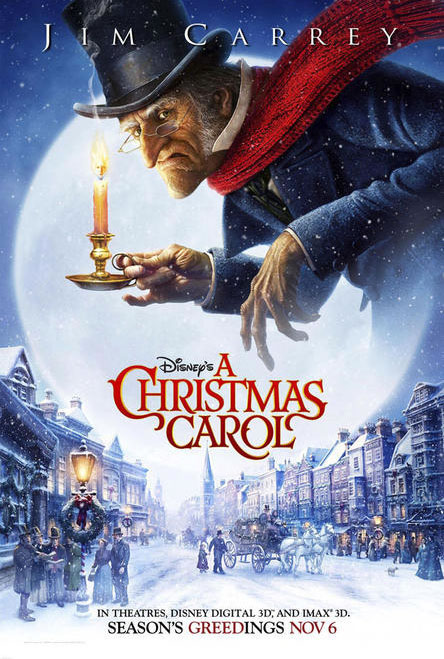
  • ‘A Christmas Carol’ poster

    I was a big fan of Robert Zemeckis’s “The Polar Express” in 2004, but “2007’s “Beowulf” didn’t work for me very much.  I had some major issues with the way 3D was used in the film.  But I’ve been very excited for “A Christmas Carol” ever since the project was announced.

    I’ve stood on the sidelines and watched Jim Carrey’s career spiral out of control in the wake of his career-best performance in “Eternal Sunshine of the Spotless Mind.”  2005’s “Fun with Dick and Jane” and last year’s “Yes Man” are just incredibly impotent comedies that didn”t give Carrey, a bona fide star, the chance to shine.  “The Number 23,” meanwhile — well, just don’t get me started on that unfortunate project.  It’s all very sad.  Maybe this film will light up his career once again.

    The poster for “A Cristmas Carol” has finally hit, and I expect it to be the first of many (since Carrey will be taking on four characters in the film — great opportunity for marketing).  Take a look:

    A Christmas Carol

  • 5/14 Web Round-up

    (from left) Adrian Brody and Mark Ruffalo in The Brothers Bloom• A little news from my homeland: Michael Cieply reports on Durham, North Carolina finally getting its Hollywood day in the sun. [The Carpetbagger]

    • Revisiting Stephen Frears’s “The Queen” on the basis of entertainment and history. [The Guardian]

    • Rachel Abramowitz profiles new “Angels & Demons” starlet Ayelet Zurer. [Los Angeles Times]

    • Director Frank Darabont’s 223 favorite movies. [Empire]

    • Kim Voynar wonders where the muscle-bound estrogen is at the multiplexes this summer. [Movie City News]

    • Brooks Barnes reports on “Kung Fu Panda”‘s transition from animated film to Nickelodeon TV series. [New York Times]

    • Maria Puente on the many visions of Salvador Dali on film. [USA Today]

    • The home of “Slumdog Millionaire” star Azharuddin Mohammed Ismail has been demolished. [Wall Street Journal]

    • In honor of the “unbearable start” of “The Brothers Bloom,” Christopher Campbell writes up a list of 10 films ruined by voice-over narration. [Spout Blog]

  • Teenage star of ‘Fish Tank’ wows Cannes

    Katie Jarvis in Fish TankOnly two films in so far, but it seems we have a formidable contender for the festival’s top honors in the shape of Andrea Arnold’s “Fish Tank.” The film has just screened for the press, and Arnold — who won the bronze-medal Jury Prize in 2006 with her debut feature “Red Road” — has evidently built on that success, but it seems the real revelation is the film’s 17 year-old star, Katie Jarvis.

    A non-professional making her screen debut, Jarvis is unable to attend the festival, having just given birth to her first child in her Essex hometown. But even in her absence, the young lady is generating enough to buzz to plant her as a strong contender for the Best Actress  award. IndieWire’s Eugene Hernandez calls her “the first major acting discovery” of the festival, while Screen International’s Allan Hunter gushes:

    Following in the wake of Kate Dickie’s extraordinary performance in Red Road, newcomer Katie Jarvis is every bit as impressive as Mia, finding the vulnerability of the teenager without recourse to sentimentality or surrendering any of her anger or sarcasm. It is a performance that should win her a lot of attention and add profile to a film that will have to fight for its audience.

    (more…)

  • Gilliam wants “another award for Heath”

    Heath Ledger in The Imaginarium of Doctor ParnassusIt may not be in the Competition lineup, but Terry Gilliam’s “The Imaginarium of Doctor Parnassus” is surely one of the most eagerly — and curiously — awaited films of the Cannes festival. The bulk of the interest, of course, rests on the unfinished final screen performance of Heath Ledger, and how (or, indeed, if) Gilliam’s audacious strategy of completing the late thesp’s characterisation with contributions from three other actors will work.

    All will be revealed when the film makes its Cannes debut next Friday, but for now, Gilliam talks up “Parnassus” in an interesting interview with the Times of London — and the famously bolshy director minces no words when it comes to his awards hopes from the film:

    The planned release date for Doctor Parnassus is in the autumn. “We want to be in that last third for the Academy Awards! Maybe we’ll get another award for Heath. We’re going to get as many awards as possible for him, long after he’s gone.”

    Meanwhile, he’s confident that Jude Law, Johnny Depp and Colin Farrell’s continuation of Ledger’s role is a success, both in terms of artistry and commercial viability:

    We were lucky because we have a magic mirror in this movie. Not every movie has a magic mirror. So you can very genuinely say that these other actors are different aspects of the character that Heath plays. And it works. The point was, we’ve got to keep going. It was a bit like half being there, but apparently on autopilot I can still do a few things … It’s a hard thing to do, walk into a character and take over. But they did it.

    (more…)

  • Can’t win ’em all

    UpSo as is the norm with Pixar productions, “Up” is apparently capturing the heart of virtually every critic it encounters. Jeff Wells offered a few mild caveats, but he was largely won over as well. So I was interested to read Kaleem Aftad’s three-star review in the Independent, which offers the first hard-and-fast criticism of the film I’ve seen to date:

    Watching with tinted glasses cannot hide the deficiencies of this adventure. It is increasingly apparent that Pixar is a company that operates best when dealing with nostalgia. Like the outfit’s previous film, WALL-E, Up is superb in setting up characters and a world that hankers over memories of yesteryear, but once the adventure moves into its obligatory action denouement, it enters a world of stereotypes that disappoints.

    Indeed, action sequences have been Pixar’s Achilles’ heel, with overly long and tedious effects letting down Cars and The Incredibles. In Up, the blockbuster moments that should be of Around the World in 80 Days proportions are instead surprisingly uninventive.

    Apart from the kooky animals (nowhere near as endearing as The Jungle Book ones), the destination is a boring land of plateaus and uninspiring forests. Muntz pops up as a Wizard of Oz-inspired villain. The nostalgic past is replaced by a horrible sentimental present that lacks emotional punch.

    Not having seen the film, I have no idea how valid these jabs are, but it’s useful to get some perspective. Interestingly, unlike several critics who are signficantly more enthusiastic about the film, Aftad has no problem whatsoever with the film’s 3-D element, justifying it on the grounds that it emphasises “optical reality rather than just an eye-popping spectacle.”

    In contrast, the Guardian’s Xan Brooks, who loves the film, sides with Roger Ebert, complaining: “It’s a film that was always going to come in three dimensions, no matter what digital wizardry they garnished it with.”

  • ‘Nine’ trailer

    Well, it looks every bit as glossy and gaudy as you might have expected (even more so in Apple HD), though it’s a tease, really: there’s little sense of the movie beneath the flash and sizzle. The only player amid the impressive ensemble that is even vaguely showcased is Judi Dench, but if her entire performance is in the amusing, imperiously tart register of that first speech, I sense a seventh nomination in the works. Otherwise, there’s not much here to go on, but enjoy the show:

  • ‘Spring Fever’ screens at Cannes

    Spring FeverMany pundits were predicting that Lou Ye’s erotic drama “Spring Fever” could nab the Palme d’Or, if only as a political gesture against the Chinese censors who imposed a five-year filmmaking ban on the director — which he has defied with this film. Following last night’s press screening, however, those hopes have taken a bit of a knock, as it appears to be more an intriguing curiosity than a surefire arthouse success.

    Screen International’s Howard Feinstein is beguiled by the film’s elaborate floral imagery and “astonishing” cinematography, but feels its narrative opacity and explicit sexual content might limit it to the gay festival circuit:

    Close-ups of flowers not only open and close the film, they also pop up intermittently, mirroring shifts in both the story line and the state of mind of its gay protagonist. This integration of visuals and narrative, however, is the exception rather than the rule in this ambitious and – by mainland Chinese standards – daring project. The screenplay is so convoluted and contains so many loose ends that the intense style (fragmented editing, jerky, handheld camera) only highlights the movie’s occasional lapses into incoherence.

    (more…)

  • Cannes soup

    Palme d'OrThere’s a bewildering wealth of quality Cannes coverage out there, and it tests the realms of possibility to mention it all. In the interests of economy, however, here’s a selection of the more interesting festival-related nuggets I found today:

    Eugene Hernandez at IndieWire has a superb piece up in which he approaches a broad selection of industry figures and bloggerfolk with the question of whether Cannes matters much these days. The response of many is sad yet predictable: that the festival does indeed matter from the purist’s perspective of showcasing artistically nourishing films, but that with the commercial window for foreign and/or arthouse fare increasingly narrowing, it has less bearing on the U.S. market than it should. Still, I liked the succinctly idealistic take of one interviewee: “When Cannes no longer matters, film will no longer matter.”

    Back to the films themselves, the New York Times’ Joan Dupont offers her own rundown of the key titles in the mix, picking up, as others have,on the prevalence of controversial auteurs in this year’s lineup. She also provokes this soundbite from the fest’s executive director Thierry Frémaux, explaining why this year’s Competition line-up is so heavy on previous winners and established names:

    “Yes, the big names are back, and with big films … The selection reflects our concern for auteurs — that’s our job. You need to be strong to be in competition; everybody’s watching you. That’s why we think that many films are better off in Un Certain Regard. The filmmakers don’t always agree.”

    I can’t say I agree, either. It’s precisely two decades since a miniature character study from a 26 year-old first-time director walked off the Palme d’Or and changed the face of American independent filmmaking in the process — would Steven Soderbergh have been relegated to the Un Certain Regard sidebar today? I suspect so, and that demonstrates a cautiousness that can only curb Cannes’ capacity for trend-setting.

    (more…)

  • Shortest brief ever?

    But I’m excited:

    LOS ANGELES – Martin Scorsese (scor-SAY’-zee) will be telling Frank Sinatra’s life story on film.

    Universal Pictures says the Academy Award-winning filmmaker will direct “Sinatra,” the first feature film about Ol’ Blue Eyes‘ life.

    Source: AP.  Love the pronunciation key.

  • Roadworks

    I know I promised a Page to Screen column on “The Road” today, but once in a blue moon, promises have to be broken. The start of the Cannes festival has ushered in a wealth of distractions, and as much as it slips my mind some days, I have a life away from my laptop too. I am but one man.

    So I must this once postpone the piece until tomorrow — but rest assured that Tuesdays will remain Page to Screen days from next week.

  • Lukewarm early notice for ‘Tetro’

    Todd McCarthy apparently posted a review for Francis Ford Coppola’s “Tetro” on the Variety site, but it seems to have mysteriously vanished — I guess embargos stills hold sway in some cases, after all. Still, if you cannot contain your curiosity, Jeff Wells has quoted a juicy chunk of the review, and the prognosis is not terribly positive.

    There’s enthusiastic praise for young actor Alden Ehrenreich, who apparently reminds McCarthy of all three leads of “The Departed” (there’s a curious mental image), but the film, according to the critic, becomes mired in murky theatrical stylistics — which I’m afraid squares with the vibe I personally got from the film’s trailer.

    I don’t really want to requote criticism that was obviously prematurely released in the first place, but I know there’s a lot of interest in this title, so it’s there if you want it. The film screens tomorrow at Cannes.

  • SPC snaps up new Haneke film

    The White RibbonOne day into the Cannes festival and the gears of commerce are already grinding, with Sony Pictures Classics looking particularly alert. The independent outfit announced two substantial acquisitions today, most notably Michael Haneke’s “The White Ribbon,” a period drama themed around issues of fascism and community that is one of the bookies’ favorites for the Palme d’Or.

    SPC have pretty good instincts on the Croisette — last year’s purchases included “The Class” and “Waltz With Bashir.” As with Haneke’s last film, “Caché,” they will be handling all North American distribution, and they appear to have high hopes for the film. Here’s an extract from the press release:

    The White Ribbon is set just prior to the start of WWI, where the quiet life of a small German village is mysteriously eroded by a series of inexplicable events. The film is a co-production between X-Filme Creative Pool in Germany, Les Films du Losange in France, Wega Film in Austria and Lucky Red in Italy. THE WHITE RIBBON was produced by Margaret Menegoz (CACHÉ, Funny Games), Stefan Arndt (Run Lola Run, Goodbye, Lenin!), Veit Heiduschka and Michael Katz.

    “We have been pursuing THE WHITE RIBBON since it was a kernel of an idea in Michael Haneke’s mind. We are convinced this is his masterwork. It is a privilege and a pleasure to be releasing Michael’s latest film and to work again with him and his amazing producers Margaret Menegoz and Stefan Arndt,” said SPC in a statement.

    Not content with that coup, Sony has also nabbed U.S. rights to the festival’s closing film, “Coco Chanel and Igor Stravinsky.” (Not exactly that catchiest title, that.) Starring Danish star Mads Mikkelsen and telling the story of the affair between the two eponymous cultural icons, it is not to be confused with Anne Fontaine’s Audrey Tautou-starring biopic “Coco Avant Chanel,” which SPC is also distributing Stateside — as savvy commenter Glenn points out, this is likely a move to prevent a head-to-head biopic battle.

  • Apparently today is ‘Top Gun’ Day

    No, seriously.  I give you my favorite moment from the film.  Anthony Edwards, God bless: