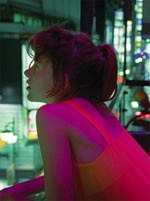
 That’s it — all 20 Palme d’Or contenders have now screened for critics, and the final deliberations can begin. Most of the media attention in the past two days has focused on Gaspar Noé’s new film “Enter the Void,” though it hasn’t aroused anything like the firestorm of controversy that his “Irréversible” did in 2002. (Perhaps the media simply hasn’t the energy for a fight after “Antichrist.”)
Although reportedly as violent and sexually explicit as one would expect from Noé, the film, which screened at the Croisette in still-unfinished form, seems to have prompted more confusion than outrage from the press. The critical response, meanwhile, is more positive than might have been expected. Manohla Dargis leads the cheer team for the film:
An exceptional work, though less because of its story, acting or any of the usual critical markers. What largely distinguishes it, beyond the stunning cinematography, is that this is the work of an artist who’s trying to show us something we haven’t seen before, even while he liberally samples images and ideas from Stanley Kubrick and the entirety of American avant-garde cinema. The grungy milieu and calculated shocks might have been designed to make you flee – even while your attention is tethered to the camera – but, really, these aren’t the point. The point is the filmmaking.
ScreenDaily’s Mike Goodridge is somewhat awed, describing the film as “a wild, hallucinatory mindfuck” that is “nothing short of hypnotic,” even suggesting the film as a future staple for narcotic-fuelled viewings — though like Dargis, he dismisses the characterisation and narrative as being of secondary quality and importance. Variety is less forgiving, labelling the film “tiresomely gimmicky” and implying it is less “pure cinema” than “pure trash.”
 •
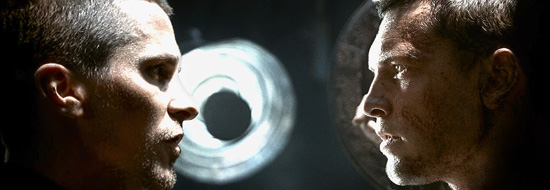
 Oscar talk hasn’t surfaced that much on the Croisette this year, with “Bright Star” the only competition title prompting much speculation from the pundits. Roger Ebert, however,
 When “The Wizard of Oz” was released in 1939, neither audiences or critics were particularly fond of the film and it died a rather quick death at the box office. When “Citizen Kane” was first released in theatres in 1941, audiences did not warm to it, and despite winning the New York Film Critics Circle award for best film, and nine Academy Award nominations, it too died a fast death.
 David Milch’s “Deadwood” was, to my mind, the best show on TV until it was unceremoniously canceled in 2006. It’s heartbreaking that its many complex plot threads were left twisting in the wind and that, in all likelihood, Milch will never bother with the feature films he once promised would close the chapter on his western yarn.
 Anne Thompson
 It was always a safe bet that, in spite of the curiosity value of Heath Ledger’s final screen performance, Terry Gilliam’s “The Imaginarium of Doctor Parnassus” wasn’t cut out to be a crowdpleaser. It’s been over a decade since the defiantly eccentric filmmaker made anything approaching the term “accessible,” much less something widely liked. And the apparent opacity of his latest, beginning with that unwieldy title, didn’t suggest he was going any easier on his audience, or himself.
 Totally beside the point, but the first thing I thought when this press release popped up into my inbox was how happy I am to see studios like Overture and Summit succeeding in what has too long been an industry run by the big guns. I miss the days when an October Films could get stuff done, or an Orion. Anyway, here’s the press release, in part:
 Watching Pixar Animation grow and develop as a studio has become almost more fascinating than experiencing one of the company’s many creative films unfold on screen. Beginning with an industry leap in 1995’s “Toy Story” and eventually moving into its daring own with 2008’s “WALL-E,” the studio has, at the very least, shown a desire for creative progression.
 If you’ve seen Steven Soderbergh’s “The Girlfriend Experience” (which opens in theaters tomorrow after being available
 It may be just a coincidence, but I’ve noticed that, for all the media kerfuffle over its maker’s supposed “woman-hating” agenda, a number of the most level-headed, inquisitive responses to “Antichrist” seems to be coming from female writers. Put it down to thicker skins, stronger stomachs, or nothing whatsoever — I’m just saying. Manohla Dargis, for one, isn’t a great fan of the film, but
 I should say at the top that I have not yet seen Rian Johnson’s “The Brothers Bloom,” but I was an absolute disciple of the director’s 2005 debut “Brick.” That said, “Bloom” has always had a particular sheen to it that has obviously kept it from being a must-see since the first screenings began back in September of 2008. Elbert Ventura, writing in
 “Airworld” is novelist Walter Kirn’s term for the impermanent realm of regional American air travel, a sleek network of bland local airports and adjacent beige hotel rooms, linked by the plush grey trails of business-class flights. It forms the scattered but otherwise constant home to thousands of American corporate drones, and is the simultaneously alien and mundane setting for “Up in the Air” – soon reaching your screens courtesy of writer-director Jason Reitman and star George Clooney.
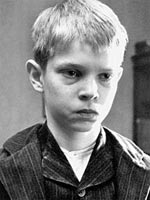 Could this year bring a close to Michael Haneke’s bridesmaid’s run at the Cannes Film Festival? Haneke has come within touching distance of the Palme d’Or before, taking the Grand Prix in 2001 for “The Piano Teacher” and Best Director in 2005 for “Caché,” but the big prize has so far eluded him.