(Courtesy: Yahoo! Movies)
 Toronto Film Festival
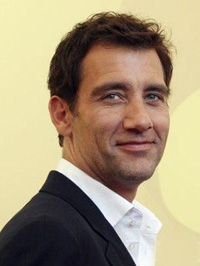
“I have two lives, mate,” Clive Owen says with clear-eyed certainty. “My work, and when I am done, my home life. There is no question to me which is more important. My wife and children are everything to me.”
Owen is as intense in person as he is in some of the roles he played on screen the last few years. Best known as a tough guy type in films such as “Sin City” and “Shoot ‘Em Up,” he is also brilliant without the edge, as evident in “Bent” and his Oscar-nominated turn in “Closer.” He sits close to me, his eyes never leave mine, and when I glance down to make a note he is still staring at me. But when he smiles his eyes smile as well. As Scott Hicks says, “Clive loves his life, he loves his family, his girls, his work, and his success…he loves his life.”
I wondered how much that love for family and life allowed Owen to tap into the mind of the character he portrays so very well in “The Boys are Back,” the new film from Aussie director Hicks, who first made an impact here back in 1996 with “Shine.” Owen has emerged as one of the great British actors in recent years, his scalding performance in “Closer” an extraordinary poiece of acting that seemed to blow everyone else in the film off the screen, no mean feat considering the quality of the acting in the movie. Julia Roberts and Natalie Portman gave career best work in the film, many of their scenes coming opposite the actor in front of me.
Owen’s road to this place began in television, with his first memorable film performance coming in the powerful drama “Bent,” based on the play by Martin Sherman about Hitler’s massacre of homosexuals during the Holocaust. It was “Gosford Park” that next earned him strong notices, followed by a role in “The Bourne Identity” with Matt Damon.
After the box office failure of “King Arthur,” Owen was back in theaters with “Closer,” which changed the course of his career. Brilliant work in “Children of Men,” “Inside Man” and, more recently, the under-appreciated “Duplicity,” have made him one of the top stars working in film today, and among the busiest. At one time he was among the leading contenders for the role of James Bond, a role that eventually went to Daniel Craig. He possesses a Bogart tough guy persona, but with a soft side buried within. There is certainly an edge to his work, but there is a heart there as well.
 • Keanu Reeves on Patrick Swayze: “He was a beautiful person, an artist.” [People]
• Peter Bart salutes John Calley for landing an honorary Oscar but highlights the producer’s roller coaster career. [BF Deal Memo]
• Peter Knegt talks to the beautiful Anna Kendrick about butterflies going into the “Up in the Air” shoot. [indieWIRE]
 Say what you like about Nicole Kidman, but the lady’s taste in directors is beyond reproach. Fresh from having imaginatively recruited John Cameron Mitchell to guide her pet project “Rabbit Hole,” she’s teaming up with another arthouse maverick looking to cross over — Tomas Alfredson of “Let the Right One In” fame.
Alfredson will direct Kidman in “The Danish Girl,” another project the actress has been nurturing for some time, but one that seemed to have stalled for a while. I’ve been intrigued by this one ever since it first popped up on the radar, offering as it does a major thesping opportunity for the actress.
Kidman will play Einar Wegener, the male Danish artist who in 1931 underwent the world’s first sex-change operation. (The film will, however, be proceeding without Charlize Theron, who was earlier attached to play Wegener’s wife. Pity, that — sounded like a plum role for her, too.)
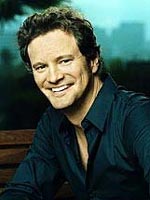 I must say, when I saw and loved Tom Ford’s “A Single Man” at Venice last week, I obviously picked up on the awards possibilities for Colin Firth’s career-best work. Hard not to.
What I didn’t quite anticipate is that it would be the talk of Toronto only a few days later. It’s encouraging to see such a niche film garnering so much attention. That’s what Harvey Weinstein will do for ya.
So, is Colin Firth decisively in the Oscar pack? Well, it depends who you choose to listen to. Anne Thompson says a big “hell yeah”:
Firth, who just turned 39 [sic], is a slam dunk for his first Oscar nomination. While the actor has delivered in many strong roles over the years, including BAFTA-nominated performances in Pride and Prejudice and Bridget Jones Diary, he’s never single-handedly carried a movie like this.
David Poland, meanwhile, offers an equally emphatic “hell no”:
Colin Firth is excellent … It’s the kind of performance in the kind of movie that could draw an Oscar nod in the thin list of actress contenders each year. But Best Actor is a 1000 to 1 shot. In fact, Julianne Moore has a better shot at Supporting, which might be why The Weinsteins bought the film.
 Keeping up our watch on the Best Foreign Language Film race, one of the category’s regular players, Spain, has come one step closer to making its official submission — having revealed the final three films in contention for the spot.
Some will be surprised that Pedro Almodóvar’s “Broken Embraces” — the year’s most globally-discussed Spanish production by a long shot — isn’t on the list. They shouldn’t be. Contrary to what some may expect, Almodóvar and the Spanish Academy selectors have an on-and-off relationship.
Five of the auteur’s films have previously been submitted for the award — though only two (“Women on the Verge of a Nervous Breakdown” and “All About My Mother”) were ultimately nominated. The latter, of course, won the 1999 race. But Almodóvar has been prominently sidelined before — as in 2002, when the selectors unwisely decided against submitting “Talk to Her,” the film that eventually won the director a screenplay Oscar in spite of the snub. (D’oh!)
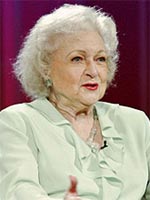 87 year-old Betty White has been named as next year’s recipent of the Screen Actors’ Guild’s lifetime achievement gong, which apparently honors both career achievement and humanitarian work. (Are both those two factors always prerequisites? Just asking.)
Anyway, you go, Rose … you’ll be 88 when you collect the prize, lest we forget. Thank you for being a friend, etc, etc. Here’s the press statement by SAG head Alan Rosenberg:
“Whether creating some of television’s most indelible characters, plunging into film roles with joyous gusto or perfecting the art of the quip as a television panelists and host, Betty White has entertained audiences with her impeccable comic timing and remarkable with for more than 60 years.
 I meant to get to this earlier, but sometimes, you know, real life gets in the way. Anyway, the big news of the day is that The Weinstein Company has snapped up the U.S. distribution rights to Tom Ford’s stunning debut “A Single Man,” with plans for a 2009 Oscar-qualifying run, marking the first really newsworthy deal of the Toronto fest.
This is just the kind of fate I hoped might await the film when I saw it last week at the Venice Film Festival. It’s a delicate, esoteric piece that needs the attentive handling of a smaller outfit — but, at the same time, has significant, clearly designated awards prospects that need some savvy campaigning to help realize. I can’t see a better fit for this film than the Weinsteins, frankly.
The long and short of it is that you can firmly pencil Colin Firth in on your list of Best Actor prospects. It’s a prominent, immensely moving performance that, following his recent win in Venice, should gain critical traction in what looks like an unusually lean field so far. Add the fact that Firth is a popular, well-established star still looking for his defining career role — for critics, at least; for the female public, he’ll always be Mr. Darcy — and the Weinsteins’ campaigning muscle, and he’s firmly in the mix.
 Toronto Film Festival
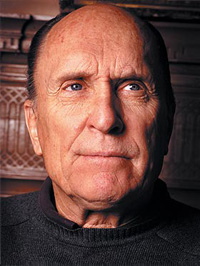
Sitting down with Robert Duvall is more than a little intimidating. The man does not suffer fools, nor does he have a lot of time for small talk or stupid questions. He likes to talk, but he also likes an informed conversation. As he nears 80, he is still a force of nature, with a powerful presence and voice that goes up and down depending on his excitement.
Duvall and I first met in 1997 when “The Apostle” exploded out of Toronto, landing the veteran actor a much-deserved Oscar nomination for Best Actor. The performance was a volcanic, furious portrait of a man trying to atone for his sins by building a church in the backwoods of Louisiana after killing a man in a fit of rage. For 13 years Duvall shopped the project around Hollywood, being turned down by the major and minor studios until his accountant suggested he finance the film himself. In a position to do so, he did just that, eventually selling the film at TIFF after a famed bidding war.
I got to know him when he invited me to spend some time with him on the set of “John Q” while it was shooting here in Toronto, the invitation coming during the 2000 Film Festival when I interviewed him a few times for his soccer picture, “A Shot at Glory,” in which he co-starred with soccer star Ally McCoist. In the years since, Duvall has kept himself busy with great roles and performances in films such as “Broken Trail,” for which he won the Emmy Award for Best Actor, and “Kicking and Screaming,” a soccer comedy with Will Farrell that seemed like an odd choice for the actor.
Recognized as one of America’s greatest thespians, Duvall has given an array of brilliant performances over the years, from his breakthrough, shy Boo, in “To Kill a Mockingbird” through to his mafia lawyer Tom Hagen in “The Godfather” and “The Godfather Part II” and perhaps most memorable of all, Kilgore in “Apocalypse Now.” He came into his own in the 1970s, at a time when other major talents such as Jack Nicholson, Dustin Hoffman, Al Pacino, Robert De Niro and Gene Hackman were also turning in brilliant performances, changing the face of American acting.
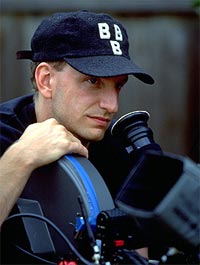 This Friday sees the release in American theaters of “The Informant!,” the nimble Matt Damon-starring corporate caper which, depending on the format in which you saw last year’s “Che,” is either the 20th or the 21st feature from one Mr. Steven Soderbergh. (I say 21st, given that “Che” clearly comprises two films utterly distinct in tone and structure, but 20th does sound more momentous for the purposes of a list. Oh, well.)
This year also marks the 20-year anniversary of Soderbergh’s game-changing debut feature “sex, lies and videotape,” which made the then 26 year-old novice the toast of Cannes and the American indie scene alike, and set the course for one of the most (delete according to taste) fascinating/diverse/infuriating/rich/productive/exciting auteur careers of the last two decades. (It also earned Andie MacDowell a deserved, everlasting defense against an increasingly hostile barrage of criticism, but that’s neither here nor there.)
On balance — he started slower, after all — it’s a work rate that matches Woody Allen’s for consistency of output, and inconsistency of content. No filmmaker today better manages the track of juggling a “one for me, one for the studios” routine, and what keeps Soderbergh’s career so intriguing is that there’s no set law as two which of these two categories might house his stronger works.
So it seemed a suitable point to take stock of this most idiosyncratic career, bisecting his filmography to evaluate the ten Soderbergh films that have delighted and/or enriched me most over the years. As a child growing up with ambitions of working in this industry, Soderbergh was — and, to a large extent, still is — one of my heroes, so his is a filmography that I’ve grown and changed with over time.
 Last year when Richard Linklater’s “Me and Orson Welles” landed at the Toronto film fest, as you know, it seemed a bona fide awards prospect for Christian McKay but likely to be picked up by a distributor if nothing else. Until a few weeks ago, the film didn’t have a pick-up, but the Frankenstein strategy is an unusual approach that Parick Goldstein thinks could be the beginnings of a new paradigm:
…for me, the reemergence of “Me and Orson Welles,” accompanied by a tie-in with a major studio DVD release and a revenue-sharing deal with a major theatrical exhibitor, offers a fascinating glimpse into the future of independent cinema. If the film finds an audience later this year, it could provide a template for success for the untold thousands of films that play film festivals around the world but never find any real theatrical distribution. If there is a real lesson behind this film’s new lease on life, it is that in today’s overcrowded marketplace, it takes a village — a village of like-minded, entrepreneurial talents — to nurture a film that appeals to a specialized audience.
Here’s a great chat between Anne Thompson and “Up in the Air” director Jason Reitman from Telluride (literally five minutes before I sat down to talk with him for my interview). Part one here, part two after the jump:
 There were some complaints in yesterday’s Toronto thread that I wasn’t specific enough as to why I enjoyed John Hillcoat’s “The Road,” so let me make it clear.
The film captures, miraculously, in its performances and its images, a profound sense of loss, both for what was and for what will never be. Trees fall around the actors, nothing left to replace them. There are no flowers, no bushes, no sense of life. The land — the earth — is slowly dying and with that humanity will die as well.
Yet The Man is dedicated to surviving and sees his son as the future, as any parent would. “To me he’s a god.” One day we will die but our children will live on, and that is a motivating factor carried across precisely in the film. The Man hopes he is teaching his boy how to survive because he knows he is dying. The constant pain is etched onto Viggo Mortenson’s face throughout the film, all joy is gone, and memory has become his foe, taking him back to happier times that simply torture him.
 • James Rocchi sits down with Jason Reitman to talk “Up in the Air.” [AMC TV]
• Jeffrey Wells bangs the Best Picture drum for Rodrigo Garcia’s as-of-yet un-acquired “Mother and Child.” [Hollywood Elsewhere]
• Michael Douglas talks “Wall Street: Money Never Sleeps.” [Empire]
I got the AP alert on my iPhone while I was out this afternoon and my heart sank. Patrick Swayze is gone. For most it was “Dirty Dancing.” For some it was “Point Break.” Still others, “Ghost.” For me, the man was epitomized in the bad-assery of “Road House” and that’s how I choose to remember him. But I couldn’t resist the opportunity to pay this ode to two of our fallen entertainers:
Last week we told you about the Best Actor buzz potentially building on the horizon for Robert De Niro in the remake “Everybody’s Fine.” Pete Hammond has seen the film and sung the actor’s praises, and now, we get this broad, sell-it-to-the-masses trailer. If you can get past the awful voice over and awkward musical choices, I think there’s an interesting performance lurking in there — maybe: