In Contention

Tag: Toni Servillo

  • ‘Gomorrah’ sweeps European Film Awards

    Wow. As I said when the European Film Award nominations were announced a month ago, this year offered a pretty vintage slate of contenders. I therefore expected the honours to be spread quite widely, as is often the case with these particular awards.

    But it was not to be. In a spectacular sweep, Matteo Garrone’s riveting Mafia opus “Gomorrah” took home five awards, including Best Film, Best Director, Best Screenwriter, Best Cinematographer and Best Actor for Toni Servillo, who won jointly for “Gomorrah” and his more prominent role in “Il Divo.”

    I must admit the latter award surprises me: terrific as Servillo is in both films, I assumed “Hunger” star Michael Fassbender had that one locked up.

    In a less surprising but richly deserved victory, Kristin Scott Thomas took the Best Actress award for “I’ve Loved You So Long,” her first trophy of the awards season. I suspect it might not be her last; check out my interview with the extraordinary thesp here.

    Elsewhere, “Hunger” inevitably took the Discovery Award for debut director Steve McQueen, while “Waltz With Bashir” was an inspired choice for the Best Composer prize (beating Oscar-winner “Atonement,” no less).

    But beyond that, it was “Gomorrah” all the way, marking an auspicious start to the awards season for a contender generating buzz beyond just the Best Foreign Language Film category. I’m pleased to see this landmark film getting its due, though I do wish such notable fellow nominees as “Happy-Go-Lucky” and Laurent Cantet’s wonderful “The Class” hadn’t gone home empty-handed. Ah well.

    Full list of winners after the cut.
    (more…)

  • Italy leads the charge at European Film Awards

    Proof positive that 2008 is a banner year for Italian cinema: Matteo Garrone’s “Gomorrah” and Paolo Sorrentino’s “Il Divo,” both masterpieces of a very different stylistic ilk, lead all nominees for the European Film Awards, with five nominations apiece.

    Joing them in the hunt for Best European Film are “The Class” and “Happy-Go-Lucky,” which makes four of my favourite films of the year in the list. Rounding out the nominees in that category are “Waltz With Bashir” and “The Orphanage,” neither film one to be sniffed at either.

    By any standards, that’s one hell of a group — I would be very surprised if the eventual five Oscar nominees for Best Picture match that collective quality. I’d be hard pressed to pick a personal favourite, though my gut says the Italian nominees will split the vote, and the wonderful “The Class” will emerge victorious.

    Four of those six reappear in the Best European Director category, with Steve McQueen (“Hunger”) supplanting Mike Leigh as the British nominee in that race. More puzzlingly, Leigh is also absent in the Best European Screenwriter category — curious, since “Happy-Go-Lucky” strikes me as more of a writerly achievement than the nominated “Waltz With Bashir.”

    More thoughts, and a full list of nominees, after the cut.

    (more…)

  • LONDON: “W,” “Genova,” “Il Divo” and more

    We’ve reached the midway point of the London Film Festival, and today’s big event is the European premiere of “W.” As I eavesdropped on assorted critics’ reactions coming out of the press screening this morning, the dominant feeling appeared to be one of pleasant surprise; I have a feeling the film may find a rather warmer reception here than in its home country.
    I’m still gathering my thoughts on the film, which I thought riveting in some respects and messy in others, though it’s clear Stone has transcended the limitations of Stanley Weiser’s script. Josh Brolin and Elizabeth Banks offer such persuasive, full-bodied characterisations that the Madame Tussaud’s quality of certain supporting players (Thandie Newton in particular) pales by contrast.

    With that, here’s another roundup of notable films from the last few days, beginning with yesterday’s starry but rather under-the-radar Mayor of London gala selection:

    GENOVA (**1/2)

    There is much to engage the eye and ear in “Genova,” the new film from restless Brit auteur Michael Winterbottom. A return to his usual, more organic directorial style after the disappointingly conventional “A Mighty Heart,” the new film teems with activity: from the loose, jazzy rhythms of the editing to the fragmented, eclectic soundtrack overlaying busy dialogue, and above all, superb location work that turns the labyrinthine alleys of the eponymous Italian coastal city into a playground of threat and desire.

    (more…)

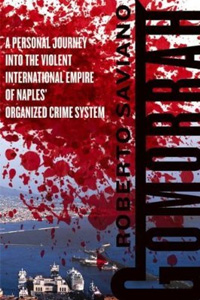
  • REVIEW: “Gomorrah” (****)

    IFC Films' GomorrahThe title “Gomorrah” is at once metaphorically apt and tonally misleading. In referencing the Biblical city destroyed by God for its sinfulness, Roberto Saviano’s best-selling non-fiction posited its own setting, Naples, as some kind of present-day equivalent.

    A city ruled and consequently ravaged by the Camorra, the notoriously brutal crime syndicate that has reportedly been responsible for over 4,000 deaths since the 1970s, it is also suffering for its sins — though in this case, the destruction comes entirely from within.

    The weightiness of the Biblical allusion, however, implies a fire-and-brimstone subjectivity that is refreshingly absent in Matteo Garrone’s thrilling remixing (adaptation is too cautious a word) of Saviano’s book. Marked alternately — and, in its best moments, simultaneously — by jolting violence, poetic kitchen-sink realism and blacker-than-black humor, this is first and foremost a work of social observation.

    As he repeatedly emphasized in his recent Q&A at London’s ICA, Garrone is more concerned with truth than tract.  Though the film lays the grim consequences of organized crime bare for all to see, his primary interest is in how such horrors complicate the everyday lives of those who live within and without the Camorra’s snare.

    The film’s social consciousness and dense, initially disorienting multi-narrative structure has earned comparisons with such recent crime sagas as “City of God” and “Traffic,” though it’s not as cinematically self-aware as the former, nor as narratively diagrammatic as the latter. (Neither term is meant pejoratively.)

    Garrone instead cites neo-realist doyen Roberto Rossellini as a key influence, and this provides a far clearer reference point: Garrone may have far busier story material here than exists in “Paisan” and “Open City” combined, but he shares Rossellini’s most academic qualities as a filmmaker, patiently following his characters through everyday domestic exchanges, and noting the physical and social textures of his story world with an anthropologist’s eye. In doing so, he further mines territory initially opened by such works as “The Sopranos” to offer up the least glamorous Mafia film ever made.

    (more…)