In Contention

Tag: Thomas Vinterberg

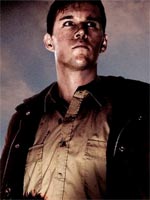
  • BERLIN: ‘Please Give,’ ‘Red Hill,’ ‘Submarino’

    Ryan Kwanten in Red HillFilm festivals have a curious way of either dulling one’s critical faculties or provoking them to an impolite degree. I almost never walk out of a screening under normal circumstances; at a festival, while compressing five-odd films into one day, it’s almost life-affirming to do so.

    Such was the case yesterday, halfway through “Caterpillar,” a Competition entry from widely admired Japanese veteran Koji Wakamatsu. An apparent Oshima knockoff combining catatonic narrative inertia with visual dinginess, it centers on a mute, limbless Sino-Japanese War vet rebuilding his relationship with his wife: “rebuilding his relationship” being a euphemism for working his way through the paraplegic Kama Sutra.

    After a sufficient number of po-faced sex scenes, interspersed with shots of cherry-blossom to indicate the passing of seasons — the film, it seems, was edited with a blunt axe — Tim turned to me and whimpered, “I can’t take it anymore.” We bailed and headed for “Gentlemen Broncos” instead; and you know now how that worked out.

    The film has its champions, mind. And I’m now convinced it will win something on Saturday just to spite me. After the cut, however, are three films I happily sat through in their entirety.
    (more…)

  • Berlin bound

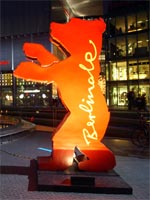
    In a couple of hours, I’ll be packing my bags, donning my warmest and most ridiculous-looking puffa jacket and catching a crack-of-dawn flight to the German capital. The occasion, of course: the 60th Berlin International Film Festival.
    I’ve been to Berlin before — and was thoroughly enamored of it — though this will be my first experience of the festival, and I’m not a little intrigued. Alongside Cannes and Venice, the Berlinale essentially completes the holy European festival trinity, but its position in the calendar gives it a rather different profile from its glitzier sisters.

    Where Cannes hogs the lofty auteur names and Venice always nabs a couple of big fall awards hopefuls, Berlin is a refuge for smaller fare from up-and-coming filmmakers, peppered with the occasional sexy Hollywood premiere.

    That’s not to say that the festival doesn’t launch substantial works. Two of this year’s Oscar nominees, “The Messenger” and “The Milk of Sorrow,” began their awards trails with wins at Berlin a year ago, while the 2008 competition turned up the actressy trifecta of “Happy-Go-Lucky,” “I’ve Loved You So Long” and “Julia.” Berlin hits have to ride their buzz for longer than those at Cannes, but there are almost always a couple that quietly stay the course.

    (more…)

  • Anthony Dod Mantle — it is time

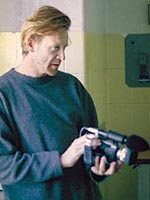
    Anthony Dod MantleI don’t generally throw myself full force behind a contender with the kind of FYC spirit I’m about to project.  We all have our favorites and we all hope this person or that will finally get the recognition deserved, but it’s a different thing to full on advocate.  But today, I just can’t help myself.

    Watching “Slumdog Millionaire” a second time Friday night as part of the AFI Danny Boyle tribute, I was taken once again by the urgent nature of the film’s visual style.  It’s a direct reflection of Boyle’s energetic attitude toward life and the cinema, of course.  But it’s also the result of wonderful creativity from cinematographer Anthony Dod Mantle.

    Boyle says he first took notice of Mantle’s work on the Dogme classic “Festen.”  The two first collaborated on television’s “Strumpet” before moving into daring digital territory with the modern zombie classic “28 Days Later,” and then Mantle moved back to his Dogme roots, taking on projects for Thomas Vinterberg and Lars von Trier with a little Boyle thrown in between (2004’s “Millions”).

    I never much responded to the supposed revelation that was Dogme, so Mantle first caught my eye with “28 Days Later” and especially with Kevin Macdonald’s “The Last King of Scotland,” where I suddenly felt the earth move under the weight of a new talent’s insistence on a refreshingly vigorous intimacy with his photography.

    Much like Harris Savides, Cesar Charlone or Rodrigo Prieto, Mantle is finding himself moving in and out of the independent market with eye-popping work that can go unnoticed in the wake of the postcard photography that tends to be singled out during the awards season.  But his work is alive, crackling with immediacy and actively creative in the service of story, never more so than in “Slumdog Millionaire,” Boyle’s latest vibrant contribution to the silver screen.

    The time has come for Mantle to be recognized for the innovation he lends not only this film, but the trade itself.  I fully expect “Slumdog” to find a home in numerous categories, but if I could insist consideration of just one aspect of its elaborate below-the-line construction, it would be for Mantle’s contribution.  What fierce life he has captured here.