In Contention

Tag: The Shootist

  • 1976: the last hurrah of the American western

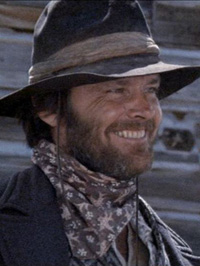
    Jack Nicholson in The Missouri BreaksThe western was not yet dead in 1976 when  four high-profile installments were released to varying degrees of success. Four years later, of course, Michael Cimino’s “Heaven’s Gate” would kill the genre for several years (and United Artists for longer), and though it has seen ups and downs in the years since, for the most part, the western remains one of the least popular genres with studios.

    In my opinion, Cimino’s film was never as bad as the critics said it was at the time.  Many of them were lying in wait for a Cimino failure, hoping to ambush him for the lies told during the press interviews for ‘The Deer Hunter,” which won the man an Oscar and was the Academy’s choice for Best Picture. He was not a Vietnam veteran, he had never seen Russian Roulette used as torture, in fact he had never been out of America until he made the “The Deer Hunter.”  This all but ruined Cimino’s reputation, which is somewhat sad because the man had a hell of an eye for detail.

    That of course was the issue with “Heaven’s Gate”; though stunning in its detail, the film is insufferably slow and ponderous, with perhaps two truly stunning sequences, the best among them the community roller skating sequence, which pulsates with energy driven by a young man, the film’s composer David Mansfield and his fiddle, as they skate around the rink, veering in and out of surrounding bodies.

    There was a time in the 1950s and 1960s when 20% of the films coming out of Hollywood were westerns. There were 26 prime time western programs on television, all popular, and John Wayne ruled as the top box office star. By the 1970s, westerns were made less frequently, and Wayne’s box office throne had been usurped by another star of the genre: Clint Eastwood.
    (more…)

  • The Duke’s greatest hits

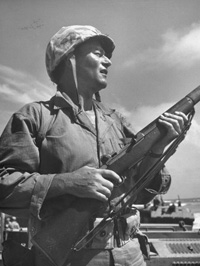
    John Wayne in Sands of Iwo JimaAs Kris mentioned Wednesday, this week marks the 30th anniversary of John Wayne’s death.  I’ve always respected Wayne’s performances and have for a long time, long before it was fashionable, to be sure.

    It was considered somewhat ridiculous for an acting student to admire Wayne’s work in the 1970s and 1980s. My God, we were supposed to be worshipping at the altar of Marlon Brando, Robert De Niro and Al Pacino! Our professors hammered home the importance of truth in a performance, which I of course believe to be essential.  But I’ve always felt that Wayne’s finest performances were as truthful and as real as anything Brando did.

    Wayne could not do Shakespeare, and was horribly out of place in certain genres, but in his element — the American western, the war film, high adventure or romantic comedy — he was as good as anyone working in movies. There were some critics who appreciated his work while he was alive, but most came around after his death in 1979, which to me is rather sad.

    I have proposed a book on Wayne, slightly different from those out there already, that would focus on his best work on film. There are 11 performances in the Wayne filmography that were truly outstanding, in my opinion.  Here is perhaps a primer for Wayne fans, new, old and emerging — a list of his best performances and some comments as to why I think they deserve to be remembered forever. Let me know what you think.

    (more…)

  • Oscar nominations that made me cheer

    Over the years I have been watching and studying the Oscars in earnest, since about 1974 (age 13).  It has always been a nice surprise when an unexpected actor, director or film made the cut to the final five.  It’s a special kind of high.

    I remember reacting with surprise and genuine happiness when Giancarlo Giannini was nominated for Best Actor for his performance in “Seven Beauties,” but even better was the inclusion of Lina Wertmuller, the film’s director (becoming the first woman ever to receive a designation in the directing category — nd for a foreign language film, no less).  I loved the film, so this put me over the moon, even though Giannini’s nod likely cost John Wayne his nomination for “The Shootist.”

    In 1997 it was Atom Egoyan, nominated for Best Director and Best Adapted Screenplay for “The Sweet Hereafter,” a brilliant study of grief in small town Canada; the L.A. Times named it the best film of the year but up here in Canada, we never expected Oscar attention for Atom and his film.

    I was equally thrilled when Martin Scorsese was rewarded with a nomination for his direction of “The Last Temptation of Christ,” a bold, passionate film made from the heart by one of our greatest directors.

    (more…)

  • The under-appreciated

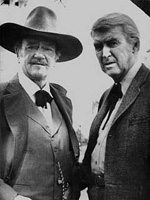
    (from left) John Wayne and James Stewart in The ShootistWe all know that there are brilliant films that sometimes never find an audience, slipping out of theatres long before they should and often disappearing into the void of the home market.

    In fairness, the advent of VHS and now DVD has allowed for such films to be re-discovered by future generations, and VHS was easily responsible for saving “Blade Runner” in the 1980s.  But these types of films deserved beter in their initial runs. Perhaps the studios were not clear on how to release them (often the case).  Perhaps critics did not get the film.  Or perhaps audiences just stayed away despite strong reviews.  Whatever the reason, there are often times that a great film just doesn’t catch on.

    I am currently contracted to write a study of the films Steven Spielberg has directed, and following that, I will be writing a study of under-appreciated films from the 1970s and 1980s. This has now been expanded into a decade-by-decade series, beginning with the 1980s (to be released in 2010), then the 1970s, the 1990s and the current decade, each one a year apart.  For obvious reasons, I am quite excited about them.

    For me, some of the more under-appreciated gems from the 1970s and 1980s for me have been films like “Black Sunday,” featuring an Osca-caliber performance from Bruce Dern, and still the best film ever made about international terrorism; John Wayne’s last film, “The Shootist,” in which The Duke portrays an aging gunslinger dying of cancer when he himself was being ravaged by the disease; the odd little western “The Missouri Breaks,” with Brando and Nicholson going toe-to-toe; the sensational musical “Hair,” directed by Oscar winner Milos Forman, who really does recreate the summer of love.

    (more…)

  • Peter Finch and the posthumous Oscar

    Peter Finch in NetworkPeter Finch’es wide-eyed, frantic performance as newsman Howard Beale in Sidney Lumet’s “Network” became a touchstone for North America in 1976 because we too were “mad as hell and not going to take it anymore.”

    Vietnam was over, though the vets were struggling with their various personal horrors.  Nixon had resigned, leaving a mistrustful America in his wake.  And up here in Canada, we were dealing with a Prime Minister who was often more playboy than politician.  Lumet’s searing film, from an original screenplay by Paddy Chayevsky, was timely indeed.

    Whispers of a posthumous Oscar have circulated Heath Ledger’s performance in “The Dark Knight” for weeks now, bringing Finch’s seizure of the Best Actor trophy back to the forefront of discussion.  But was Finch’s win a recognition of the performance or was it fueled by his unfortunate dead in January of 1977?

    (more…)

  • Respect for The Duke

    In light of Kris’s recent westerns piece, I thought it might be worth it to give some space to what I believe to be one of the most underrated actors of all time.

    Cinematical recently carried a marvelous article on John Wayne, supporting the belief that the screen legend was an exceptional actor (in the right role) and that perhaps Hollywood and the critics had not given him his due while alive.  Certainly his work was appreciated by audiences, who made him the top box office star for more than 20 years.

    I grew up watching Wayne and even defended him as an actor some time ago to a very skeptical university professor.  Using the actor’s performances in “The Searchers” and “The Shootist,” I wrote my paper and received an “A.” I figured I must have proved my case. But my professor passed me in the hall a year or so later and told me I had converted him to the Duke, and he had now seen many more of his films.

    Obviously part of the issue had been just that: he had not seen all of Wayne’s work — and he was more than a little attached to Sir Laurence Olivier (in my opinion the most overrated actor in the history of the cinema). But you could always see Olivier acting, working the trade.  I defy you to catch the Duke mugging.

    While Wayne often portrayed a variation of what audiences perceived him to be in real life, there were characters that challenged him as an actor and allowed him to stretch. Though he won the Academy Award for his jaunty performance as the tough old one-eyed geezer in “True Grit,” he certainly should have won for his raging Ethan Edwards in “The Searchers” and been nominated for at least a half dozen others.

    (more…)

  • 1976: a great year and Oscar blew it

    Continuing the conversation on great years for movies (1974 being my pick for the best), I thought I’d dig into a season rich with material that slipped through Oscar’s fingers.

    The American bicentennial year was loaded with wonderful films — ground-breaking works that stunned both audiences and critics with their mastery. Three of them were nominated for Best Picture, some of the others were not, yet the eventual winner was a low budget love story about a boxer that wanted to prove he wasn’t just another bum from the neighborhood.

    The true greats of 1976:

    “All the President’s Men”

    Alan J. Pakula’s superb adaptation of the Pulitzer Prize-winning book written by Bob Woodward and Carl Bernstein about their investigation of the Watergate burglary was born out of an astonishing script by William Goldman. Making sense of the politics within a dense book, incredibly detailed, Goldman’s work had the good sense to make the film a detective-like thriller with well-defined characters.

    This could have been a dull, political film made to exploit the happenings in the United States at the time, but Pakula instead made one of the great films about journalism in the days before the Internet and e-mail. Robert Redford bought the rights to the book and produced the film, starring as Woodward, with Dustin Hoffman as Bernstein, both giving exceptional performances, but it was Jason Robards who blew them off the screen with his excellent performance as the crusty, wise, and ultimately loyal Washing Post editor Ben Bradlee.

    (more…)