In Contention

Tag: The Lord of the Rings: The Return of the King

  • LIFE WITHOUT OSCAR: 2003 and 2004

    Catch up with the idea behind this series here.

    2003 belonged to “The Lord of the Rings: The Return of the King” as it won every single award it was up for, tying the all time record haul of 11 trophies. Few could argue that Peter Jackson had accomplished something unique with the execution of this trilogy, but in my humble opinion, this is the most boring and bloated Best Picture winner since “Around the World in 80 Days.”

    Throw in the fact that Tim Robbins in “Mystic River” and Renee Zellweger in “Cold Mountain” are both embarrassingly bad performances and you can start to realize why Oscar and I have agreed to go our separate ways. At least “City of God” nabbed a few nominations, causing a stir in an otherwise sterile race.

    Clint Eastwood completed his transformation back into Oscar darling in 2004 with a Best Picture triumph for “Million Dollar Baby,” which also scooped up awards for Director, Actress and Supporting Actor, dooming Martin Scorsese to another year in the loser’s bracket.

    Billy Crystal hosted in 2003, mistakenly thinking that constant jokes about New Zealand were going to be entertaining. At least we had this though.

    Chris Rock took the reigns in 2004 and may have not won over Sean Penn, but I thought his bit interviewing moviegoers at the Magic Johnson theater about Oscar contenders was amazing. Anyway, hope you all watched “Pootie Tang” this week and are ready for some new suggestions.

    (more…)

  • THE LONG SHOT: Popular mechanics

    Chris Pine in Star Trek“My God, they’ve thrown in everything but the Teenage Mutant Ninja Turtles.”

    Quoted by writer Anthony Holden in his gossipy history “The Oscars,” this was one publicist’s dismayed response to the 1990 Academy Award nominations, which included such unusual concessions to popular (as opposed to critical) opinion as a Best Picture nomination for “Ghost” and a Best Actress nod for Julia Roberts in “Pretty Woman.”

    I remember this year well – I was eight years old, and it was the first Oscar race I followed in detail from burbling Christmas hype to the ceremony itself, digging up and scrapbooking all the press and TV coverage I could find.

    And from what I recall of my fledgling research, the unnamed publicist above wasn’t alone in her discontent. In particular, the “Ghost” nomination attracted levels of critical scorn even higher than those usually reserved for the Oscars – the common line being that the Academy had sold out to commerce rather than art, and that the sky would be falling at any given moment.

    Does this situation sound at all familiar?

    It should do. Though it was a response to an outcome rather than a possibility, the kvetching over the 1990 nods more than slightly resembles the panic that set in among certain pundits and fans alike (including, admittedly, yours truly) when the switch to 10 Best Picture nominees was announced in June.

    (more…)

  • Searching for Oscar meaning in IMDb’s top 15 of the millennium

    IMDbOver at IMDb there is a new feature called “The Power of Film” (lofty title, that), which has listed out the top 15 films of the millennium as voted on by IMDB users, i.e., fans, the public, regular folks.

    The IMDb top 250 is an ever-changing mish-mash of high-,middle- and low-brow entertainment that always makes for an amusing cross section of what the public thinks of cinema from one moment to the next.  “The Godfather” and “The Shawshank Redemption” trade off the #1 spot consistently, save for the spike of interest in this major new release or that, films that insinuate themselves high early on but inevitably fall down the list as more viewers get a look.

    The new feature, unsurprisingly, features Christopher Nolan’s “The Dark Knight” at the top, but strewn throughout is a diverse mixture including the “Lord of the Rings” triology, German Oscar-winner “The Lives of Others” and Pixar entries “WALL-E” and “Up.”  And speaking of Oscar, MTV’s Terri Schwartz has spun her wheels on the idea that, with a larger slate of Best Picture possibilities, the IMDb list could prove an omen for the potential blend of eclectic and entertainment cinema so many expect the Academy’s line-up to resemble from this year forward.

    (Schwartz’s thoughts and IMDb’s list after the jump.)

    (more…)

  • ‘Slumdog’ sweep joins Oscar’s actorless trio

    Simon Beaufoy at the 81st annual Academy AwardsUPDATE: Okay, this is what happens when you skim emails too quickly and don’t do the research on your own.  I’ve corrected the statistical errors on my part.  THIS should be on the money:
    Not sure if this bit of trivia has already been consumed and digested, but thanks to Jeremy who sent it in weeks ago.  We’ve already talked at length about “Slumdog Millionaire”‘s Cinderella season marking the winningest awards streak of all time (Oscar, BAFTA, PGA, DGA, WGA, SAG Ensemble, ACE, ASC, CAS, ADG, CDG, USC Scripter — hell, even an MPSE honor).  But the film’s Oscar victory Sunday night also marked only the the fourth time a film won Best Picture, Best Director and a screenplay award without a member of the cast being nominated. The others were “Gigi” in 1958, “The Last Emperor” in 1987 and “The Lord of the Rings: The Return of the King” in 2003.

    I’ll read more carefully next time, I swear.

    Other interesting stats contributed by Speaking English and The Z:

    • “Slumdog” is the first film to win Best Picture and Best Cinematography since 1999’s “American Beauty.”

    • It is also the first Best Picture winner since 1984’s “Amadeus” to win 8 Oscars.

    • Additionally, it is the seventh film to win 8 Oscars after “Gone With the Wind,” “From Here to Eternity,” “On the Waterfront,” “Cabaret” and the aforementioned “Amadeus.”

    • This was the first year since 1994 that all acting winners had been previously nominated.

    • Sean Penn is the only actor to win twice this decade.  (Tom O’Neil also notes he is the ninth male actor to win two lead Oscars after Spencer Tracy, Fredric March, Gary Cooper, Marlon Brando, Dustin Hoffman, Tom Hanks, Jack Nicholson and Daniel Day-Lewis.  Twelve actresses have taken two.)

    • With Penelope Cruz’s victory, Woody Allen is now third behind William Wyler and Fred Zinneman for most performances directed to an Oscar with seven, Chad tells us.

    Anything else?

  • The new millennium Oscars?

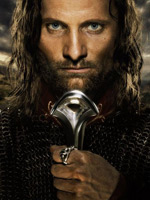
    Viggo Mortensen in The Lord of the Rings: The Return of the KingLooking back over the previous Oscar winners for Best Picture since 2000, the start of a new century (and a new millennium), I find myself wondering sometimes what the hell the Academy was thinking.  It’s no secret I disagree with the Academy a lot, but I can also admit that when they get it right, they get it right.

    But since 2000, their Best Pic choices have run the gamut from incredibly ridiculous, “Gladiator” and “A Beautiful Mind” being just goofy, to bang on, with “The Departed” and “The Lord of the Rings: The Return of the King.”  I am told the Academy is moving in a more progressive direction, willing to take more risks, and I suppose some of these winners do just that.  But they could have gone further.

    Year by year, here’s a quick look, with some thoughts about who might have won, and who should have at least been nominated…

    (more…)

  • And often, the Academy gets it right…

    United Artists' Midnight CowboyAs much as I rant about some of the bizarre choices made by the Academy, let’s be fair…there are times when they are right on the money.

    The AMPAS allowed for an embracing of the New American cinema with their awards for Best Picture and Best Director for “Midnight Cowboy” in 1969, and only they had the courage (and the smarts) to recognize that “The Godfather Part II” was a superior film to the first in handing it the same two trophies. They had awarded “The Godfather” Best Picture two years earlier, but much of the precursor circuit (and all of the critics groups) largely ignored the sequel, opting instead for films such as “Alice Doesn’t Live Here Anymore” and “Chinatown,” among others.

    The five awards betsowed on “One Flew Over the Cuckoo’s Nest” in 1975 are among the group’s best choices ever, in particular the honors for actor Jack Nicholson and director Milos Forman.

    Though far too often dismissed as a chick flick, “Terms of Endearment” was a marvelous slice of life that the Academy embraced with five Oscars, including Best Picture, Best Actress, Best Supporting Actor and Best Director. By the way, is it not odd that first time winner James L. Brooks has never again been nominated in the directing category again, despite two Best Picture nominees in “Broadcast News” and “As Good As It Gets?”

    I remember cheering loudly the many wins for “Amadeus,” “Out of Africa” and “Platoon” three years in a row, and though I believe “Goodfellas” is a better film, I was pleased to see a western, “Dances with Wolves,” win seven Oscars.

    No arguments from me between 1991 and 1993, with “The Silence of the Lambs,” “Unforgiven,” and “Schindler’s List” all most deserving winners. And though I prefer “Pulp Fiction,” I understand why “Forrest Gump” took the top prize in 1994.

    Bravo, too, to the Academy for honoring “The Lord of the Rings: The Return of the King,” a bonafide movie masterpiece, and again the following year for “Million Dollar Baby.”

    So you see, for all my bitching (and we all do it…come on), I concede that the Academy does, from time to time, nail the best.

  • Alright…the 20 WORST endings of all time from The Times

    Olivia Newton John and John Travolta in GreaseSo The Times has followed up last week’s collective assessment of the 20 greatest movie endings of all time today with a list of the worst, and there are some reasonable choices here and there.

    Like “Grease” for starters, probably my favorite movie musical but with an undeniably wretched denouement. And then there’s the cheeky mirror of the “Planet of the Apes” saga (the original made the best list, while Tim Burton’s remake lands here), not to mention “Indiana Jones and the Kingdom of the Crystal Skull,” which would definitely be near the top of my own list (ballsy to go so recent, too).

    I also like the shout out to the never ending ending of “The Lord of the Ring: The Return of the King.”

    But beyond those and perhaps a few others, the rest of the list is populated with terrible choices (many of which landed on my own best list). “There Will Be Blood” (which was deemed the #2 film of all time by The Times’ film critic James Christopher)? “Psycho?” “2001?” Fucking “Citizen Kane” at #1???

    Lots of eyebrow raisers. And from what I can gather, merely an attempt at being controversial.

    Their choices:

    1. “Citizen Kane”
    2. “Indiana Jones and the Kingdom of the Crystal Skull”
    3. “The Lord of the Rings: The Return of the King”
    4. “2001: A Space Odyssey”
    5. “The Maltese Falcon”
    6. “Grease”
    7. “Brief Encounter”
    8. “The Great Dictator”
    9. “Saving Private Ryan”
    10. “The Great Escape”
    11. “Apocalypse Now”
    12. “Psycho”
    13. “There Will Be Blood”
    14. “Magnolia”
    15. “Blade Runner” (original release)
    16. “Monty Python and the Holy Grail”
    17. “Star Wars – Episode VI: Return of the Jedi”
    18. “Planet of the Apes” (2001)
    19. “Cast Away” (totally disagree here…I think it’s a beautiful ending)
    20. “Velvet Goldmine”

  • Movie stingers: do they work?

    Columbia Pictures\' Hancock

    If you saw “Hancock” over the weekend, you probably noticed a brief scene in the middle of the closing credits sequence featuring Mike Epps and meant as a funny punch for your theater exiting pleasure.

    It got me thinking about inter- and post-credit sequences — called “stingers” — and whether they ought to be eliminated altogether.  I ask this despite a history that includes a precious few great examples in films like “Ferris Bueller’s Day Off” and perhaps extending way back to the point-and-shoot moment of “The Great Train Robbery” that sent audiences screaming out of nickelodeons in 1903.

    Most of the time, these moments are random, useless and nothing more than a send-off treat (like in “Hancock”).  Other times, they might be an “Easter egg” for those who know to stick around, like Samuel L. Jackson’s Nick Fury scene at the end of “Iron Man.” (There are also stingers after the credits of “WALL-E” and “Kung Fu Panda” this year.)

    More often, however, they have the potential to leave viewers who weren’t aware somewhat burned.  Or otherwise irritated — like Eric Snider of Cinematical, who dug into this issue in May.

    The question actually brings up another point, which is, are the closing credits of a film a part of the greater artistic whole?  Plenty of opening credit sequences provide direct commentary on a film and could therefore be argued part and parcel of the piece.  But with few exceptions, closing credits are a tacked-on necessity that even those featured in the roll wouldn’t consider any part of a directorial vision or collective filmmaking result — even if they are beautiful or interesting (i.e. “The Lord of the Rings: The Return of the King”).

    Then again, used to the right artistic effect, a subtle stinger might actually add to the overall canvas of a film.  Such is the case, I thnk, with the sound of children’s laughter after the credits of “Children of Men.”

    Typically, the existence of stingers just annoys me.  I’m more at ease with the inter-credits stuff.  As I was leaving “Hancock,” the Mike Epps scene kicked in and we all stopped and watch — har, har — off we go.  Fine, fair enough.  But if I miss something I realy want to see (like in “Iron Man”), it’s quite irritating.

    That doesn’t mean I don’t enjoy the scenes, however.  And I do have a few favorites.

    My top 5 movie stingers of all time after the jump! (spoilers obviously involved)

    (more…)