In Contention

Tag: The Godfather Part II

  • LIFE WITHOUT OSCAR: 1973 and 1974

    Catch up with the idea behind this series here.

    “The Sting” swept the 1973 awards and it remains one of the breeziest films to win top honors. The combination of Newman and Redford, working at the top of their game and re-teaming with “Butch Cassidy and the Sundance Kid” director George Roy Hill proved irresistible.

    Unbelievably, it was joined in the Best Picture race by films from Best Director nominees George Lucas and Ingmar Bergman. If ever there was a pair that represented polar opposites of the filmmaking spectrum, they were nevertheless cinematic equals for a night here.

    Tatum O’Neal became the youngest winner of a competitive Oscar while 1974 saw Art Carney win over Pacino, Nicholson, Hoffman and Finney in some of the roles of their careers. Try explaining that one to anyone today without having to google Art Carney.

    1974 also gave us the first sequel to ever win Best Picture in “The Godfather Part II” and you’ll find no complaints here, although Coppola’s other Best Picture nominee that year, “The Conversation” is equally good.

    Oh, and Oscar’s one and only instance of full frontal nudity. So far…

    (more…)

  • THE LISTS: Top 10 Robert Duvall performances

    Robert Duvall in The Great SantiniWith “Get Low” bringing actor Robert Duvall back to the spotlight, and Sony’s purchase of the film no doubt landing him in the Oscar race for Best Actor (whether released this year or next), I thought perhaps a look back at the legend’s substantial carer and best performances might be fun.

    Since his first brilliant turn as Boo Radley, both boogey man and savior to the children in “To Kill a Mockingbird,” Duvall has been one of America’s greatest actors. A self-described late bloomer, he did not see great success until he was in his 30s, but once there he never stopped, giving us an array of brilliant performances that have made him one of the most beloved, finest actors in American history.

    Over the years I have had the chance to spend some time with Duval and it should seem obvious by now that I admire the man. Sure there have been missteps along the way — what great actor does not err — but films like “Newsies,” “The Scarlett Letter” and “Kicking and Screaming” are few and far between in a career spanning more than 50 years.

    With “Get Low,” a decent campaign should see the veteran actor with his seventh Oscar nomination, his fourth for Best Actor, and given the Academy’s wont for waxing sentimental or fixing past wrongs, they might just give it to him for having passed on the opportunity 12 years ago.

    Here are my picks for his 10 best performances…

    (more…)

  • THE LISTS: The top 10 Best Picture winners of all time

    Clint Eastwood in UnforgivenWith the Oscar season officially here it seemed only logical to dedicate an installment of The Lists to the little golden guy.  And as we push forward past the fests and into the thick of it, I figured the best idea would be a broad assessment of the Academy’s chosen best through the years, a bone of contention for a great many, as you read in this space and in the comments section year in and year out.

    But I must say, putting this list together was a joy.  The percentage of times I think the Academy has gotten it “right” is quite low, of course, but when I skimmed the cream of the crop I was left with, I felt, a wonderful collective representative of the finest of American cinema.

    Of course, that should itself be seen as damning the organization with faint praise.  After all, the Academy has failed to recognize a great many foreign classics with its top prize.  And by a great many I mean any.

    The most celebrated decade in cinema, the 1970s, has three representatives on the collective, each of them at the very top.  The 1990s and 1980s came in right behind with two to show for themselves, while the 1930s, 1940s and 1960s each had one entry.

    I’d say that’s a pretty decent cross-section.

    It goes without saying a list like this is incredibly subjective, but I’d be very curious to hear the readership’s thoughts on 82 years of this award, so when you rattle through my list, be sure to offer up your own in the comments section.  We have a diverse group here so I’m sure there will be a number of unique takes.

    (more…)

  • INTERVIEW: Robert Duvall

    Robert DuvallToronto Film Festival

    Sitting down with Robert Duvall is more than a little intimidating. The man does not suffer fools, nor does he have a lot of time for small talk or stupid questions. He likes to talk, but he also likes an informed conversation.  As he nears 80, he is still a force of nature, with a powerful presence and voice that goes up and down depending on his excitement.

    Duvall and I first met in 1997 when “The Apostle” exploded out of Toronto, landing the veteran actor a much-deserved Oscar nomination for Best Actor.  The performance was a volcanic, furious portrait of a man trying to atone for his sins by building a church in the backwoods of Louisiana after killing a man in a fit of rage. For 13 years Duvall shopped the project around Hollywood, being turned down by the major and minor studios until his accountant suggested he finance the film himself.  In a position to do so, he did just that, eventually selling the film at TIFF after a famed bidding war.

    I got to know him when he invited me to spend some time with him on the set of “John Q” while it was shooting here in Toronto, the invitation coming during the 2000 Film Festival when I interviewed him a few times for his soccer picture, “A Shot at Glory,” in which he co-starred with soccer star Ally McCoist.  In the years since, Duvall has kept himself busy with great roles and performances in films such as “Broken Trail,” for which he won the Emmy Award for Best Actor, and “Kicking and Screaming,” a soccer comedy with Will Farrell that seemed like an odd choice for the actor.

    Recognized as one of America’s greatest thespians, Duvall has given an array of brilliant performances over the years, from his breakthrough, shy Boo, in “To Kill a Mockingbird” through to his mafia lawyer Tom Hagen in “The Godfather” and “The Godfather Part II” and perhaps most memorable of all, Kilgore in “Apocalypse Now.” He came into his own in the 1970s, at a time when other major talents such as Jack Nicholson, Dustin Hoffman, Al Pacino, Robert De Niro and Gene Hackman were also turning in brilliant performances, changing the face of American acting.

    (more…)

  • POLL: The most influential films of all time, round one, part three

    Alright, we’ve moved on and three more films have survived: “The Birth of a Nation,” “The Godfather Part II” and “Metropolis.”  Color me confused on the inclusion of Coppola’s film.  Chalk it up to popularity, I guess, because it’s a shame to see truly deserving films like “The Jazz Singer,” “sex, lies and videotape” and even “Die Hard” get passed over for something that no one (I think) can argue as more influential (even if it is a masterpiece).  But that’s how it crumbles.

    Next up, a new set of ten and your choice of three to continue.  As always, check out the background on this series here.  Give us your vote in the sidebar and feel free to cut loose in the comments section below with your thoughts on the series so far.

    This poll will close in one week, Wednesday, May 6 at 2:00pm PST.

  • Get your votes in!

    Just a reminder that today is the last day for the second part of round one in our “most influential film of all time” poll series.  Get your votes in over in the left sidebar.  The new poll will hit tomorrow at 2:00pm PST.  I’m still shocked “The Godfather Part II” is surging ahead of the pack, but oh well.

  • Coming in June: Coppola’s ‘Tetro.’ Will it bring him back?

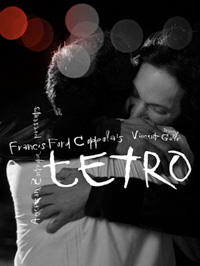
    TetroNo other director in the history of the cinema dominated a 10-year span as Francis Ford Coppola did the 1970s. Beyond directing four of the decade’s greatest films — “The Godfather”, “The Godfather, Part II”, “The Conversation” and “Apocalypse Now” — his name was on “Patton” and “The Great Gatsby” as screenwriter and “American Graffiti” as producer.

    In addition, Coppola created American Zoetrope in the hopes of building a haven for young directors to make small films free of the studios.  But he also believed what the press were saying: he was a genius who would turn whatever he touched into gold.  His ego got in the way and he alienated friend and comrade George Lucas, eventually making up with the director years later when positions of power had been reversed.

    In the years after “Apocalypse Now,” the Oscar-winning Coppola fell on hard times with one failure after another it seemed, his once golden touch lost in the jungles of the Philippines while making his Vietnam epic. There were glimmers of former greatness from time to time, such as the expressionistic brilliance of “Rumble Fish,” the Cab Calloway sequence in “The Cotton Club,” the haunting scene with Kathleen Turner and her grandparents in “Peggy Sue Got Married” and Jeff Bridges’s wonderful work in “Tucker.”

    But “One from the Heart” was a mess.  “The Outsiders” was a sentimental disaster of a film. And then there was “The Godfather, Part III,” a failure because Paramount failed the director, breaking their word after making the promise he would have complete control, refusing to pay Robert Duvall, integral to the story, half of what Al Pacino was making, forcing a major re-write (that cost…?) and casting his daughter (the poor girl) in a key role when she simply lacked the acting chops to work with that ensemble.  On and on.

    (more…)

  • Best Actor race — shades of ’74 and ’02

    Richard Jenkins in The VisitorThe 1974 Academy Award nominees for Best Actor were Jack Nicholson in “Chinatown,” Al Pacino in “The Godfather, Part II,” Albert Finney in “Murder on the Orient Express,” Art Carney in “Harry and Tonto” and Dustin Hoffman in “Lenny.”  There had been some mild surprise that Gene Hackman had been passed over for his work in “The Conversation” and Richard Dreyfuss in”The Apprenticeship of Duddy Kravitz,” but other than those minor quibbles, it was a strong field of contenders.

    Essentially it was a two-man race.  The frontrunners were clearly Nicholson and Pacino, both nominated the previous year for their work in “The Last Detail” and “Serpico,” respectively.  For his sly, slick portrayal of Los Angeles private detective JJ Gittes, Nicholson had again displayed his extraordinary range and ability to slip easily inside a character to the delight of audiences.  Pacino, meanwhle, again portrayed Michael Corleone in the sequel to “The Godfather,” moving farther down the path of power, corrupting himself totally, eventually ordering the execution of his own brother.

    Of the two actors, Nicholson had the inside track, having won the Golden Globe and the New York Film Critics Circle award, but there was a lot of Pacino love, too.

    On Oscar night, many jaws hit the ground when the winner was television veteran Art Carney for his performance in “Harry and Tonto,” a nice little film about an old man and his cat traveling across America looking for a home. Carney was terrific in the role, no argument, but it was hardly a performance for the ages. The likely scenario, some thought, was that Nicholson and Pacino split the vote.

    (more…)

  • THE LISTS: Top 10 films of the 1970s

    (from left) Dustin Hoffman and Robert Redford in All the President's MenWhen critics and historians of the cinema sit down to discuss uh, cinema, the conversation almost always turns to the great decades in movie history. And n nearly conversation I’ve been a part of, the 1970s reigns supreme as the single decade of brilliance.

    It was a time of enormous artistic growth for film, as up-and-coming directors grabbed Hollywood and ran with it, merging their love for cinema and the works of John Ford, Billy Wilder, and Elia Kazan (among others) with their own fresh ideas. And the releases of “Bonnie and Clyde,” “The Graduate” and “2001: A Space Odyssey” had already announced the arrival of the new American cinema by the end of the 1960s.

    But the next 10 years brought us Francis Ford Coppola, who exploded onto the scene wit four brilliant works and mentored many of the younger directors of the time. Steven Spielberg would earn the name “whiz kid” for his incredible visual storytelling gifts that would eventually make him one of the greats of all time.

    Martin Scorsese was making unsettling character studies that alarmed the studios but thrilled critics and actors, who felt challenged by his work. Woody Allen evolved from comedy writer, to comedic actor-director, to world-class filmmaker by the end of the decade. And Oscar winning film editor Hal Ashby would make a name for himself behind the camera with a swath of works.

    Sidney Lumet, William Friedkin, Peter Bogdonavich, Bob Fosse, Roman Polanski, Bernadro Bertolucci, Alan J. Pakula, Milos Forman, and Michael Cimino would all leave their mark in the 1970s and continue directing to varying degrees of success in the 1980s and beyond.

    Society heavily impacted the work as films about the war in Vietnam dominated much of the 70s’ final years. Watergate raged mid-decade. Stories were plucked from the headlines and committed to celluloid. Movies were exciting, well made, and interesting. Films like John Frankenheimer’s “Black Sunday,” Milos Forman’s “Hair” and Don Siegel’s “The Shootist.”

    Big budget disaster films enlivened the trade, along with movies about divorce, drug addiction, mental illness, organized crime, vigilantes, prostitution, and countless other topical issues that were explored with great courage on screen. I found narrowing it down to a 10 best list to be nearly impossible and enormously frustrating because some the films left off the list should really be here. But that’s just a testament to the era’s resilience.

    (more…)
  • Greatest movie sequels of all time?

    Elsa Lanchester in Bride of FrankensteinTwo friends of IC, Rope of Silicon and The Movie Blog, have decided this week to chart the greatest movie sequels of all time. Obviously it’s a subjective endeavor, but I thought I’d crank out my list. Pick it apart, praise it and/or add your choices in the comments below!

    Before getting to the list, however, I want to note the criteria. For me, I don’t think this is one of those lists where #1 is necessarily a better film than #2, etc. I think judging a list of sequels should entail what a sequel does for the film or films that preceded it and how it fits into that overall landscape.

    A fantastic sequel to a terrible film might deserve more credence than a fantastic sequel to a fantastic film, but if the latter happens to add considerably to the overall palette rather than continue down already trailblazing territory, then it should be taken into serious account as well.

    The 10 greatest movie sequels of all time:

    10. “Indiana Jones and the Last Crusade” (Steven Spielberg, 1989)
    Before Steven Spielberg and George Lucas raped my childhood earlier this year, they were separately responsible for the greatest trilogy in movie history. While my personal favorite of the set is “Temple of Doom” (a minority opinion I cherish), this late-80s denouement (well, we thought it was a denouement) had all the right ingredients for sending our valiant hero of the decade off into the sunset.

    (more…)

  • ‘Godfather Restoration’ on DVD generates excitement

    The Godfather RestorationI wonder if any of us really understands the impact of home entertainment, beginning back in the early 1980s with the advent of the VHS and BETA tapes one could rent to play on new machines known as VCRs.

    My parents, God bless them, bought one right away, perhaps a way to get their eldest son (me), away at college, to come home and visit weekends. I did indeed, and after Dad would pick me up at the bus station, we would stop at the video store and grab 10 or so movies for the weekend.

    I rarely went for new releases.  Instead I chose films that I had seen once on the late show, perhaps, or films of interest I might have heard about.  Sometimes I might even have gone for the films I had never heard a thing about but were directed by someone I recognized or featured an actor I knew.

    I was 19 when I hit university and felt I was pretty well educated cinematically, having seen many films at the rep theaters in town.  I would set my alarm for the late shows, attending showings at the libraries and consuming every book I could find on film. So the advent of the VHS tape was a film lover’s wet dream.

    I watched literally thousands of films at home, over and over, studying them and finding something new each time. When I became a professional critic (when someone finally paid me for it) I made it clear that in addition to reviewing new releases in theatres, I must be permitted to review what was out for the home market.

    The generation of film-goers that followed me me (I am 49) are far better equipped with film knowledge than I was as a teen, but they have seen probably thousands more films than I had seen at that age as well. Furthermore, the special features on DVDs provide audiences with extraordinary knowledge that we were simply never privvy to.

    Yes I know there are disadvantages to home viewing.  Perhaps it has bred bad manners in movie theaters — talking, coming and going, cell phone use — but I still believe that films should be seen on a movie screen whenever possible.

    I am thrilled that Paramount and Francis Ford Coppola have gone back to restore “The Godfather” and “The Godfather Part II” in the upcoming “The Godfather Restoration,” which will also include the film that does not exist in my universe, the wretched “The Godfather Part III.”  Entirely new generations will get to see two of the greatest films ever made, enjoy the insightful commentary and documentaries that come with the set, and hopefully, come to understand that art can also be entertainment.
    (more…)

  • And often, the Academy gets it right…

    United Artists' Midnight CowboyAs much as I rant about some of the bizarre choices made by the Academy, let’s be fair…there are times when they are right on the money.

    The AMPAS allowed for an embracing of the New American cinema with their awards for Best Picture and Best Director for “Midnight Cowboy” in 1969, and only they had the courage (and the smarts) to recognize that “The Godfather Part II” was a superior film to the first in handing it the same two trophies. They had awarded “The Godfather” Best Picture two years earlier, but much of the precursor circuit (and all of the critics groups) largely ignored the sequel, opting instead for films such as “Alice Doesn’t Live Here Anymore” and “Chinatown,” among others.

    The five awards betsowed on “One Flew Over the Cuckoo’s Nest” in 1975 are among the group’s best choices ever, in particular the honors for actor Jack Nicholson and director Milos Forman.

    Though far too often dismissed as a chick flick, “Terms of Endearment” was a marvelous slice of life that the Academy embraced with five Oscars, including Best Picture, Best Actress, Best Supporting Actor and Best Director. By the way, is it not odd that first time winner James L. Brooks has never again been nominated in the directing category again, despite two Best Picture nominees in “Broadcast News” and “As Good As It Gets?”

    I remember cheering loudly the many wins for “Amadeus,” “Out of Africa” and “Platoon” three years in a row, and though I believe “Goodfellas” is a better film, I was pleased to see a western, “Dances with Wolves,” win seven Oscars.

    No arguments from me between 1991 and 1993, with “The Silence of the Lambs,” “Unforgiven,” and “Schindler’s List” all most deserving winners. And though I prefer “Pulp Fiction,” I understand why “Forrest Gump” took the top prize in 1994.

    Bravo, too, to the Academy for honoring “The Lord of the Rings: The Return of the King,” a bonafide movie masterpiece, and again the following year for “Million Dollar Baby.”

    So you see, for all my bitching (and we all do it…come on), I concede that the Academy does, from time to time, nail the best.

  • Robert Duvall: the screen’s greatest, ignored too often

    Robert Duvall“There are two greats in America right now.  The first is Brando, whose best work is behind him, and the other is Robert Duvall.”

    Legendary acting guru Sanford Meisner said those words in the 1960s.  He trained Robert Duvall at the Nieghborhood Playhouse in the late 1950s and early 1960s before the actor’s screen debut in “To Kill a Mockingbird” as the children’s boogey man and savior Boo Radley. In the years since, Duvall has given some of the greatest performances captured on film, yet stands in his seventies now with just a single Oscar to his credit, a Best Actor trophy for his country and western singer in 1980’s “Tender Mercies.”

    There are many, myself included, who consider Duvall the most purely gifted actor in American cinema.  He’s always lacked the leading looks to harness the roles often awarded to other players. Instead he has toiled quietly yet effectively as a character actor, often playing second fiddle to bigger stars and stealing the film more often than not.

    (more…)

  • Where have you gone, Al Pacino?

    It has been more than 30 years since Al Pacino gave his career-defining performance as cold blooded Michael Corleone in “The Godfather Part II.” He radiated quiet danger the moment he appeared on screen without ever raising his voice or allowing his mouth to wrap its way around words and spit them out like venom.

    While a one-two punch of “88 Minutes” and “Righteous Kill” slithers its way to theaters this year, audiences are reminded once again that one of the cinema’s all-time legends has immersed himself once again in either sub-par material or, as has become his cliche, the tendency to overreach and overact on his way to becoming a walking spoof of himself.

    There was a time when Pacino was thought of as one of the greatest American actors in movies…period. His work in the 1970s was nothing short of sublime, with strong performances in “The Godfather,” “Serpico,” “Scarecrow,” the aforementioned sequel to Coppola’s study of La Cosa Nostra and “Dog Day Afternoon.” In the latter he gave his most electrifying and properly energized portrayal.

    Along with many of the fresh-faced actors of the day, Pacino owned the decade. Sure he faltered with “Bobby Deerfield,” which meant he was not the type for romantic films…right? Or was this his limitations beginning to become apparent?

    (more…)

  • Will Francis Ford Coppola ever see an Oscar again?

    The first time I saw “Apocalypse Now” I staggered out of the theater stunned by what I had seen on screen. I remember sitting on Bloor Street with this burning need to tell people what I just witnessed, what I had seen and how profoundly it had galvanized my soul. At that moment I began writing about film, giving up the dream of being an actor and becoming a critic-historian. Francis Ford Coppola altered the course of my life, and his films have changed the way I see and think about movies.

    (more…)

  • Best year in film? 1974, no question…for me.

    I love it!

    When I began writing for this site it was my hope to be able to cover current Oscar material and reach back into the past to perhaps gain insight into how the Academy has thought, how that impacts today’s voting, and pay tribute to the films both honored and snubbed. Mr. Rutherford’s comments about 1973 got me to thinking about the best year in film, and while 1939 was a terrific year, as well as 1956, for me the finest year, with great films that hold up equally today is 1974.

    (more…)

  • Best actor contenders join an eclectic list of recent winners

    Sean Penn, Benicio Del Toro and Frank Langella seem to be the names bandied about for Oscar consideration this year, which would place them in some impressive company of nominees and winners these last 20 years. Of course, that said, there have also been some bizarre choices for the Best Actor award, which has often left me shaking my head in disgust and wondering what these voters were actually seeing.

    Since 1988, there have been 10 winners that perhaps should not have been, the award arguably deserved by another of the nominees, or worse, an actor not nominated! Consider Dustin Hoffman in “Rain Man,” a widely acclaimed performance that asked that he not connect with anyone in the film, never make eye contact, rock back and forth and speak in a nasally voice.

    Stop what you are doing right now and try what he did in the film, and trust me it is very easy to do. Now do you deserve an Oscar for doing what Hoffman did in that film? The real perfortmance in “Rain Man” was that of Tom Cruise, who we watched evolve over the course of the film, and of course the best performance of that year was Gene Hackman as the tough investigator in “Mississippi Burning.” Hackman was nominated, but he stood no chance in the wake of the juggernaut of support for Hoffman, who in fact should have won years before for his miraculous work in “Tootsie!”

    (more…)