In Contention

Tag: Susan Sarandon

  • SHORT TAKE: “Wall Street: Money Never Sleeps” (**1/2)

    Cannes Film Festival

    “Is greed good?” Gordon Gekko asks near the beginning of Oliver Stone’s glib, gleaming and endearingly trashy sequel to his 1987 corporate morality tale. Delivering the line, a looser-haired but stiffer-skinned Michael Douglas can barely resist licking his lips and winking; this is his earlier, Oscar-winning performance turned inside-out, emerging as lascivious pantomime, and he wants us to be certain he’s in on the joke.

    Provided you are, too, “Wall Street: Money Never Sleeps” is one of the more pleasantly surprising studio pictures of the year thus far, and a significant improvement on its po-faced (and, 23 years on, now fearsomely dated) predecessor. If the sequel could never have been deemed “necessary,” it’s certainly as handily timed as can be. As the original served as dumb but not ineffective allegory for the coke-fuelled iniquities of 1980s capitalism, the new film not only does the same for credit-crunch sobriety in the post-2000s, but allows Stone his “Toldja!” moment to boot.

    Not that the film is nearly as concerned with socio-economic commentary as it is with smirking self-parody: it arguably blew its best gag in the trailer, as Gekko’s bread-loaf-sized cellphone is returned to him on his exit from prison, but there’s plenty more idle fun where that came from, culminating in a slithery cameo from the original film’s star, a bronzed glamazon on either arm, that may as well have been credited: “and starring Charlie Sheen as himself.”

    (more…)

  • The Great Performances: 2002

    Chris Cooper in Adaptation2002 was probably one of the greatest years for performance excellence in film history, from leading actor right through all the supporting players. They could have easily nominated 10 actors in each of the four acting categories, and still missed some.

    Though Adrien Brody won the Oscar for “The Pianist,” which was a huge shock, I have always felt that Jack Nicholson gave one of his finest performances in “About Schmidt.” I suspect he and Daniel Day-Lewis in “Gangs of New York” may have split the vote in some way, allowing for Brody’s win.

    Michael Caine was up for “The Quiet American” after that film scored with critics at many precursor fests, and Nicolas Cage was the fifth nominee in “Adaptation.” Great performances all, deserving performances all, but there were so many other noteworthy turns.  Like Robin Williams’s chilling performance in “One Hour Photo” as a deranged photo lab worker obsessed with a family. Equally brilliant was Leonardo DiCaprio as the young fraudster in “Catch Me If You Can” while Tom Cruise gave one of his very best performances in Steven Spielberg’s “Minority Report.”

    One of the year’s very best films, “Road to Perdition,” contained one of the year’s best leading performances from Tom Hanks, as a lethal killer on the run from his own mob.  And though I loathe the work of Richard Gere, I must confess he did some of his finest work in “Chicago,” winning a Golden Globe for his performance, but no Oscar nod.

    (more…)

  • OFF THE CARPET: Looking at the supporting ladies

    Vera Farmiga in Up in the AirA few weeks ago in this space I took a dedicated look at the lead actress category.  With little in the way of actual development (this season is curiously divided on the timeline as we’ve got maybe another month before more major titles begin screening), I figured it would be a good idea to keep things going on that front and take a look at the supporting actress race.

    It’s a little difficult to ignore the fact that Mo’Nique stands way out ahead of the pack in this race for her work in “Precious.” Unless her reported behind-the-scenes drama-queen tactics somehow poison the cause, she should be holding a statue in four months’ time.  She is fierce and focused in a monstrous role and when viewers get over the initial “she had this in her?” shock, they’ll also see it for the expert piece of acting that it is.

    Mo’Nique is joined in her film, however, by what I’d call an awards-worthy turn from Mariah Carey.  The singer-turned-actress has been lurking in Mo’Nique’s shadow throughout the film’s publicity and festival tour this year, and she also lost something of a diva battle with Mary J. Blige to have a featured track in the film.  The poor girl can’t catch a break here, but I think she deserves a look from voters and, perhaps, even prognosticators.

    A few weeks ago I mentioned in an episode of Oscar Talk that “Up in the Air” star Vera Farmiga would be pushed as a lead actress.  Some things have changed.

    (more…)

  • The Great Performances: 1995

    (from left) Clint Eastwood and Meryl Streep in The Bridges of Madison CountyBased on some of the comments I received last week regarding my article on great acting, I took the suggestion of a young lady and am kicking off a series of articles, one per week, that will explore the best performances ofeach year, beginning today with 1995.  So let’s go back and work our way towards 2008 and discover the great film performances we know about, and maybe a few we do not.

    The Academy did a pretty fine job in 1995 when it came to the acting nominees.  Sure there was some shock when John Travolta was snubbed for his superb work in “Get Shorty,” and those hoping for a three-peat with Tom Hanks missed it when the actor was not nominated for his solid work in “Apollo 13.” I personally would like to have seen Clint Eastwood nominated for his wonderful work in “The Bridges of Madison County,” but there are just five slots open, and so many fine pieces of acting.

    One could also argue for Morgan Freeman and Brad Pitt, both excellent in David Fincher’s “Seven,” or Bruce Willis, who was nobly brilliant in “Twelve Monkeys,” and perhaps even Jack Nicholson in “The Crossing Guard.”

    Nobody could argue with Nicolas Cage in “Leaving Las Vegas,” Sean Penn in “Dead Man Walking” or Anthony Hopkins for “Nixon” as Best Actor nominees.  And frankly I believe Penn gave the best performance of the year, one for the ages in fact. However, Richard Dreyfuss in “Mr. Holland’s Opus?” Seriously?  I love Dreyfuss and I think he’s even been short-changed in the past, but come one.  He does fine work and it’s not his fault the script asks him to be mushy and sentimental, but I have struggled with his nomination over Hanks, Travolta and Eastwood for many years.

    (more…)

  • PAGE TO SCREEN: “The Lovely Bones” by Alice Sebold

    The Lovely BonesRemarkable cinema can be born of lesser literary source material, and vice versa. An arresting narrative hook can be enough for an adept screenwriter and filmmaker to fashion into an evocative cinematic vision; the artistry (or otherwise) of the prose is of secondary importance.
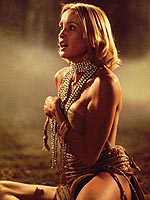
    Sterling cast and credentials aside, it is for this reason that I hold out much hope for Peter Jackson’s adaptation of Alice Sebold’s “The Lovely Bones,” a wildly popular novel that is nonetheless more exciting in its conceptualization than in its clunky execution. The novel offers bold visual and structural possibilities, not to mention a strong emotional charge, for Jackson and his collaborators to draw upon, but is weighed down by a maudlin, sometimes lurid literary sensibility that could benefit from the more interpretive route of visual storytelling.

    The story, in short, requires a subtler hand than Sebold’s to move into the realm of art; whether Peter Jackson, hardly the gentlest of directors recently, is the man for the job is something I’m intrigued to see. The Jackson of “Heavenly Creatures” could tease out the candid, often mordantly humorous tone that occasionally surfaces in the novel to good effect. The Jackson of “King Kong” risks drowning the delicate core narrative in effects-heavy supernatural dazzle, not unlike how Sebold ultimately smothers her story in spiritual bathos in an utterly unhinged final act. As a match of filmmaker and source material, it’s a double-or-nothing proposition.

    Perhaps that sounds unduly harsh on a debut fiction effort that has redeeming features beyond its overriding stylistic stickiness. Its essential gimmick – as you no doubt know, it’s narrated by the spirit of Susie Salmon, a murdered 14 year-old girl, observing how her family members variously handle the crisis on earth – is distinctive and immediate, and should translate well to film with judicious use of voiceover.

    (more…)

  • The evolution of the actress, part two

    Jessica Lange in King KongThis is the second of a two-part study of legendary screen actresses through the years.  Click here for part one.

    Diane Keaton and Sally Field emerged at the end of the 1970s with strong performances that defined them as actresses of the future. Keaton won an Oscar for her kooky “Annie Hall” and became a regular performer  for Woody Allen. But she was also taking risks with other filmmakers, giving a darkly brilliant performance, for instance, in “Looking for Mr. Goodbar” as a promiscuous young teacher.

    Keaton gave a sublime performance in “Shoot the Moon,” a critically acclaimed box office failure, and was excellent in “Crimes of the Heart,” “The Little Drummer Girl,” “Marvin’s Room” and most recently, “Something’s Gotta Give.” Equally at home in comedy or drama, Keaton never ceases to amaze.

    Sally Field’s career is a bit more bizarre.  A two-time Oscar winner for genuinely brilliant performances, she truly arrived with “Norma Rae,” claiming all major lead actress awards.  Five years later she won again for a wonderful performance in “Places in the Heart,” which yielded the infamous “you like me” speech.  In the years since, she should have been nominated for “Forrest Gump,” but was not, and now she’s an Emmy Award winner on television. Easily miscast, though, Field can come across as too earnest in some roles, as she was in “Murphy’s Romance.”  But in the right material, she is terrific.

    (more…)