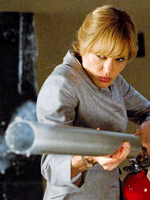
 I stopped researching somewhere in the 1970s, but as far as I can tell going back that far, the Best Sound Mixing (formerly Best Sound) category has never included more than three Best Picture nominees. In a number of cases there were two, a great many years saw one and often enough, there were none.
So there’s a theory worth addressing. But before I get to that, first and foremost, the safe money in the category is on “Inception.” However, there should be a bit of pause because the film did not resonate with the Academy enough to land two key nominations (Best Director and Best Film Editing) and it flew over many heads. But it’s the loud blockbuster of the bunch and ought to be considered the frontrunner.
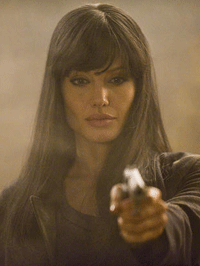
That having been said, when you think of the reality of the Oscars, the winner ballots are largely filled out in blocks of support, sometimes even mandated from on high (no joke). So there are six Best Picture nominees that aren’t represented in the Best Sound Mixing category, and the last thing in-house supporters of those films will want to do is check off a box for a competitor and add to another film’s momentum. The only vote that wouldn’t put wind in anybody else’s sails? “Salt.”
 Yesterday we began our final look at the 10 crafts categories. Check out part one
 I feel like we’ve done a pretty decent job of educating some of our readership on the difference between Best Sound Editing and Best Sound Mixing over the last five years here at In Contention. It struck me that we haven’t really covered it in a focused way this season, and the Oscar Guide seems as good a place as any to recap.

 •
 When Oscar voters spoke up last Tuesday, two intriguing craft category nominations stuck out, both coming from the same branch: Mark P. Stoeckinger’s third bid to date for the sound editing of
 On the face of it, the
 Sound mixing has a lot in common with sound editing, but the distinctions are still critical. While both clearly relate to what we hear in the theater, sound editing specifically relates to the creation of artificial sounds (“sound effects”) while sound mixing brings everything together — from effects to music to dialogue (recorded on set or during post-production) to music – into the overall soundscape of a film.
 Last week we discussed how a movie’s soundtrack can be immeasurably improved by music. This week, we turn to the sound technicians. While next week will concentrate on sound mixing (the overall mix of effects, recorded sounds, dialogue and music), this week we look at sound editing, the creation of artificial sound effects to enhance a film’s aural impact.
 How often do you go to the movies to escape? To be immersed into a different world, whether it be fantastical, thrilling or action-packed? For many movie-goers, if not most, the answer is “frequently.”
 Last week, while discussing the sound editing category, I explained the difference between that art form and sound mixing. The Oscar for the latter is shared between two (or more) persons who construct the soundtrack of a movie. The re-recording mixers bring together everything – dialogue, sound effects, music – into what we hear in the theater. The production sound mixer is also awarded for capturing the sounds during shooting, an undoubtedly arduous task.
 Now matter how many times I watch the Oscars, someone will always ask, “So what is the difference between the two sound categories?”
 I am marveled by the accomplishments of all the crafts artists who elevate our films, but this is particularly the case with respect to music composers. Composing equals genius as far as I am concerned.These musicians join the film at the end, when usually only the director, editor and perhaps the sound mixers are still working. But capturing the mood and feel of a film that has been created in your absence must be extraordinarily difficult.And I do not need to count the ways in which a brilliant score can make a good film truly unforgettable.
 *All historical figures cited are adjusted to
 *All historical figures cited are adjusted to
 *All historical figures cited are adjusted to
 The most recent predictions
 *All historical figures cited are adjusted to