In Contention

Tag: Russell Boyd

  • TECH SUPPORT: Final analysis, part two

    Yesterday I began a final look at the crafts categories. Today, a look at the four remaining fields: Best Art Direction, Best Cinematography, Best Costume Design and Best Film Editing.

    BEST ART DIRECTION

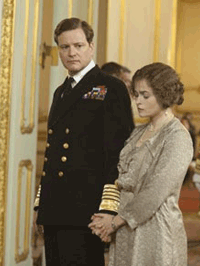
    The precursors of the BFCA, BAFTA and Art Directors Guild have been fairly consistent in citing four titles in this category. Last year’s winner, Robert Stromberg, seems poised to dip again for creation of a 3D world on Tim Burton’s “Alice in Wonderland.” Eve Stewart, on the other hand, will likely be returning to the fold after an 11 year absence for “The King’s Speech.”

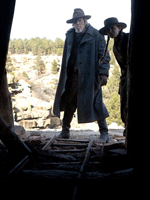
    Guy Hendrix Dyas and Jess Gonchor also have got all necessary precursors, and have fashioned surefire Best Picture nominees, in “Inception” and “True Grit” respectively. It is true that they have had difficulty being nominated in the past but Gonchor has also never had such an Oscar-friendly opportunity, whereas the impressive, integral-to-the-story nature of Dyas’s work has been especially embraced by the precursors.
    (more…)

  • Predict the ASC nominees

    Now that the DGA has spoken, something to pass the time.  Tomorrow the crafts guilds continue to roll out the season as the American Society of Cinematographers (ASC) offers its picks for the best work behind the camera in 2010.  This is perhaps my favorite of the below-the-line categories, so I thought I’d offer up a lengthy preview.

    The Society is usually good for 80% when it comes to Academy crossover with its nominees. Sometimes you get a 5/5, sometimes a 3/5, but generally it’s 4/5. The trick is figuring out what the oddball selection will be. But let’s see what’s looking good for a nod, first.

    Leading the way this time around, like most years, would have to be Roger Deakins. His work on “True Grit” will likely win him an Oscar and the road there could very well begin with a win from the Society. He seems to be papa bear these days. Chalk it up.

    (more…)

  • TECH SUPPORT: Best Cinematography — Volume II

    Today we take a look a second look at, well, certainly the most “cinematic” of categories: Best Cinematography. As I like to say, cinema is born out of the camera and those who wield these devices enrich our films more than a few words written here could possibly say. From capturing mood, lighting and atmosphere to telling the story visually and creatively, our cinematographers truly are artists in every sense of the word.

    Naturally, “pretty” films, war films and Best Picture nominees all have a knack for doing particularly well in this category.

    Now that the trailer for “True Grit” has reached the internet, I surely cannot be the only person asking…is this the film that will finally bring Roger Deakins his Oscar?  He has eight nominations (four for Coen brothers films), tragically winning zero times. The photography looks amazing, and the film is exactly the sort that would seem to excel in this category. That the film also looks like a bigger Oscar player across the board (more than I was originally expecting) is merely icing on the cake.

    (more…)

  • INTERVIEW: Peter Weir

    Telluride Film Festival

    For director Peter Weir, the pacing of his output has become almost as measured as his brand of cinema. The Australian has built a career around art house grandeur, but his work has slowed to a handful of films per decade, in stark contrast to the frequency of the 1970s and 1980s.

    That could be reflective of a professional desire to take his time from project to project, but another hypothesis could be the fact that the general movie-going audience has shown a reluctance to the product Weir and those like him provide. The industry is changing around him, and for his part, the director appears to be a mighty oak in the storm.

    “I’ve sensed this profound change that’s occurring in the industry that’s not purely locked to the Wall Street crisis,” he says in a modest hotel room here at the Telluride Film Festival, where his film, “The Way Back,” saw its world premiere. “That’s obviously a significant part of it, but what I thought was there is a change in taste amongst a growing audience that really likes sequels and likes their films very, very simple and in the area of pure spectacle. They’re not interested in structural character, and I think the studios and others have reacted to that.”

    However, Weir says he thinks it’s all “a bit of baby out with the bath water because they then more or less said, ‘That’s it, that’s the change.’ Well people and audiences don’t change overnight. And I think there’s a large audience left high and dry, the type of people who appreciate a program like here around the world who are saying, ‘What happened? There’s nothing on.’ Everything does change but I think there’s been an over-reaction on the part of distributors and there’s been a kind of deep conservatism that has come in which has led them back to what we call the genres.”

    (more…)

  • TECH SUPPORT: Best Cinematography — Volume I

    Of the so-called “tech” categories, Best Cinematography is one of the most popular, certainly for me. The invention of the camera took us beyond radio and literature and set modern art on a path aimed toward the moving picture, and this field recognizes those behind the lens.
    Cinematography obviously has a massive impact on a film, everything unfolding within a frame and any nuance specific to the tone, atmosphere and theme of the piece.  It is unimaginable to think of a good movie not having a good Director of Photography (DP).

    “Pretty” films with beautiful landscapes and memorable, postcard-like shots shots are a regularity (and tend to win).  But war films also show up regularly.  And being a Best Picture contender never hurts. Innovative lighting that creates unique mood is frequently rewarded, at least with nominations, as well.

    While this branch does at times play favorites (Robert Richardson and Roger Deakins being the most notable), it always tends to find room for one, two or three first-time nominees every year. From this vantage point, I’m curious who they will be because, the way I see it, most of the obvious contenders have been nominated before.

    (more…)

  • PAGE TO SCREEN: “The Long Walk” by Slavomir Rawicz

    In one of the year’s more groan-worthy feats of movie marketing magic, Disney recently slapped their plucky horse ’n’ housewife drama “Secretariat” with a paradox of a tagline in “The Impossible True Story.” No sooner had they done so than assorted sniggering blogger types responded with a perfectly reasonable question: if the story is impossible, how can it be true?

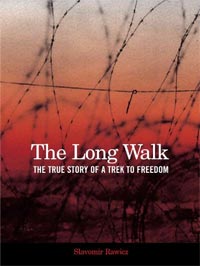
    That said, whoever ends up handling Peter Weir’s currently distributor-less “The Way Back” may rather wish they had bagged this ropey tagline first. Adapted from the ghostwritten 1956 memoir by Slavomir Rawicz, a former Polish cavalry officer and Gulag labor camp survivor, the film tackles a story that is indeed “impossible” in the Disney-dictionary sense – read: extraordinary – but also, to some extent, in the literal one: two years after his 2004 death, Rawicz’s account was entirely discredited by historians.

    In the book, following the 1939 invasion of Poland, a 25 year-old Rawicz is arrested, tortured and unjustly convicted of treason by the Soviets. Sentenced to 25 years’ hard labor in the remote Gulags of Siberia, he is placed in a POW chain-gang and subjected to a gruelling two-month journey northwards, whereupon the scarcely less arduous drill of prison life begins.

    (more…)