In Contention

Tag: Rupert Friend

  • My dream ballot: part two

    Charlotte Gainsbourg in AntichristYesterday, I began my far-fetched wishlist of nominees for tomorrow’s announcement with a look at the technical categories. Today we move into the big races. And as much as I thought I had my favorites clearly mapped out in my head, a rundown of the eligible titles made for some very crowded races indeed.

    Once again, I’ve mostly played by the Academy’s own criteria, considering only U.S. releases from 2009 — hence the slight discrepancy with my Top 10 from December. But where certain titles seemingly never made it through the administrative red tape guarding Oscar eligibility, I’ve intervened on their behalf. (Films as good as “Summer Hours” can’t go unmentioned, after all.)

    Check out my picks after the cut, and share your own last-minute thoughts and hopes in the comments. My final predictions are coming shortly.

    (more…)

  • THE LONG SHOT: Consider this

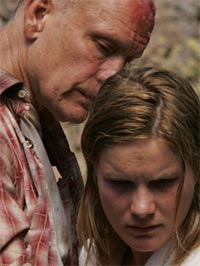
    John Malkovich and Jessica Haines in DisgraceThere’s nothing like an Oscar season to prove what a small number five (or even ten) is.

    We may only be in November, but already, months of conversation, covering a broad canvas of Oscar sure-shots and long-shots alike, have devolved into a ruthless mathematical elimination process, as previously five-wide categories fill up with safe bets. Before you know it, scores of previously fancied contenders are jostling for a mere one or two supposedly “free” slots on the ballot, and with each week that passes, the pool of possibles is culled further.

    This is, of course, hardest on independent or leftfield contenders. Having fought mightily even to enter the discussion in the first place, they must then rely on a flaky combination of precursors, DVD screeners and prayer to stay afloat.

    Miracles do happen, of course, thanks largely to the Academy’s weighted ballot system, where a number-one vote is all. (Nobody was talking about Tommy Lee Jones to take the last Best Actor slot in 2007, but there he was nonetheless. Ditto the recent likes of Michael Shannon, Samantha Morton and “City of God.”)

    With that in mind, I’d like to spotlight one contender in each major category that deserves a similarly happy outcome. Many of them are names I’ve championed before. Most of them are sitting on the furthest reaches of the sidelines. All of them deserve better.

    (more…)

  • David Poland’s Oscar underdogs … where are the ladies?

    Tilda Swinton in JuliaFor those of you bored of reading the same ever-narrowing list of names in the assorted Oscar-speculation pieces across the web, David Poland’s latest column is a slight breath of fresh air.

    Decrying the fact that many pundits are making ludicrous long-shot calls like “This Is It” for Best Picture, while ignoring more deserving contenders who could use the attention, Poland provides a list of less-hyped contenders in the top categories that he feels merit consideration.

    His definition of the term “underdog” ranges from genuinely fanciful contenders (Catherine O’Hara and James Gandolfini for “Where the Wild Things Are,” “In the Loop” for Best Picture) to names still very much in the race who  have lately lost a bit of steam (Matt Damon, Jeremy Renner and Viggo Mortensen, all in the Best Actor category).

    (more…)

  • Supporting actors, step forward

    Christoph Waltz in Inglourious BasterdsA while back, certain folks were (rather unfairly) dredging up the routine annual complaint about the supposed scarcity of viable Best Actress contenders. Dave Karger, however, has located the real weak spot of this year’s awards race, and it concerns the opposite sex for a change: where, he asks, are the Best Supporting Actor standouts?

    Pound for pound, I tend to find Best Supporting Actor the least compelling of the acting races, a haven for affectionately regarded stalwarts in bit parts that are frequently less than challenging. The last two years have raised the bar considerably, but recent wins for Morgan Freeman, Alan Arkin and Michael Caine are typical of the laziness with which the Academy often treats the category.

    Even by the category’s usual standards, however, this year’s pickings look unusually lean, as Karger narrows the serious contenders so far to a scant three.

    (more…)

  • Apparition will release ‘The Young Victoria’ Stateside

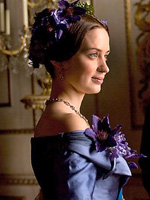
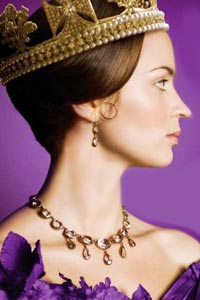
    Emily Blunt in The Young VictoriaBob Berney’s new outfit is filling out nicely, having acquired “Bright Star” out of Cannes, announcing plans to release Terrence Malick’s “The Tree of Life” in 2009 last week and now, snatching the domestic rights to Jean-Marc Vallee’s “The Young Victoria.”  Anne Thompson has the scoop:

    Over the weekend, Apparition closed a U.S. distribution deal for Toronto Film Festival closer The Young Victoria, starring Emily Blunt in what could be her breakout role carrying a movie as the youngest British monarch. As is typical these days, the new distrib run by Bob Berney and backer Bill Pohald did not put up a minimum guarantee, but rather beat out several competitors (including Miramax, Overture and Roadside Attractions) by committing to $4.5 million in P & A and a 250-screen release. Appariiton will open the movie November 13.

    (more…)

  • Cougar in a corset

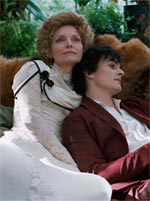
    Michelle Pfeiffer and Rupert Friend in CheriJane Shilling has a piece at the Telegraph about the gender politics of “Chéri” — specifically, the social disruption engendered by a romantic relationship between a middle-aged woman and a young man.

    Describing “Chéri” author Colette, and by extrapolation the character of Léa (played by Michelle Pfeiffer in the film), as “the original cougar,” Shilling suggests that the story of her love for a man half her age is more provocative to a contemporary audience than the first readers of the 1920 source novel:

    A couple of weeks ago in Grazia magazine an article appeared about a fascinating modern phenomenon. “Until recently,” wrote the author, Rita Sangha, “a woman dating a much younger man was likely to be ridiculed. But things have changed. Thanks to stars like Madonna, a ‘cougar’ – an older woman dating a younger man – isn’t seen as desperate: she’s glamorous and in charge of her own destiny.”

    Perhaps, she would have been amused – though not surprised – to discover that the seductive alchemy of a love affair between a middle-aged woman and a boy young enough to be her son would seem even more scandalous in 2009 than it did when she sat down to write it, 90 years ago.

    Shilling’s rather sketchy argument fails to bridge these two contradictory points — how is the so-called “cougar” phenomenon both laudable and scandalous? — though that perhaps accidentally echoes Colette’s own ambiguity on the matter. As I discussed in my Page to Screen article on the novel, Colette both defends Léa and Chéri’s generation-crossing relationship, but condemns a similar dalliance by of one of Léa’s peers as grotesque; the principal difference, it seems, lying in the two women’s levels of physical attractiveness.

    (more…)

  • REVIEW: “Chéri” (***)

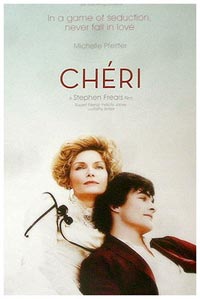
    CheriMy first thought on leaving the theatre after watching Stephen Frears’ crisp, elegantly turned new effort is that it is, in many ways, a consummate Frears film. My second thought, however, ran counter to the first: it has, over the years, become increasingly difficult to define what “a Stephen Frears film” might be.

    We are talking about a filmmaker, after all, who deals in polarities, following up the broad music-hall frivolity of the ghastly “Mrs Henderson Presents” with the austere docu-realism of “The Queen,” or a glib studio bauble like “Accidental Hero” with the jagged domestic comedy of “The Snapper.”

    The uncharitable could call Frears something of a dilettante, subsuming his own long-term artistic preoccupations beneath a veneer of versatile professionalism. That, however, would be to miss the keen emotional detail and bone-dry irony that lace themselves through all of Frears’ best work.

    Whether he finds them in a Chicago record store or an 18th century French chateau, Frears dissects his characters with an amused, academic precision that inevitably reveals the Oxbridge intellectual he is – and it’s a sensibility that meshes beautifully with the prose of Colette, who in 1920, wrote “Chéri” in much the same tartly tragic register that Frears and screenwriter Christopher Hampton tell it. (I discussed the novel in greater depth here.)

    Contrary to the shrill period rom-com that the trailer appears to be pitching it as, “Chéri” remains a cutting, economic study of love thwarted by the twinned obstacles of aging and social expectation. Painstakingly mapping the end of the affair between the eponymous 25 year-old playboy (Rupert Friend) and Léa (Michelle Pfeiffer), the world-weary courtesan twice his age, it becomes something of a dual coming-of-age story, as the lovers are forced to accept the indignities of adulthood and middle age, respectively.

    (more…)

  • PAGE TO SCREEN: “Chéri” by Colette

    Cover of Cheri by ColetteMerely casual acquaintances of French literature will likely associate the name Colette with her short story “Gigi” – or rather, the flouncy musical film adaptation thereof that swept the board at the 1958 Academy Awards. A sunny, sanitized interpretation of an intricate study in sexual politics, it captured the author’s sensibility in its lavish set-dressing, but little else.

    I doubt 1950’s Hollywood would have known where to begin with “Chéri,” a darker portrait of the louche demimonde of Parisian courtesans – and we are close to finding out if they do even now. Certainly, those who approach the novel with the jolly peals of laughter from the meringue-light trailer for Stephen Frears’ upcoming film still ringing in their ears, may be taken off-guard by the elegiac, often cruel comedy of manners that awaits them.

    Though “Chéri” is a slender, subtle volume, it’s easy to see what drew Frears and screenwriter Christopher Hampton to the material. Much like their previous collaboration, 1988’s “Dangerous Liaisons” (and other Hampton works such as “Atonement” and “Total Eclipse”), this is a story of sexual awakening gone awry — which is not to say that the novel lacks for romance. Amid the rueful cynicism lies a rather tender love story between two people who only realize they are in love a full six years into their relationship.

    The affair between Fred, an aimless 25 year-old dandy known to all by his family nickname Chéri, and Léa, a wealthy courtesan twice his age, is introduced in the novel as a pragmatic transaction: the beautiful yet increasingly insecure Léa feeds vicariously off her lover’s youth, offering material rewards and a sexual (if not sentimental) education in exchange.

    As such, “Chéri” is truly a coming of age story, a gender-reversed “Pygmalion” even, in which an older, more worldly woman grooms a boy for marriage, before releasing him into gentlemanly society. The twist comes when, the ink barely dry on the certificate of his marriage to sweet, shy debutante Edmée, Chéri discovers that carnal and sensual affections are not merely transferrable between different women. Léa, meanwhile, having undertaken this schooling for multiple men in her career and living by the philosophy that “being disinterested is its own reward,” realizes that she’s more emotionally invested in Chéri’s maturation than she knew at the time.

    (more…)

  • REVIEW: “The Young Victoria” (**)

    The Young VictoriaSomewhere out there, wherever such souls reside, Anne of Great Britain must be wondering what she had to do during her reign to merit her own prettily mounted biopic. She may be the last relatively untapped figure in British heritage cinema’s well-worn library of queenly narratives, but she has once more been passed over for the privilege of fronting the latest middlebrow, true-life royal drama, fast becoming an annual fixture on the UK film calendar.

    Instead, the powers that be (noting with reluctance that the lives of both Elizabeths have been sufficiently plundered of late) have returned to that old stalwart, Queen Victoria, for inspiration. Marginal inspiration, at that –- that “young” inserted in the title is intended as the film’s creative and commercial trump card, promising a sprightlier, sexier take on the figure more frequently depicted in her latter years as a stern, cabbage-faced matron.

    Indeed, from the sly casting of impish Emily Blunt in the title role to the Easter-egg hues of Sandy Powell’s typically immaculate frocks, Jean-Marc Vallee’s film works overtime to convince us that the 18-year-old Victoria could be very amused indeed: as Blunt barely suppresses laughter at a stiff royal function, or skips down a corridor after being informed of her impending coronation, she effectively severs any connection or comparison with Judi Dench’s Oscar-nominated interpretation of the role in “Mrs Brown.”

    Meanwhile, in depicting its subject as a modern woman suffocated by her surroundings and dated gender trappings, complete with adorable lapdog and an accent that is decidedly more Sloane Square circa 2009 than House of Hanover circa 1837, the film pulls a similar trick of characterization to last year’s “The Duchess.” Working, however, in an even softer register than that already lightweight film, “The Young Victoria” plays down court intrigue in favor of dewy-eyed first love; if “Elizabeth’s” populist coup was restyling royal history as political thriller, this lands squarely in rom-com territory, with Rupert Friend’s Prince Albert the dreamy yet ever-deferred suitor.

    (more…)