In Contention

Tag: Robbie Ryan

  • Venice awards make a stand

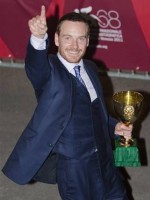
    To judge from the press reaction to yesterday’s Venice Film Festival awards, you could be forgiven for thinking that Michael Fassbender won every single one of them, plus an extra certificate for full attendance.

    That’d hardly be surprising in any circumstances, given Fassbender’s growing celebrity and the media’s reliable aversion to world cinema. Best Actor was the only major prize handed to an English-language film, after all — prompting cries of “Boring!” in many a comment board, for what in cinema is more boring than subtitles and faces you don’t immediately recognize?

    But I’m being unfair. Surely one reason for Fassbender hogging last night’s Lido headlines — with Golden Lion winner “Faust” generally relegated to a grudging postscript — is that his was one choice made by the jury that nearly everyone could agree upon, and had indeed agreed upon since “Shame”‘s first screening a week before. I’d have been equally happy with an award for quick-witted “Carnage” savior Christoph Waltz, but I’m pleased the more exciting film got indirectly honored.
    (more…)

  • REVIEW: “Wuthering Heights” (***1/2)

    Venice Film Festival

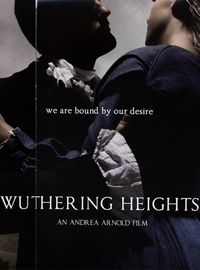
    British filmmaker Andrea Arnold would have been 16 years old when Kate Bush topped the UK pop charts with “Wuthering Heights,” a swirling art-rock ballad that stripped the Emily Brontë novel for which it is named down to a few key lines and narrative details, but evoked its grand-scale tragic romance in more intuitive terms. In its wake, a new generation of schoolgirls clutched Brontë’s words tightly to their chests.

    We can only speculate how Arnold came to the novel, but her bold, forbidding and impressively reconceptualized “Wuthering Heights” appears to take the Kate Bush course of adaptation: gutted of most of its words, with some choice ones added (I haven’t read it in some time, but I’m pretty sure Brontë didn’t write the line, “Fuck you all, cunts”), the novel serves as a theoretical starting point for an artwork that redraws the story with the most immediate sensory tools of its medium. This is a “Wuthering Heights” of weather and flesh and grass and locked eyes, one that has the simple common sense and staggering cinematic wherewithal to know that great adaptations don’t beat great writers at their own game; they play a new game entirely.

    (more…)

  • FIRST-HALF FYC: Below-the-line standouts

    For the penultimate installment in our reflection on the most Oscar-worthy achievements from the largely forgotten first half of 2010’s release calendar, I’m backtracking away from the major categories to the place I should perhaps have started: the technical sphere.

    Had I thought to start this column 20-odd weeks in advance of nomination day, I could have given each craft category the attention it deserves — though if I’m being honest, picking five outstanding Best Sound Editing contenders from the year’s first six months wouldn’t be the easiest of tasks.

    As it stands, I’ve arrived at an admittedly drastic compromise: singling out five individual technical contributions, across the range of categories, that made a particularly strong impression. With such a doubly curtailed brief, the list of painfully excised honorable mentions inevitably runs very long indeed, so I’ll jump straight in with a few of them.

    As much as “Shutter Island” didn’t work for me as a whole, it delivered considerable rewards as a craft showcase: I was particularly tempted to include Dante Ferretti’s art direction, which will likely find its way to Oscar recognition without my help.

    (more…)

  • Picking the best new lensers

    As you know, we at InContention are dedicated to spotlighting below-the-line talent, so this excellent cinematography-themed piece at The Playlist caught my eye — in it, Oli Lyttelton singles out five individuals that he feels are spearheading an exciting new generation of DPs, breaking down their past achievements and future promise in some detail.
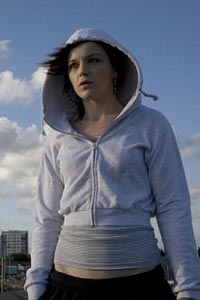
    The focus on newer names is both refreshing and necessary, given how awards voters can be resistant to outstanding work from comparatively untested talents. Of the five worthy names he puts forth, three — Greig Fraser (“Bright Star”), Eduard Grau (“A Single Man”) and Adriano Goldman (“Sin Nombre”) — arguably deserved awards traction in the 2009 season than they eventually got, while two — Robbie Ryan (“Fish Tank”) and Michael McDonough (“Winter’s Bone”) — seem destined to be similarly slighted this year, given their low profile and the gritty unprettiness of their projects.

    (more…)

  • REVIEW: “Fish Tank” (***1/2)

    Katie Jarvis in Fish TankEdinburgh International Film Festival

    There’s a slightly condescending tendency among many critics to brand almost any British film set on a working-class council estate as “miserablist” simply by virtue of the aesthetics of its setting, despite the fact that many thousands of people live functional, three-dimensional lives in precisely such conditions.

    Of course, it’s a bias that filmmakers feed too: since Ken Loach essentially patented this sub-genre with “Cathy Come Home” in 1966, the landscape of Britfilm has been clogged with imitators piling on the grimness to perverse effect.

    Occasionally, however, the trend gives rise to a creative voice of genuine compassion and ingenuity. Recently, Lynne Ramsay and Shane Meadows have located poetry and humor in the crevices of blue-collar Britain.

    Now Oscar-winning short filmmaker Andrea Arnold joins their rank with “Fish Tank,” a deserving Jury Prize winner at Cannes that represents a quantum leap on Arnold’s already impressive feature debut, “Red Road.”

    I’d be lying if I said “Fish Tank” isn’t an often unhappy, and occasionally very angry, film. But in its detailed, immersive study of the life of an emotionally tormented, 15 year-old Essex girl (the term applied geographically rather than pejoratively, though protagonist Mia certainly has many of the vulgar physical and behavioral traits beloved of British satirists like Catherine Tate), the film seeks out moments of everyday contentment, and even cathartic bliss, that keep the proceedings in balance. (It’ll be interesting view the film in relation to its similarly-themed U.S. counterpart, “Precious.”)

    (more…)