In Contention

Tag: Platoon

  • LIFE WITHOUT OSCAR: 1985 and 1986

    Catch up with the idea behind this series here.

    1985 saw “Out of Africa” win the top prize in another instance where I’ve only seen one of the Best Picture nominees. I don’t know what it is about this period, but hardly any of the films jump out as necessary viewing when looking back on what to catch up on. I’ve been meaning to see “The Color Purple” for a while, but also, don’t really care.

    Spielberg’s drama came into the ceremony with 11 nominations and went home with a goose egg, tying an Oscar record. Spielberg himself didn’t get a directing nod, Akira Kurosawa jumping in instead for “Ran.” Fans of ladies daytime TV would be happy to see two of their favorites, Oprah and Whoopi Goldberg, were both nominated this year.

    Oliver Stone’s “Platoon” earned top honors in 1986, competing against a number of films made outside of the Hollywood studio system. One of them, “Children of a Lesser God,” was the first Best Picture nominee ever directed by a woman. It’s also the first and only time an Oscar winner couldn’t attend because they were busy filming “Jaws: The Revenge” (cough, Michael Caine).

    Finally, the winner of Best Documentary Short was a montage called “Precious Images” that may as well have been made by the Academy. It’s the first piece of film they show every new student at my film school and used to joke that if you could name every film in it, you could get free tuition. Check it out here, movie nerds!

    (more…)

  • Going to war with Oscar

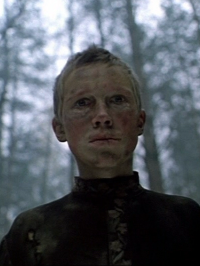
    Willem Dafoe in PlatoonOver at The Big Picture, Patrick Goldstein spent some time revisiting the three “bona fide” war films to win the Oscar for Best Picture (in the last 40 years): “Patton,” “The Deer Hunter” and “Platoon.” He notes that each of those films, when adjusted for inflation, grossed over $300 million, $280 million and $160 million respectively.  We all know where “The Hurt Locker”‘s tally sits.

    What he took away from another look was that each film captures modern day ambivalence toward war, which really, the best of war cinema does.  Which reminds me, I caught “Black Hawk Down” again on cable earlier this week (a brilliant film), and certainly the point is driven home there, though in more camouflaged strokes.  When Tom Sizemore sarcastically quips, “Just get it over with,” in response to a young soldier screaming, “They’re going to get us killed,” any notion that the film uses high octane tropes to drum up a sense of “duty” or American flag-waving quickly flies out the window.

    But I digress.  All of that is kind of inherent in the drive to make a war film, unless you’re talking about a golden age period that saw the likes of John Wayne (who Goldstein reminds “ducked out of the fighting himself”) standing up, larger than life, to the identity-less enemies of a nation.

    (more…)

  • THE LISTS: The top 10 Best Picture winners of all time

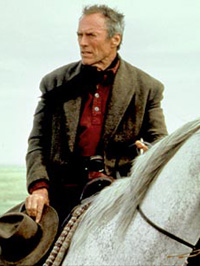
    Clint Eastwood in UnforgivenWith the Oscar season officially here it seemed only logical to dedicate an installment of The Lists to the little golden guy.  And as we push forward past the fests and into the thick of it, I figured the best idea would be a broad assessment of the Academy’s chosen best through the years, a bone of contention for a great many, as you read in this space and in the comments section year in and year out.
    But I must say, putting this list together was a joy.  The percentage of times I think the Academy has gotten it “right” is quite low, of course, but when I skimmed the cream of the crop I was left with, I felt, a wonderful collective representative of the finest of American cinema.

    Of course, that should itself be seen as damning the organization with faint praise.  After all, the Academy has failed to recognize a great many foreign classics with its top prize.  And by a great many I mean any.

    The most celebrated decade in cinema, the 1970s, has three representatives on the collective, each of them at the very top.  The 1990s and 1980s came in right behind with two to show for themselves, while the 1930s, 1940s and 1960s each had one entry.

    I’d say that’s a pretty decent cross-section.

    It goes without saying a list like this is incredibly subjective, but I’d be very curious to hear the readership’s thoughts on 82 years of this award, so when you rattle through my list, be sure to offer up your own in the comments section.  We have a diverse group here so I’m sure there will be a number of unique takes.

    (more…)

  • James Cameron on ‘The Hurt Locker’

    With the more gossipy factions of the press trying to conjure up tension between him and his ex-wife Kathryn Bigelow, it’s great to see that James Cameron is having none of it.

    In this extract from an interview with David Poland — worth checking out here — Cameron sings the praises of “The Hurt Locker,” suggesting it could emerge as the “Platoon” of the Iraq generation. He also makes clear that they continue to enjoy a professional friendship … so the wags hoping for some kind of bitter rivalry come Oscar season will be disappointed.

  • And often, the Academy gets it right…

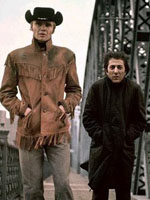
    United Artists' Midnight CowboyAs much as I rant about some of the bizarre choices made by the Academy, let’s be fair…there are times when they are right on the money.

    The AMPAS allowed for an embracing of the New American cinema with their awards for Best Picture and Best Director for “Midnight Cowboy” in 1969, and only they had the courage (and the smarts) to recognize that “The Godfather Part II” was a superior film to the first in handing it the same two trophies. They had awarded “The Godfather” Best Picture two years earlier, but much of the precursor circuit (and all of the critics groups) largely ignored the sequel, opting instead for films such as “Alice Doesn’t Live Here Anymore” and “Chinatown,” among others.

    The five awards betsowed on “One Flew Over the Cuckoo’s Nest” in 1975 are among the group’s best choices ever, in particular the honors for actor Jack Nicholson and director Milos Forman.

    Though far too often dismissed as a chick flick, “Terms of Endearment” was a marvelous slice of life that the Academy embraced with five Oscars, including Best Picture, Best Actress, Best Supporting Actor and Best Director. By the way, is it not odd that first time winner James L. Brooks has never again been nominated in the directing category again, despite two Best Picture nominees in “Broadcast News” and “As Good As It Gets?”

    I remember cheering loudly the many wins for “Amadeus,” “Out of Africa” and “Platoon” three years in a row, and though I believe “Goodfellas” is a better film, I was pleased to see a western, “Dances with Wolves,” win seven Oscars.

    No arguments from me between 1991 and 1993, with “The Silence of the Lambs,” “Unforgiven,” and “Schindler’s List” all most deserving winners. And though I prefer “Pulp Fiction,” I understand why “Forrest Gump” took the top prize in 1994.

    Bravo, too, to the Academy for honoring “The Lord of the Rings: The Return of the King,” a bonafide movie masterpiece, and again the following year for “Million Dollar Baby.”

    So you see, for all my bitching (and we all do it…come on), I concede that the Academy does, from time to time, nail the best.

  • Stone’s ‘W’ could be his ticket back to Oscar

    I like the films of Oliver Stone, though I am acutely aware he tends to pound us over the head to get his message across, is known to bully his actors and audiences, and from time to time has bent history to suit himself and the film he is making.

    That said, it cannot be denied Stone creates powerful, visceral films, beginning with the vastly under appreciated “Salvador” back in 1986 that was somewhat overshadowed by his Vietnam drama “Platoon” which won the Oscar for best film and director making Stone a household name. Aside from being the most realistic film about the war in Vietnam, “Platoon” obliterated those terrible comic book style films like “Rambo: First Blood Part II” and “Missing in Action” in which the war had been reduced to a comic book and a single American could go back and win it!!

    Three years later he won his second Academy Award and Directors Guild Award for “Born on the Fourth of July” a film he had wanted to make for years, at one point in the 70s with Al Pacino as Ron Kovic. Both Vietnam films were powerful and deeply moving, populated with strong performances that drew the viewer into the story. In between those pictures he made “Wall Street,” now horribly dated, and “Talk Radio,” an underrated little film based on the hit play.

    (more…)

  • The 80s yielded one great Best Pic winner: ‘Platoon’

    Ten awards for Best Picture were handed out throughout the 1980s, one of the worst decades for film in history, and I’d wager that only “Platoon,” the Oscar winning giant of 1986, can lay claim to being a great film.

    Oh, that is not to say there were not great films made in the 80s; there were indeed, but nobody went to see them, despite rave reviews. Many of the decade’s very best films were released and abandoned, to be re-discovered on video, at that time a very new addition to the film industry.

    “Raging Bull” ended up being the finest film of the decade, hell one of the five greatest films of all time, yet Oscar did not see it that way. Somehow, Martin Scorsese’s masterpiece lost the Oscar for Best Picture and the New York Film Critics Circle award for Best Film to Robert Redford and “Ordinary People” — a well crafted film, but hardly the raw and angry work of the former.

    That same year would see the releases of “The Empire Strikes Back” — a superior film to the first “Star Wars” installment, yet snubbed for a nomination for Best Picture — and Richard Rush’s “The Stunt Man,” which might have been a strong choice for a nomination as well.

    (more…)