In Contention

Tag: Pictures at a Revolution

  • ‘Pictures at a Revolution’ makes its way to the big screen

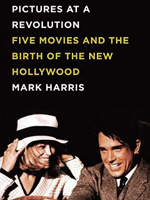
    When I read Mark Harris’s “Pictures at a Revolution” last summer, an amazing history of the American filmmaking revolution through the lens of the 1968 nominees for Best Picture, one of my first thoughts was, “This would make a great film.”

    I was thinking narrative, though, mainly because key figures like Rex Harrison and, of course, Warren Beatty stuck out as such vibrant characters.  And the circumstances are so dramatic — or, at least, Harris really found the right dramatic rhythms when he pulled all the information together.  If anyone was willing to sit down and attempt the thankless task of streamlining his dense work into a script, it could make a hell of a film.

    Well, that’s not happening, of course, but the inevitable is.  Oscilloscope Laboratories has announced plans to produce a documentary based on the volume with “Roman Polanski: Wanted and Desired” director Marina Zenovich tapped to head up the project.  It’ll be fun and it’ll hopefully be revealing.  And if you haven’t read the book yet, do yourself the favor.

    There aren’t any quotes from Harris in the press release, so I thought I’d reach out and get his quick perspective on things.  Check out his response, as well as the full release, after the jump.

    (more…)

  • TCM’s ‘Summer Under the Stars’ posters

    Brad Brevet over at Rope of Silicon points me today over to the Turner Classic Movies website, which, in preparation for August’s mega “Summer Under the Stars” program, has released a modest series of redesigned posters for a few of the classic films set to be screened.  The “Magnificent Seven” and “Grapes of Wrath” posters are, of course, exquisite, but I was taken by the arresting simplicity of this one for “Guess Who’s Coming to Dinner?”:

    Guess Who's Coming to Dinner?

    Speaking of Stanley Kramer’s film, I finally got around to Mark Harris’s book “Pictures at a Revolution” last week, maybe 100 pages in so far.  It’s a look at a pivotal time in American film history through the lens of 1967’s five Best Picture nominees (“Bonnie & Clyde,” “Doctor Dolittle,” “The Graduate,” “Guess Who’s Coming to Dinner?” and “The Graduate”), and I can’t put the damn thing down.  It’s expertly rendered journalism that reads like a novel and every chance I get, I’ve been recommending it to film enthusiasts.  So it only makes sense I bring it up here.  Seek it out.

  • What does it all mean?

    Kate Winslet in The Reader“Pictures at a Revolution,” Mark Harris’s smart, keen-eyed study of the cultural implications of the 1967 Best Picture race, is without a doubt one of the best books ever written on the subject of the Academy Awards. So it’s hardly surprising that Harris, in a piece for yesterday’s Observer, has provided the most intelligent take on this year’s awards race to date.

    What’s particularly interesting is that, while he just wrote an entire volume on the countercultural meaning of a Best Picture race in a pivotal year in Hollywood history, he’s quick to avoid such a unified reading of this years nominees — effectively and wittily debunking several trends that many Oscar-watchers have attempted to glean from the crop:

    1) The Academy has a new, more global outlook, represented by the 10 nominations given to Danny Boyle’s Slumdog Millionaire. Alternatively, the Academy suddenly has a new, more insularly American outlook, as evidenced by the fact that 17 of the 20 acting nominees are from the US, the most since the early 1990s.

    2) The “gay mafia” in the Academy, outraged by the passage of the anti-gay marriage amendment Proposition 8 in California, powered the gay-rights drama Milk into the race with eight nominations. However, it will never win, because the Academy is hopelessly homophobic, as we all are presumed to have learned when Brokeback Mountain lost to Crash.

    3) In a time of great economic uncertainty for the major studios, Hollywood reasserted its authority by bestowing 13 nominations on the high-grossing, high-budget product of two conglomerates, The Curious Case of Benjamin Button. But the Academy simultaneously renounced any interest in supporting studios or representing popular taste by snubbing Christopher Nolan’s blockbuster The Dark Knight, excluding it from consideration for best picture, director or screenplay.

    (more…)