In Contention

Tag: Patricia Clarkson

  • OFF THE CARPET: Kicking the tires on the circuit

    On the precipice of December, the season feels at once stale and fresh. We’re in the post-Thanksgiving food coma paradox that hits every year. But things are going to start heating up real soon.

    The last two films out of the gate, “TRON Legacy” and “True Grit” (both ironically starring Jeff Bridges), have already started screening.  SAG ballots are already in the hands of nominating committee members and voting deadlines are approaching for various organizations.

    The circuit “officially” begins Thursday with the always arbitrary National Board of Review announcement. The Washington, D.C. Area Film Critics Association will get a jump on the critics awards once again when they announce one week from today, while the Los Angeles (12/12) and New York online (12/12) and print (12/13) critics will have their say the following week, as well as the BFCA (12/13) and HFPA (12/14).

    The excitement will build to the usual pre-holiday stall and pick right back up on January 4 when the writers and producers guilds announce nominees, followed the same week by the art directors and sound mixers. And the date most will have their eyes on — January 10 — will bring the DGA’s list of contenders. Before you know it we’ll be on a collision course with the January 25 Oscar nominations announcement and things will be mercifully nearing an end.

    (more…)

  • WEEKLY WRAP: ‘127 Hours’ dissent, BIFA nods, interviews

    • Guy didn’t much care for “127 Hours.” That got you talking.

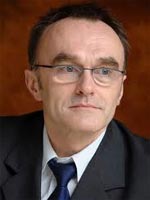
    • Happily, Kris did, and got talking to director Danny Boyle and screenwriter Simon Beaufoy.

    • The British Independent Film Award nominations threw some surprises into the mix, handing scads of noms to “The King’s Speech”… and “Kick-Ass.”

    • Chad’s Life Without Oscar column eased into the late 1980s, showcasing one films on either side of the Hollywood border.

    (more…)

  • INTERVIEW: Patricia Clarkson

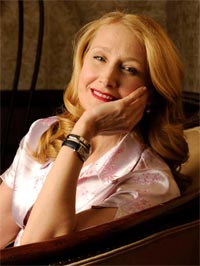
    “I’m going to bring back the letter,” a flustered Patricia Clarkson announces as she makes her way to our lunch table, ever-so-slightly rain-mussed but otherwise immaculate in black and cream, a jaunty matching fedora astride her familiar blonde mane. “I’m never late. I blame email for this. I’m only just getting acquainted with it.”
    She is, thanks to a slight communication muddle, late only to a degree most actors wouldn’t apologise for. Together with my lunchmate, Daily Telegraph critic Tim Robey, we’ve nabbed a cosy corner spot at Mayfair’s all-day Italian bistro Cecconi’s, a humming London institution of marble, green velvet upholstery and £40 white truffle starters. (Clarkson is more excited by other things on the menu: later, one eye on the menu, she interrupts her own sentence with the jubilant cry, “Meatballs! With spaghetti sauce!”)

    “This place is fabulous,” she says—that adjective’s first of many appearances in our two-hour conversation—settling into our banquette with a tidy collapse of a sigh. Patricia Clarkson, she does not mind admitting, is exhausted, and not just from her week of jury duty at the London Film Festival, where she presided over the panel that, we’d learn the next day, selected Russia’s “How I Ended This Summer” as best in show. (All she tells us is that she’s “very happy” with the “wonderful” winner they’ve chosen, though she successfully deflects our speculation as to what it might be. “Oh, the Russian film?” she shrugs, when Tim brings it up.)

    (more…)

  • ‘How I Ended This Summer’ takes top prize at London fest

    “We chose our winner last night,” London Film Festival jury president Patricia Clarkson told me yesterday, an evasive  smile on our face, as we eased into our lunchtime interview. (More on that in a few days.) “I’m very pleased with it — it’s a wonderful film.”
    Naturally, my fellow lunch guest, Daily Telegraph critic Tim Robey, and I tried to tease some clues out of the estimable character actress, but she wasn’t budging. She was, however, keen to know which of the shortlisted films we had seen. When Tim declared Alexei Popogrebsky’s two-hander character drama “How I Ended This Summer” his favourite film of the festival,  Clarkson’s eyes glazed over ever so slightly. “Oh, the Russian film?” she said unenthusiastically.

    Well, Clarkson really is quite the actress. For as it turns out, “the Russian film” she so slyly shrugged off at lunch is the very one that she — together with jurors Sandy Powell, John Hillcoat, Shekhar Kapur and Gabriel Byrne — had already voted the winner of the fest’s Best Film trophy, following in the footsteps of last year’s champ “A Prophet,” and beating such heavyweight competition as “Black Swan,” “Another Year,” “The King’s Speech” and “Uncle Boonmee Who Can Recall His Past Lives.” The choice was unveiled at tonight’s festival closing ceremony.

    (more…)

  • London fest honors Boyle, announces award shortlist

    The 2010 London Film Festival only kicks off in two weeks’ time, but with press screenings having started on Monday, I’m already feeling the festival spirit. (Those of you who follow my Twitter feed may have noticed some 140-character reviews trickling through.)
    Without a major world premiere like “Frost/Nixon” or “Fantastic Mr. Fox” in this year’s lineup, the LFF looks to be a more local affair than recent editions, but they’re still luring in big-name visitors — some of them with the promise of more awards hardware.

    Today, LFF organizers revealed the 11-film shortlist for the festival’s second annual Best Film award, which will be determined by the eminently classy jury of president Patricia Clarkson, Sandy Powell, Gabriel Byrne and Shekhar Kapur. (Should be a cushier judging assignment for Kapur than his Cannes juror stint earlier this year.)

    (more…)

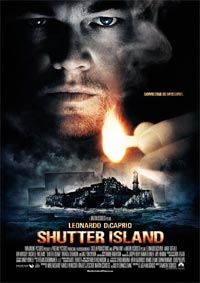
  • REVIEW: “Shutter Island” (**1/2)

    Shutter Island

    Berlin International Film Festival

    (EDIT: Star rating adjusted upon consideration.)

    To filch an aphorism from Mike Skinner, “Shutter Island” represents of continuation of Martin Scorsese’s decade-long quest to find the hardest way to make an easy living.

    If that sounds like a jab, it’s not. Since the self-amusing personal statements of “Kundun” and “Bringing Out the Dead” perplexed far more than they pleased, Scorsese has weaved over to the middle of the road, flirting with broad Oscar-bait and crowdpleasers (successfully marrying the two in “The Departed”) while playfully maintaining an auteur’s consistency of theme and aesthetic.

    It’s a tricky game to play, and when the elements align, it can work to smashing effect — as in “The Departed,” a nifty pop movie-movie winkingly intended as the prototypical “Scorsese film” that casual cinemagoers attributed to him, but that he’d never actually made.

    When they don’t, however, you get “Shutter Island,” a film awash with beauty and trademark stylistic flourishes, attached to a narrative that he never seems all that into. A near letter-faithful adaptation of Dennis Lehane’s pulpy source novel, itself something of a genre lark for the author, it surprises principally by offering more intrigue as a Scorsese picture than as an entertainment. As an artistic investigation of B-movie construction, it has all the impeccable craft, and a measure of the cinephile intelligence, of “The Departed” or “Cape Fear”; but a lot of the fun is missing.

    (more…)

  • The Great Performances: 2005

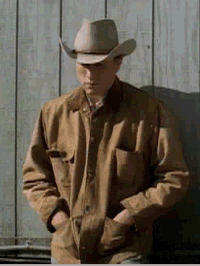
    Heath Ledger in Brokeback Mountain2005 was the year of Heath Ledger’s beautiful, moving performance in “Brokeback Mountain,” which I saw for the first time in Toronto.  It instantly became the talk of the festival, and the film became the one to beat for the Academy Award.
    Ledger was astonishing as the taciturn cowboy who is more surprised than anybody when his soulmate turns out to be another cowboy, portrayed superbly by Jake Gyllenhall. If there is a more deeply felt moment in film history than Ledger gently adjusting Gyllenhall’s shirt at the end of the film, his eyes filled with tears, I don’t know what it is. That’s loss, that is absolute heartbreak, that is one of the greatest acting performances of the decade.

    Phillip Seymour Hoffman would win the Oscar for his transformation into “Capote” and he’s very good, but just not in the same league as Ledger. I wondered from time to time if “Infamous” had been released earlier if Toby Jones might have won the Oscar instead of Hoffman. Each becomes Capote in a very different manner, and side by side it is difficult to choose the stronger portrayal. Certainly I prefer Hoffman’s as it is darker, and for me more realistic, but there can be no denying Jones.

    (more…)

  • The Great Performances: 2003

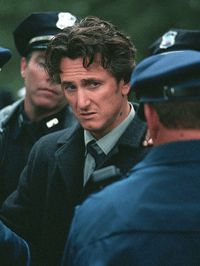
    Sean Penn in Mystic RiverThere is little doubt in my mind I am going to take some heat this week, so let’s kick it off right away with my belief that Sean Penn deserved his Best Actor Oscar for “Mystic River,” a performance of overwhelming ferocity and staggering emotional power.
    Yes, I too loved Bill Murray in “Lost in Translation,” and would have loved to have seen him win, but he didn’t, and frankly he lost to a stronger performance (in my opinion). I know it is a cliche to say the nomination is the reward, but I would hope that Murray would be happy with that.

    But there were so many great male performances in 2003!

    Robert Duvall was superb in “Open Range” as the wily old rancher who ends up in a gunfight for his life with his friend, played by the also fantastic Kevin Costner, by his side. Tom Cruise gave a great performance in “The Last Samurai” for director Edward Zwick, while Russell Crowe was again brilliant in “Master and Commander: The Far Side of the World,” adding to his string of stunning performances.

    (more…)

  • The Great Performances: 2002

    Chris Cooper in Adaptation2002 was probably one of the greatest years for performance excellence in film history, from leading actor right through all the supporting players. They could have easily nominated 10 actors in each of the four acting categories, and still missed some.
    Though Adrien Brody won the Oscar for “The Pianist,” which was a huge shock, I have always felt that Jack Nicholson gave one of his finest performances in “About Schmidt.” I suspect he and Daniel Day-Lewis in “Gangs of New York” may have split the vote in some way, allowing for Brody’s win.

    Michael Caine was up for “The Quiet American” after that film scored with critics at many precursor fests, and Nicolas Cage was the fifth nominee in “Adaptation.” Great performances all, deserving performances all, but there were so many other noteworthy turns.  Like Robin Williams’s chilling performance in “One Hour Photo” as a deranged photo lab worker obsessed with a family. Equally brilliant was Leonardo DiCaprio as the young fraudster in “Catch Me If You Can” while Tom Cruise gave one of his very best performances in Steven Spielberg’s “Minority Report.”

    One of the year’s very best films, “Road to Perdition,” contained one of the year’s best leading performances from Tom Hanks, as a lethal killer on the run from his own mob.  And though I loathe the work of Richard Gere, I must confess he did some of his finest work in “Chicago,” winning a Golden Globe for his performance, but no Oscar nod.

    (more…)

  • The Great Performances: 1998

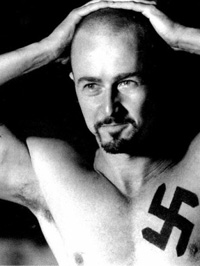
    Edward Norton in American History XFor all my bitching about Roberto Benigni winning Best Actor in 1998 for his incessant mugging in “Life is Beautiful,” I was also thrilled the Academy watched enough films and paid enough attention to realize that Edward Norton was deserving for his magnetic turn as a neo-Nazi who sees the light in “American History X.” Norton was electrifying as Derek, the charismatic leader of a group of skinheads, handpicked by the older gentleman, played with menace and sleaze by Stacey Keach, who believes in what Hitler taught and seeks to spread the word to the youth of California.
    Norton gave the best performance by an actor I saw in 1998, but the Academy got caught up in the groundswell of support of Benigni’s movie, a fable set in a death camp. I’m not a fan, either of his overwrought, over the top performance, or the film itself. No rant, you all know what I think there.

    That said, there was a bounty of great male performances in 1998, many of which went unnoticed by the Academy. They did their best to get it right, though.  Joining Norton and Benigni for nominations were Nick Nolte in “Affliction,” Ian McKellen, superb in “Gods and Monsters,” and Tom Hanks as the weary soldier in Steven Spielberg’s magnificent “Saving Private Ryan.”

    Not even nominated, however, were Warren Beatty for his brilliant turn as the truth-talking senator in “Bulworth,” Joseph Fiennes in Best Picture winner “Shakespeare in Love,” Jim Carrey in “The Truman Show,” George Clooney in “Out of Sight,” Brendan Gleason in “The General” and John Travolta in “Primary Colors” or “A Civil Action,” take your pick.  And perhaps the most deserving of all: Jeff Bridges as The Dude in “The Big Lebowski,” the actor’s finest work, in my opinion.

    Each of the aforemenetioned men gave stronger performances than the eventual Oscar winner, yet failed to nab a nomination.  Jeez!

    (more…)

  • PAGE TO SCREEN: “Shutter Island” by Dennis Lehane

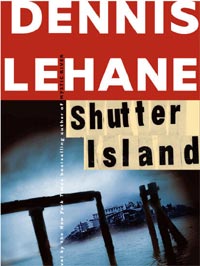
    Shutter Island by Dennis LehaneDeep into Dennis Lehane’s 2003 novel noir “Shutter Island,” there’s a wonderfully telling exchange between the two central characters. Reflecting on the gothic heights to which their situation has spiralled, one observes, “It’s all a bit Grand Guignol, don’t you think?” His partner’s reply: “I don’t know what the fuck that means.”

    Ostensibly a nod to class difference within the narrative, it’s also arguably a tongue-in-cheek dig at the novel’s self-reflexive straddling of high and low culture. “Shutter Island,” of course, is Grand Guignol of the highest order, but with an acute awareness of the term: steeped in references to throwaway pulp fiction and lurid 1950s B-movies, but written with the literary discipline and deference of a serious novelist.

    Needless to say, Boston-ish setting aside (and even then, “Shutter Island” goes to significant dramatic lengths to distance itself from the city), the novel is a very different beast from the two Lehane titles successfully given the screen treatment in recent years. For all their whodunnit trappings, “Gone Baby Gone” and “Mystic River” traded largely in earnest authenticity; “Shutter Island,” by contrast, hinges on artifice.

    Lehane has apparently stated his admiration for Graham Greene’s alternation between “novels” and “entertainments”: this, carefully wrought and quotation mark-enclosed as it is, is plainly his idea of a pure entertainment, a funhouse, a ride.

    (more…)

  • ‘Whatever Works’ trailer

    Well, it certainly works for me — it’s been a while since a trailer made me laugh out loud. Larry David’s and Woody Allen’s respective brands of neurosis seem to mesh together nicely, while Evan Rachel Wood looks unexpectedly comfortable doing the guileless simpleton thing. Patricia Clarkson is obviously having a good time too. I’m in.

  • Mixed-to-positive notices for ‘Whatever Works’

    Evan Rachel Wood in Whatever WorksEven with the success of “Vicky Cristina Barcelona” having partially righted the course of Woody Allen’s career, I can’t help holding my breath when the reviews roll in for his latest effort. Few auteurs inspire more haphazard uses of the term “return to form” (roughly applied to anything that doesn’t go completely off the rails from the word go), with so many critics seeming to forget that Allen’s best form is, well, anyone’s best form. (“Vicky” was a delight, to be sure, but Barcelona is a long way away from “Manhattan,” if you will.)
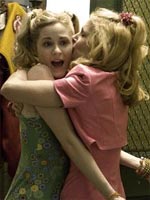
    In the case of “Whatever Works,” which just opened the Tribeca fest, the trade reviews — while uniformly encouraging — vary between gently disciplining expectations and wildly inflating them. Performing the latter task is David D’Arcy’s all-out rave in Screen International,which declares the film Allen’s best in over a decade:

    Writing a New York story and shooting at home has given Allen a sureness to his voice. The dialogue here has a familiar ring yet a crackling freshness … Whatever Works transcends Allen formulas thanks to David, who is taller, balder and more foul-mouthed than the usual types Allen himself has played. Spitting out his lines, David finds a deeper nastiness here than the everyday bile of his character on the autobiographical Curb Your Enthusiasm. Allen does wonders with a character who isn’t seeking to be loved.

    (more…)

  • Is Clarkson one to watch for ‘Whatever Works?’

    Evan Rachel Wood and Patricia Clarkson in Whatever WorksAs Penélope Cruz, Dianne Wiest, Mira Sorvino and assorted nominees over the years can attest, if you’re an actress hungry for some awards attention, you can do a lot worse than take a supporting role in an (at least) halfway decent Woody Allen film. (Unless, of course, you’re Scarlett Johansson, who’s still holding an IOU for her startling work in “Match Point.”)
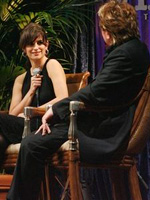
    Allen’s latest, “Whatever Works,” has just been unveiled at ShoWest, and while much of the advance speculation has been centred on leading lady Evan Rachel Wood, I’ve heard a couple of informal reports that, in accordance with the aforementioned trend, Patricia Clarkson could be the story here. Which wouldn’t be a surprise, of course; she’s a great actress, and the film apparently gives her a chance to play entertainingly against type.

    Judging from this faintly spoiler-ish description from a contributor at Nat Rogers’ Film Experience site, it sounds like a pretty showy role:

    Patricia Clarkson storms into the movie after approximately 40 minutes, and plays a role in many ways comparable to Penélope Cruz’s tempestuous Oscar-winning Maria Elena. While I was initially skeptical of Allen’s treatment of Wood as a young Lolita, Clarkson actually plays the much more sexualized character. After showing up on Boris’s doorstep in a hot pink ensemble (scrunchy included!) fit for the Southern pageant circuit, she is quickly awakened to the culture of New York … Her character transitions from praising Jesus to opening an exhibit of nude collages. Clarkson is dynamic and sexy and once again demonstrates her unbeatable range. I don’t think it is any stretch to consider her worthy of this year’s Oscar race.

    (more…)

  • SANTA BARBARA: Writers talk writing, Cruz walks the red carpet

    Penelope Cruz talks to festival director Roger Durling at the Santa Barbara International Film FestivalYesterday was another busy event day for the Santa Barbara fest.  It was a shame the Director’s Panel was canceled, but participant Andrew Stanton switched gears to join Robert Knott (“Appaloosa”), Tom McCarthy (“The Visitor”) and Dustin Lance Black (“Milk”) for an Anne Thompson-moderated discussion on their work at the keyboard this year.
    It was a good discussion, though I couldn’t help a double take at Black’s prepubescent appearance as he waltzed casually on stage.  I mean it as a compliment.  I was also intrigued by his noting one of the things that really interested him when working on the spec “Milk” script was the famed politician’s not-so-heroic side.  “Sometimes he’d be in the bath house when he should have been home with his boyfriend,” Black said.  I say intrigued because one of the key criticisms of the film has been its overly haloed depiction of the man, a criticism that, frankly, hasn’t been properly defended by even the film’s legion of supporters (and I count myself in their ranks).

    Stanton, meanwhile, was perhaps the most thought-provoking member of the panel, finding a nice place amid Black’s low-key veneer, McCarthy’s wit and Knoll’s hilarious interjections.  And thankfully, Jeffrey Wells martyred himself by asking why Stanton continued to be “oblique” when addressing the overweight “teletubbies” of “WALL-E.”  This has been a bone of contention for me on the film for some time, not so much because I feel it undermines the film, but because I believed it to be an easy opportunity for mean-spirited “fat” jokes, so to speak.

    (more…)

  • Adapting Philip Roth

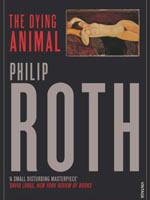
    Cover of The Dying Animal by Philip RothPhilip Roth is author of 25 novels and other works of non-fiction.  Revered in America, he has won every major American literature prize, including the National Book Foundation’s Award for Distinguished Contribution to American Letters in 2002.  Despite his literary success, his films have had a difficult journey to the silver screen.

    I joined the long line of Roth fans that were disappointed with Robert Benton’s adaptation of “The Human Stain,” the 2000 novel that received the National Book Award for the best work of American fiction. It was an extraordinary book and perhaps Roth’s finest. And I believed that it would translate nicely onto the silver screen. While the novel weaved in and out of the past and present, the transitions weren’t so frequent that it would create a problem for the screenwriter, Nicholas Meyer (Oscar-nominated for “The Seven-Per-Cent Solution.”

    Benton was able to attach an exceptional cast that included Anthony Hopkins, Nicole Kidman, Ed Harris and Gary Sinise. But when the film bombed with critics and audiences alike, it was quickly pulled from mainstream movie houses and relegated to small boutique theaters, and for short periods of time. It made only $5.3 million against a production budget of $30 million.

    Mr. Roth’s work has been adapted again by Mr. Meyer this year. Taking the pages of “The Dying Animal” and turning them into the film “Elegy,” Mr. Meyer and the film’s director, Isabelle Coixet have managed to create a finer adaptation of the text, and a far better film.

    (more…)

  • ‘Elegy’ the second film to go out to AMPAS

    Screeners of Isabel Coixet’s “Elegy” are set to go out to Academy members this week, fresh on the heels of Sony Pictures Classics’ “Frozen River,” which went out over the weekend.

    Key pushes for the film are Best Actor (Ben Kingsley),  Penélope Cruz (Best Actress), Dennis Hopper (Best Supporting Actor), Patricia Clarkson (Best Supporting Actress) and Nicholas Myer (Best Adapted Screenplay).  Let the games begin.