In Contention

Tag: Page to Screen

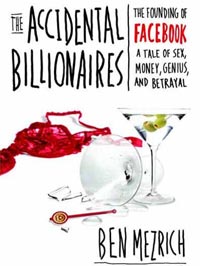
  • PAGE TO SCREEN: “The Accidental Billionaires” by Ben Mezrich

    (NOTE: This week’s Page to Screen text is the source material for David Fincher’s upcoming film “The Social Network.”)

    If, with its short, sketchy chapters and preponderance of surface-level description, Ben Mezrich’s “The Accidental Billionaires” resembles less a work of literary non-fiction than a treatment for a more substantially developed screenplay, that’s probably precisely what the author intended: after all, the movie rights to Mezrich’s thin, gossipy account of the birth of Facebook were snapped up well before he’d even finished writing it.

    Mezrich has turned this trick before: his 2003 bestseller “Bringing Down the House,” the story of a group of Massachusetts Institute of Technology students who managed to swindle millions out of top Las Vegas casinos, was recently turned into a reasonably profitable (if rapidly forgotten) film, “21.” Mezrich’s work certainly commands more respect from Hollywood than it does from literary critics.

    A former sci-fi author, Mezrich delights in fudging (and often blatantly fabricating) the facts in his non-fiction work: a disclaimer at the start of “The Accidental Billionaires” acknowledges that numerous “conversations and scenes [have been] recreated and compressed,” verbs that sound decidedly euphemistic by the time the writer is casually describing the interior thoughts of people he admits to never having met. (Mark Zuckerberg, the young Facebook founder at the center of Mezrich’s story, refused any meetings or interviews with the author, giving this already skimpily researched volume a distinctly lopsided perspective.)

    (more…)

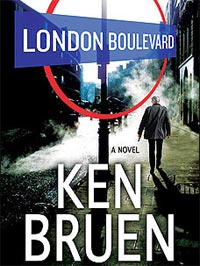
  • PAGE TO SCREEN: “London Boulevard” by Ken Bruen

    When Oscar-winning screenwriter William Monahan (“The Departed”) brings Irish crime writer Ken Bruen’s 2001 novel “London Boulevard” to screen in his directorial debut, he won’t be adapting the text so much as returning it to its natural source.

    A short, sharp, deliciously black-hearted thriller that reads not unlike a readymade screenplay in its brisk, dialogue-dominated prose, Bruen’s novel makes its debt to Hollywood clear not only in its construction (brief, propulsive chapters of only a couple pages’ length resemble individual cinematic scenes) and its assorted winking namechecks of bygone films and stars, but in its very conception.

    The title – not a location (locals will know that there is no London Boulevard in the British capital) but a metaphor of sorts – is our first clue to what Bruen is up to: the novel is itself an adaptation, and Billy Wilder’s gothic Hollywood noir “Sunset Boulevard” is the source material.

    The novel’s allusions to the 1950 classic aren’t exactly subtle. Where Wilder’s film gave us Joseph C. Gillis, a destitute L.A. screenwriter who seeks shelter in the mansion of faded movie goddess Norma Desmond to escape the repo man, “London Boulevard” crosses the Channel, jumps a half-century forward, and replaces Gillis with Mitchell, a middle-aged ex-con who dodges the ghosts of his past (and his own compulsive criminal urges) by shacking up in the plush Holland Park pad of Lillian Palmer, a washed-up theater diva plotting her triumphant West End return.

    (more…)

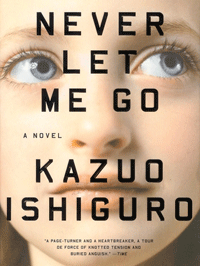
  • PAGE TO SCREEN: “Never Let Me Go” by Kazuo Ishiguro

    SPOILER ALERT: By necessity, this article must reveal some key plot developments of the novel, though no more than you might have gleaned from the film’s recent trailer.

    “(T)hough the tears rolled down my face, I wasn’t sobbing or out of control,” writes Kathy, the young female narrator of Kazuo Ishiguro’s 2005 novel “Never Let Me Go,” on its final page. She’d certainly be entitled to a good sob: over the course of 31 years and 282 pages, she has had the possibility of real life – with its attendant romance and independence and uncertainty – dangled in front of her, only to be unceremoniously denied at every turn, a Pinocchio figure resigned to eternal wooden form.

    That Kathy (to be played by Carey Mulligan in Mark Romanek’s upcoming film) remains so stoic and accepting in the face of even the novel’s most crushing revelations makes her very much of a piece with other Ishiguro protagonists; in many ways, she’s something of a modern-day sister (or daughter) to Stevens, the emotionally stunted butler later played by Anthony Hopkins in “The Remains of the Day,” the only other screen adaptation of the British-Japanese novelist’s work to date.

    Stevens denied himself feeling, but the disability of Kathy – and her classmates at Hailsham, the plush private college where they spend their entire childhood – is less autonomous than that: if her responses aren’t entirely human, it’s because she’s not entirely human herself.

    You may have heard “Never Let Me Go” described as a work of science fiction, and if you haven’t read it – and, say, are only going on the high-end, contemporary-set romance (albeit with mildly gothic overtones) of the film’s trailer – you could be forgiven for being a bit puzzled by that classification.

    (more…)

  • No Page to Screen this week

    With the Edinburgh Film Festival occupying my attention this week — more on that in a moment — my weekly Page to Screen feature has gone on vacation too. It’ll be back next Tuesday, with Kazuo Ishiguro’s “Never Let Me Go” the topic of discussion.

    As you were.

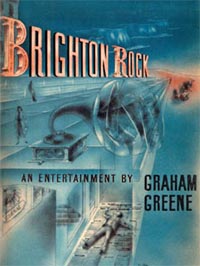
  • PAGE TO SCREEN: “Brighton Rock” by Graham Greene

    Welcome to 2010’s first installment of Page to Screen, our summer series in which I spotlight the source material behind some of the year’s most notable forthcoming adaptations.

    After a spectacularly prescient 2009 season – in which I blew my load over “Chéri,” largely dismissed the awards potential of “Up in the Air” and didn’t even notice “A Single Man” hovering in the wings – I’m all set to further prove the vast creative chasm that can lie between paper and celluloid, amplified by the fact that this year presently looks shorter on prestige literary adaptations than most.

    When in doubt, however, it is best to begin with a classic – and if there are many 2010 titles adapted from classier sources than Graham Greene’s 1938 novel “Brighton Rock,” I am not yet aware of them.

    “An Entertainment” is the rather perverse subtitle Greene attached to his novel on its initial publication, thus distinguishing it from what he regarded as more serious literary output; he could be as snootily blasé about his own oeuvre as a studio-dabbling auteur. Certainly, the descriptor isn’t unmerited: “Brighton Rock” is a tight, terse little underworld thriller, easily devoured in a single day of reading, with a blatant view, even then, toward the mainstream movie-house.

    (more…)

  • 3/8 Oscarweb Round-up (Oscar hangover edition)

    Kathryn Bigelow at the 82nd annual Academy Awards• Melissa Silverstein with a personal reflection on those four words: “the time has come.” [Women & Hollywood]

    • Anne Thompson gets a nice soundbite from “Logorama” director Nicolas Schmerkin backstage: “It took longer than ‘Avatar.’  It took more directors than ‘Avatar.’” [Thompson on Hollywood]

    • Paola Singer sits down with Best Foreign Language Film winner Juan Jose Campanella. [Speakeasy]

    (more…)

  • WEEKLY WRAP: Toronto looming, ‘Education’ rising

    Carey Mulligan in An Education• Lots of buzz over “An Education” this week, with a new trailer and poster unveiled … and the talk isn’t only about Carey Mulligan.

    • We kicked off a new season of Tech Support with a look at the runners and riders for Best Cinematography.

    • Darwin biopic “Creation” will open this year’s Toronto fest, while “Bright Star” and “Precious” are also in the lineup.

    • Speaking of “Precious,” this week’s edition of Page to Screen examined the novel behind the Sundance sensation.

    (more…)

  • WEEKLY WRAP: Buried treasure, reading pleasure

    Leonardo DiCaprio and Michelle Williams in Shutter IslandEntirely slipped my mind to do this on Friday, but here’s what we (and you) were talking about this week:

    • At 2009’s halfway mark, this week’s list shone a light on the year’s most undersung films thus far.

    • In Page to Screen this week, we eagerly sank our teeth into Dennis Lehane’s “Shutter Island.”

    • As the respective “Ice Age” and “Transformers” rehashes battled for box-office glory, “Up” quietly became Pixar’s second-highest grosser.

    • Meanwhile, soon-to-be titan “Harry Potter and the Half-Blood Prince” garnered mixed-to-positive notices.

    • Burton, Lasseter, Miyazaki, Zemeckis … the upcoming Comic-Con just got a lot more auteur-heavy.

    • Speaking of comics, “The Green Lantern” has a lead … and his name is Ryan Reynolds.

    • Away from the big screen, we discussed the joys of bargain-bin DVDs.

    • And stirred up debate with a celebration of Mel Gibson’s “The Passion of the Christ.”

  • Always a day away

    I’ve had a chaotic day today, so I regret to inform that I haven’t yet finished hammering out this week’s edition of Page to Screen. Apologies. Be sure to check in tomorrow for a discussion of Dennis Lehane’s “Shutter Island.” Promise.

  • Page to Screen delay

    Apologies for the disappearance of Page to Screen this past fortnight — amid the screenings, travelling and general whirl of the Edinburgh Film Festival, the reading and writing time required for the column has somewhat fallen by the wayside.

    I can promise, however, that Page to Screen will definitely be back this time next week, with a look at Dennis Lehane’s “Shutter Island.” We’ll also be getting into “An Education” and “Push” (AKA “Precious”) in due course — all titles that, especially with this morning’s game-changing announcement, look to remain very much in the awards conversation. (EDIT: Hold that thought — we’ll be discussing “An Education” instead next week.) Stay tuned.

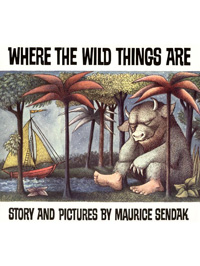
  • PAGE TO SCREEN: “Where the Wild Things Are” by Maurice Sendak

    Cover of Where the Wild Things Are by Maurice SendakOf all the literary adaptations reaching our screens this year, none is as seemingly impossible – and yet, simultaneously, rife with possibilities – as Spike Jonze’s long-awaited realization of “Where the Wild Things Are.” A work that occupies multiple positions within the popular culture pantheon – grade-school standard, highbrow literary classic, cult hipster item, fine-arts touchstone, pop psychology standby – it arguably nourishes a broader audience than any children’s text published since.

    As such, Jonze’s film has been complicated throughout by shifting lenses of expectation: as a family film perhaps more eagerly awaited by parents than their children, as a mainstream entertainment aiming to appease art house mavens and indie kids, it is essentially required, like its literary source, to be all things to all people.

    His own artistry notwithstanding, Sendak achieved such catholic appeal through the sparseness of his approach. With a narrative of fewer than 400 words – not even half the length of this very article – “Where the Wild Things Are” is an exceptionally porous feat of storytelling that accommodates a wide range of interpretations and identifications from the reader. It is plainly a metaphor-driven story, yet there isn’t enough text to articulate or prescribe the symbolism that is otherwise so lavishly illustrated.

    Sendak employs minimalism to expansive effect: the unadorned narrative allows the imagination to  roam, enabling the reader to take only what s/he wants from the story. Yet a literal reading thereof – such as may be absorbed by younger readers – is no less compelling in terms of tension and atmospherics, than one more interpretive.

    (more…)

  • WEEKLY WRAP: Cannes unspooled, ‘The Road’ unveiled

    Opening night at Cannes 2009• Kicking off a Cannes-loaded week, we offered a two-part profile of this year’s contenders for the Palme d’Or.

    • Meanwhile, this week’s Top Ten list reflected on the greatest runners-up in the festival’s history.

    • As “Up” opened the festival, Pixar maintained its recent critical streak.

    • Within the competition, however, it’s two films from female auteurs — “Bright Star” and “Fish Tank” — that have critics buzzing.

    • Away from the Croisette, there was lots of talk about “The Road” this week, with a new trailer and early review.

    • In a neat coincidence, “The Road” was also the subject of this week’s Page to Screen column.

    • In a major week for debuting trailers, we also got a look at two very different hot properties: “Nine” and “Precious.”

    • Ahead of its June U.S. release, we reviewed Michelle Pfeiffer’s comeback vehicle “Chéri’.”

    • We looked into the box office success of “Star Trek.”

    • We revisited some buried treasures from the 1980s.

    • And finally: is the theatrical experience overrated? Have your say here.

  • Roadworks

    I know I promised a Page to Screen column on “The Road” today, but once in a blue moon, promises have to be broken. The start of the Cannes festival has ushered in a wealth of distractions, and as much as it slips my mind some days, I have a life away from my laptop too. I am but one man.

    So I must this once postpone the piece until tomorrow — but rest assured that Tuesdays will remain Page to Screen days from next week.

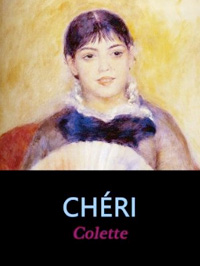
  • PAGE TO SCREEN: “Chéri” by Colette

    Cover of Cheri by ColetteMerely casual acquaintances of French literature will likely associate the name Colette with her short story “Gigi” – or rather, the flouncy musical film adaptation thereof that swept the board at the 1958 Academy Awards. A sunny, sanitized interpretation of an intricate study in sexual politics, it captured the author’s sensibility in its lavish set-dressing, but little else.

    I doubt 1950’s Hollywood would have known where to begin with “Chéri,” a darker portrait of the louche demimonde of Parisian courtesans – and we are close to finding out if they do even now. Certainly, those who approach the novel with the jolly peals of laughter from the meringue-light trailer for Stephen Frears’ upcoming film still ringing in their ears, may be taken off-guard by the elegiac, often cruel comedy of manners that awaits them.

    Though “Chéri” is a slender, subtle volume, it’s easy to see what drew Frears and screenwriter Christopher Hampton to the material. Much like their previous collaboration, 1988’s “Dangerous Liaisons” (and other Hampton works such as “Atonement” and “Total Eclipse”), this is a story of sexual awakening gone awry — which is not to say that the novel lacks for romance. Amid the rueful cynicism lies a rather tender love story between two people who only realize they are in love a full six years into their relationship.

    The affair between Fred, an aimless 25 year-old dandy known to all by his family nickname Chéri, and Léa, a wealthy courtesan twice his age, is introduced in the novel as a pragmatic transaction: the beautiful yet increasingly insecure Léa feeds vicariously off her lover’s youth, offering material rewards and a sexual (if not sentimental) education in exchange.

    As such, “Chéri” is truly a coming of age story, a gender-reversed “Pygmalion” even, in which an older, more worldly woman grooms a boy for marriage, before releasing him into gentlemanly society. The twist comes when, the ink barely dry on the certificate of his marriage to sweet, shy debutante Edmée, Chéri discovers that carnal and sensual affections are not merely transferrable between different women. Léa, meanwhile, having undertaken this schooling for multiple men in her career and living by the philosophy that “being disinterested is its own reward,” realizes that she’s more emotionally invested in Chéri’s maturation than she knew at the time.

    (more…)

  • Page to Screen has officially closed

    Sorry for the column to go out with a whimper like that, but the more things piled on, the less time I had to read William Monahan’s “Body of Lies” and offer up the final column.  I’m seeing the film on Monday, so by now it’s a bit moot, so I just wanted to note that this season of Page to Screen came to a close with Brian’s review of Peter Buchman’s “Che” two weeks back.

    I’m thinking about revamping the column next year, perhaps taking it back to it’s source material commentary roots (a concept that has been lifted elsewhere in the interim, as we went the script review route for the last two years).  But I’ll cross that bridge when I come to it.

    We hope you’ve enjoyed the reviews and gathered some helpful insights along the way.  If you want to read back over our series of seven screenplay reviews this season, have a look here.

  • PAGE TO SCREEN: “Che” by Peter Buchman

    Page to Screen at In Contention“To the people of Santa Clara, this is Commandant Che Guevara. The enemy would have us live in fear. But it is they who should be afraid. Because the power of the people is irresistible. Blockade the streets. Open your homes to rebel soldiers. And if you have a gun, pick it up. If there was ever a time to fight for your liberty, that time is now.”

    Consider myself a former believer in the church of Steven Soderbergh. When the director won his much deserved Oscar for “Traffic” I thought for sure we were seeing the emergence of one of the most important American directors in quite some time. And then what happened? The movies he was making — the “Ocean’s” trilogy, “Bubble,” “The Good German” and more — all sounded so interesting and promising on paper, and in the opinion of this writer, all ended up entirely soulless and lacking.

    So I have been cautiously anticipating the Che Guevera one-two punch of “The Argentine” and “Guerrilla.” You’ll have to forgive me (but I’m sure you’ll understand) if I certainly wasn’t in anticipating Peter Buchman’s scripts. He debuted with “Jurassic Park III” (how the hell do you get to start your career with a “Jurassic Park” movie?!) and followed it up with the excruciating “Eragon.” Not exactly the man I’d select for this task, to be certain.

    But thankfully, “The Argentine” and “Guerrilla” — collectively, “Che” — are far superior works than Buchman’s previous two scripts. What we have here are handsomely crafted pieces that are easily malleable for a director like Soderbergh to reconstruct the way he wants, which according to the reviews I’ve read, seems to be exactly what he’s done. Scenes from “Guerrilla” appear in the first half of the film (what I presume will be “The Argentine” section), predominately Guevera’s famous speech at the United Nations in New York City.

    (more…)

  • PAGE TO SCREEN: “The Road” by Joe Penhall

    Page to Screen at In Contention“You think I come from another world, don’t you? Filled with all these strange things you’ve never seen…Well I do, I guess.”

    Cormac McCarthy’s “The Road” debuted last year to one of the biggest literary love fests in recent memory. From Oprah to Pulitzer, the author had one hell of a year, not to mention the Golden Globe- and Oscar-winning adaptation of “No Country for Old Men.” And so, after failed attempts like “All The Pretty Horses” (still one of my picks for director’s cut I want to see the most), McCarthy’s books are hitting the film world hard. Adaptations are coming from Todd Field and Andrew Dominik, and in just a few months, “The Road” hits screens from director Joe Hillcoat (he of the fantastic “The Proposition”) and screenwriter Joe Penhall.

    And rest assured, fans — from the looks of this script, you have very little to worry about.

    A quick catch-up for those who don’t know what “The Road” is about: It’s a post-apocalyptic world. Character names are omitted, leaving mere pronouns as items of identification. A man (to be played by Viggo Mortensen) and his son (Kodi Smit-McPhee) make their way toward the coast, hoping to find warmer weather in the desolate despair that surrounds them. The script is as sparse as the book; I honestly couldn’t tell you if there was a single scene added.

    Much has been made about the enlarged role of the man’s wife (Charlize Theron), but that really only adds up to a good cameo for Theron, each scene meatier than the last. Theses were the few sequences that seemed new to me, flashbacks of events before whatever terrible event took place, quite subtle and unassuming. No dialogue, no big moments, just a couple in love going through their routine lives, enjoying each other.

    These sequences, told from The Man’s perspective, add to the heroism of the character. However, the argument could be made that The Wife still comes across as difficult to like and even easier to hate, for reasons that would be spoilerific if you’ve not read the book. I’m sure Theron will bring her A-Game to the role (in a weak year, it’s a definite contender for a supporting actress nomination, based solely on the fact that every scene she has is a perfect contender for an Oscar clip), but I wished I could sympathize with her just a little on the page.

    Along the road our duo meets a variety of folks, including more good cameo time for Robert DuVall and Guy Pearce toward the film’s conclusion. While their parts are fine and good, I can’t help wondering if their casting will be more distracting than helpful (neither character has more than five-to-10 pages).

    The bigger encounters The Man and The Boy face are much more horrifying and emotionally wrenching, chief among them being an ungodly terrifying scene in which the two stumble upon a group of cannibals and the dying humans they eat alive in their basement. I was sweating just reading these pages (as I was in the book), and it has the potential to be one of the most nerve wracking sequences in film history. It’s moments like this that make me wonder about the film’s Oscar prospects. These scenes are pitch black and hopeless, and much more in the horror vein than any Oscar-bound movie that I can remember, including “The Silence of the Lambs.”

    The movie’s secret weapon, and the root of whatever failure and sucess it might face, is the casting of The Man and The Boy. I’ve never seen Kodi Smit-McPhee in anything, but needless to say if he pulls off the role, it’s impossible to imagine him not garnering an Academy Award nomination. It’s the type of role that is the only legitimate threat to Heath Ledger in my opinion.

    Whereas Ledger’s performance is one of showmanship and iconography, Smit-McPhee has the opportunity to pull heart strings and in a non-cloying or baity way to boot. Just like people were reduced to puddles reading the book, I imagine the film could play out in the same fashion, and that really rests squarely on this young man’s shoulders.

    Luckily for Smit-McPhee, one of our greatest actors shares every scene with him. Viggo Mortensen is perfectly cast. Was anyone even surprised when he was announced as The Man? It’s a challenging role for any actor, but one can’t help but see it as something as a culmination of the excellent work he’s been doing since appearing in that little fantasy film a few years ago.

    There’s real pain and bravery to The Man, a character whose sole existence is to take his son closer to a better life one step at a time. It’s a beautifully written role (again, like always, we have McCarthy to thank for that) and it’s hard seeing Mortensen not receive his second nomination in two years. It’s the type of role AMPAS dies to award, a family hero, deglamed, beloved actor, etc., and Mortensen has been quietly building up his reputation year after year. With three films this year to support his campaign, I’d have to say you’d be pretty ignorant to vote against his odds at this point.

    A potential downfall of “The Road” could simply be that it lacks the beautiful wordplay of McCarthy. Some of the great lines, “If he was not the word of God, then God had never spoke” or “There is no God and we are his prophets” are not present, and I’m sure that’s bound to disappoint the loyalists. Personally, I didn’t mind it so much. “The Road” is an incredibly faithful adaptation that is more than just a cut-and-paste rehash of the book. Joe Penhall has clearly taken the time and care to craft the story into as livid an adaptation as possible.

    As a big fan of the novel, I guess I can say that my fears have been laid to rest. While the success of the film on the screen lies in the work of the actors, at least we can rest assured that they’ll be working from a damn fine piece of writing.
  • PAGE TO SCREEN: “The Curious Case of Benjamin Button” by Eric Roth

    Page to Screen at In Contention“Time is the most precious of God’s gifts. It is untouchable, unseeable, unknowable…it is as light as a feather…as heavy as a stone…Time, my darling, what precious little there is, is all we have…”

    I’ve known from Eric Roth for a few years now. I’ve spent some time investigating his process, picking apart his tendencies and have committed such findings, in addition to personal impressions of the man, to print. So one thing I’ve always taken to heart when sitting down to read one of his scripts is that, “bastardized art form” or not, he is insistent on challenging himself with his screenwriting, stretching the potential for thematic resilience and above all, treating the work like an exercise in elegant prose.

    Such is the case with “The Curious Case of Benjamin Button,” a 159-page adaptation of a 30-page F. Scott Fitzgerald short story. It’s a rare thing to flip through the pages of a script written by someone focused on the words almost more so than the images he or she expects them to become. And as part of an art form that can be insufferable as a result, I have to say that “Benjamin Button” is something of a masterpiece.

    The script begins with an aging Daisy (to be played by Cate Blanchett), recounting, via the reading of a diary by her daughter Caroline (Julia Ormond), the life and times of Benjamin Button (Brad Pitt). The love of her life, the one that got away, the one that came back and the one that will stay in her heart forever, Benjamin was born, as you certainly know, “under unusual circumstances.”

    Roth decides to do away with the hilarity of Fitzgerald’s take on Benjamin’s birth. We aren’t treated to a full-grown 85-year-old man in a baby crib greeting his father with a hearty hello. Instead, he treats Benjamin’s early years as something of a potential disease that makes a newborn aged beyond his or her years, so to speak. Frail skin, deformities…”His body is failing him before it has begun,” a doctor conveys with flabbergasted wonder.

    Benjamin’s mother does not survive childbirth, while his father instinctively passes him off on a lonely Baltimore doorstep before disappearing from his life…for a time. It is there, not hours old, that Benjamin is taken in by Queenie (Taraji P. Henson) at an old-timers’ home, for lack of better vernacular on my part.

    It was actually a stroke of brilliance by Roth to place Benjamin in such a setting for his formative years (and he’ll come back frequently throughout the tale). The writer’s commentary on wisdom and its many vessels is perfectly conveyed in this environment, simultaneously providing a fair share of comedic relief here and there, most of the time via unexpected flatulence (but it works).

    (more…)